The best grass seed for Nicholasville KY depends on the conditions in your yard. A sunny lawn that gets regular foot traffic has different needs from a shaded patch or a low spot that stays wet. In Central Kentucky’s transitional climate, summer heat can stress cool-season grasses, so matching seed to the site is essential.
Turf-type tall fescue is a strong starting point for many local lawns. Kentucky bluegrass and perennial ryegrass may suit particular goals and conditions. To choose, consider sunlight, soil and drainage, how the lawn is used, and how much ongoing care you can provide.
This guide compares common grass types for Nicholasville and explains what to look for on a seed label, including species and blend proportions. It also covers the primary seeding window, site preparation, and follow-up watering. Aeration, overseeding, fertilization, weed control, and irrigation maintenance can support a healthier lawn when matched to its needs.
Best grass seed for Nicholasville, KY: why the right choice depends on your yard
A seed that performs well in an open, sunny lawn may struggle beneath trees or on a damp slope. Choosing the best grass seed for Nicholasville KY starts with the conditions on your property, not a universal product ranking. Central Kentucky’s transition-zone climate exposes cool-season grasses to winter cold as well as summer heat and humidity. Even neighboring yards can have different growing conditions.
Grass seed is a suitable choice for a Nicholasville lawn when its grass type fits the yard’s sunlight and soil, can handle the intended use, and matches the care you can provide. Seed selection sets the direction, but soil preparation, seed-to-soil contact, and consistent follow-up care also affect establishment.
For a helpful visual overview of how common grass types differ, watch:
What Central Kentucky conditions mean for lawn seed
Cool-season grasses generally grow most actively during the cooler parts of the year. Summer heat and dry spells can slow growth and stress established turf. Newly seeded areas also need reliable moisture as seedlings develop. Exposure, drainage, and care affect how much those conditions matter in a particular yard. Don’t assume every Nicholasville property has the same soil: texture and drainage can differ between nearby yards. A soil test can help identify conditions that may affect seedling growth.
Start with the conditions in your own yard
Observe where sunlight falls throughout the day. Open areas receive more direct sun, while partial shade under scattered trees differs from persistent shade beside buildings or beneath dense canopies. If light varies across the lawn, one seed choice may not suit every section.
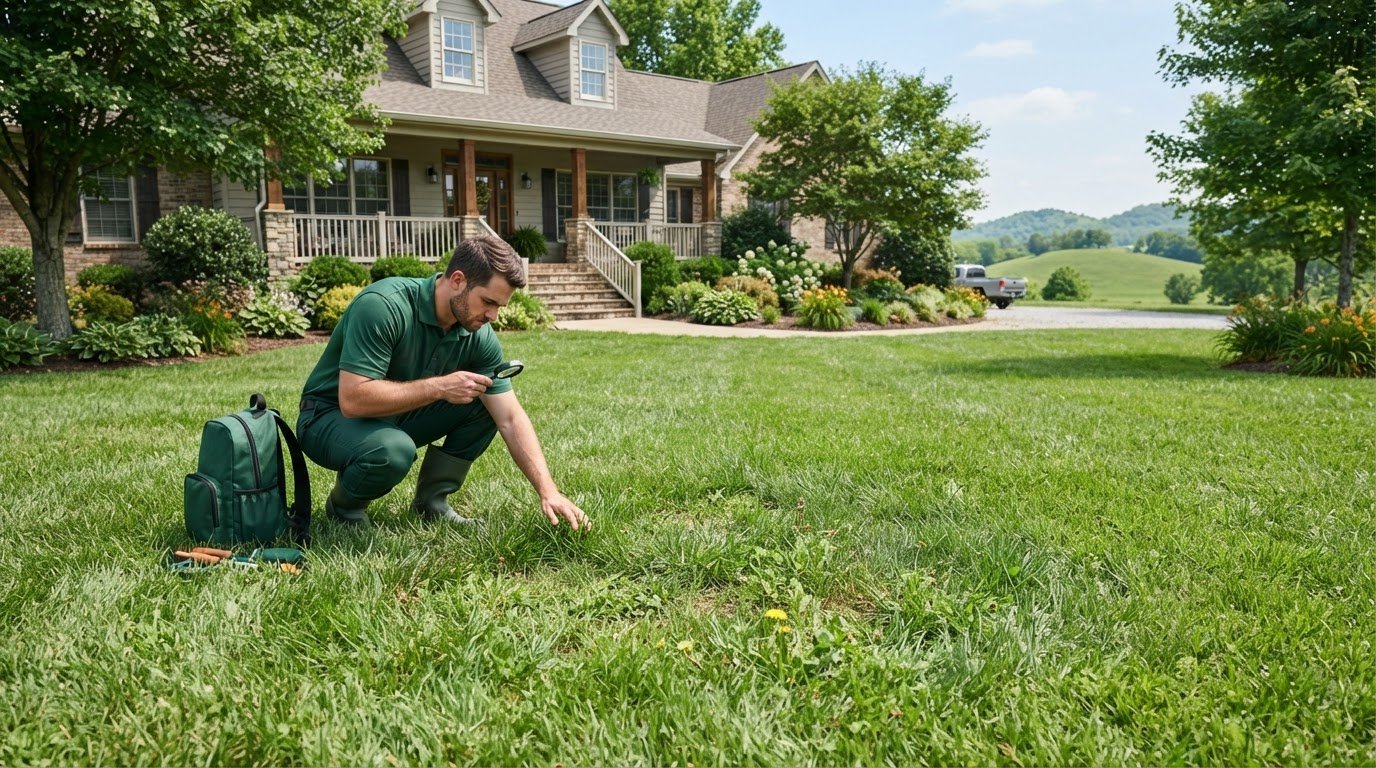
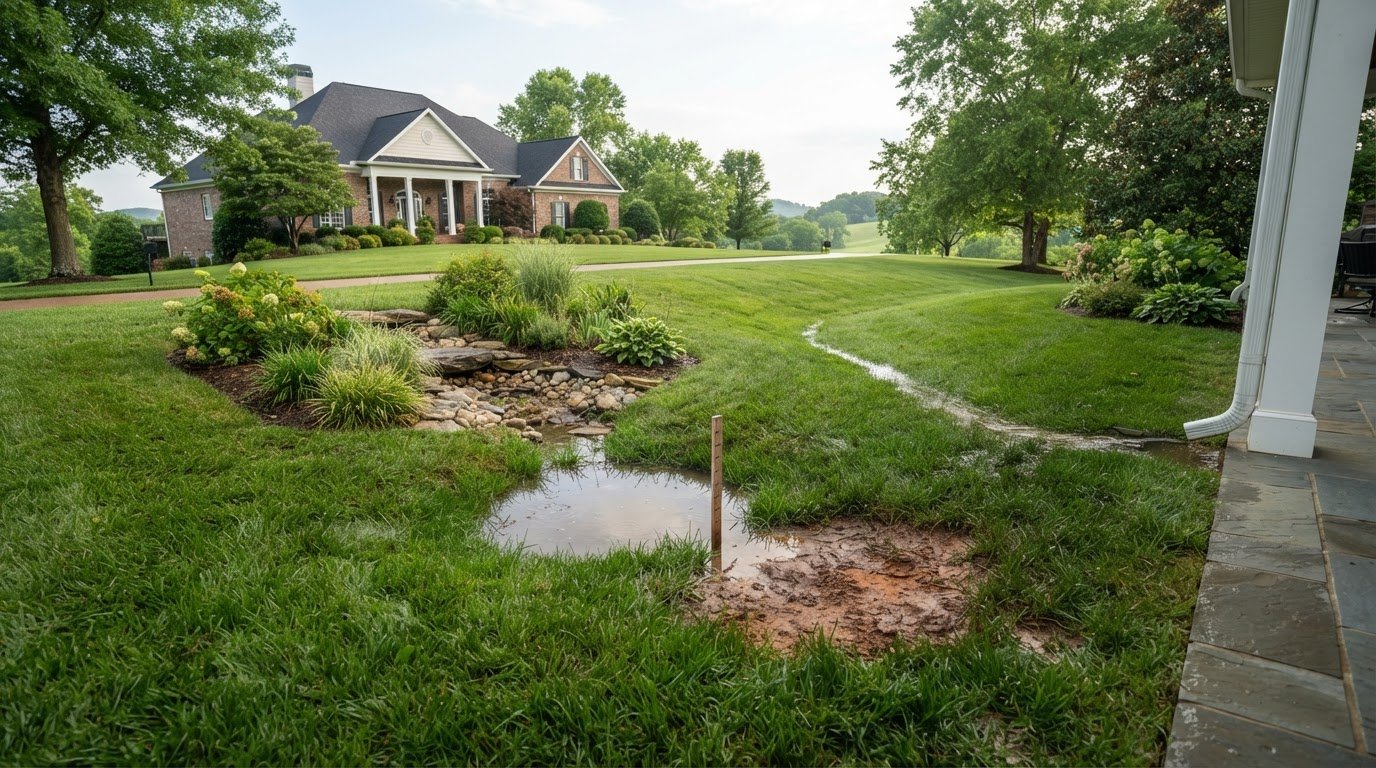
Consider how each area is used, too. Play areas and pet routes need to tolerate regular traffic. Slopes can lose water more quickly, while low or poorly draining spots may stay wet. Note where grass repeatedly thins or turns bare, then look for a pattern: shade, wear, standing water, or exposed soil may point to the underlying challenge. Seeding without addressing that cause can leave the patch weak again.
Where compacted soil is part of the problem, lawn aeration and overseeding can support better seed-to-soil contact. Match the seed to the site, then prepare and care for that area accordingly.
Compare grass seed types for Nicholasville lawns by sunlight, durability, and upkeep
The best grass seed for Nicholasville KY depends on what matters most in your yard: durability in active areas, dense growth, a better fit for shade, or a particular level of upkeep. Use the comparison below to narrow the options. Seed quality, cultivar, site conditions, and care all influence how a grass performs.
| Grass type | Typical strengths | Limitations and establishment | Potential site fit |
|---|---|---|---|
| Turf-type tall fescue | Adaptable option for many local lawns; commonly selected for durability. | Doesn’t spread to fill bare areas as readily as Kentucky bluegrass. Establishment depends on good seed-to-soil contact and consistent care. | Sunny to partly shaded lawns and areas with regular use. |
| Kentucky bluegrass | Forms dense, attractive turf and can recover from wear through underground rhizomes. | Can take longer to establish and may require more maintenance than tall fescue. | Lawns where a fine, dense appearance and recovery potential are priorities. |
| Fine fescue | Some fine fescue types can perform in shadier conditions. | Shade tolerance varies by type, and dense shade can still limit turf growth. | Shady lawn sections with suitable growing conditions. |
| Perennial ryegrass | Establishes quickly and is often used to renovate high-traffic areas. | Fast establishment alone doesn’t make it the right choice for every lawn or a complete long-term solution. | Repair or renovation areas where quick cover is useful. |
| Bermudagrass or zoysiagrass | Warm-season grasses suited to different growth patterns than cool-season turf. | Go dormant and brown roughly October through April; assess local site fit before choosing. | Consider only where warm-season dormancy and appearance suit the homeowner’s plans. |
Tall fescue, Kentucky bluegrass, and blends: what separates them?
The University of Kentucky recommends turf-type tall fescue for most lawns in the region. It’s a practical candidate, not a guarantee of success. Kentucky bluegrass offers dense growth and recovery potential, but may need more care. Blends can combine species, though performance depends on the proportions and cultivars listed. The University of Kentucky's Turfgrass Science program provides further guidance on selecting and managing turf.
Which grass seed is better for shade, sun, or heavy use?
Fine fescue may suit a shaded section, while tall fescue is worth considering for sunny or partly shaded areas with regular activity. Perennial ryegrass can help provide faster cover in a worn spot. Read the label for species proportions and intended growing conditions. A bag marked “shade” or “traffic” still needs to match the actual site.
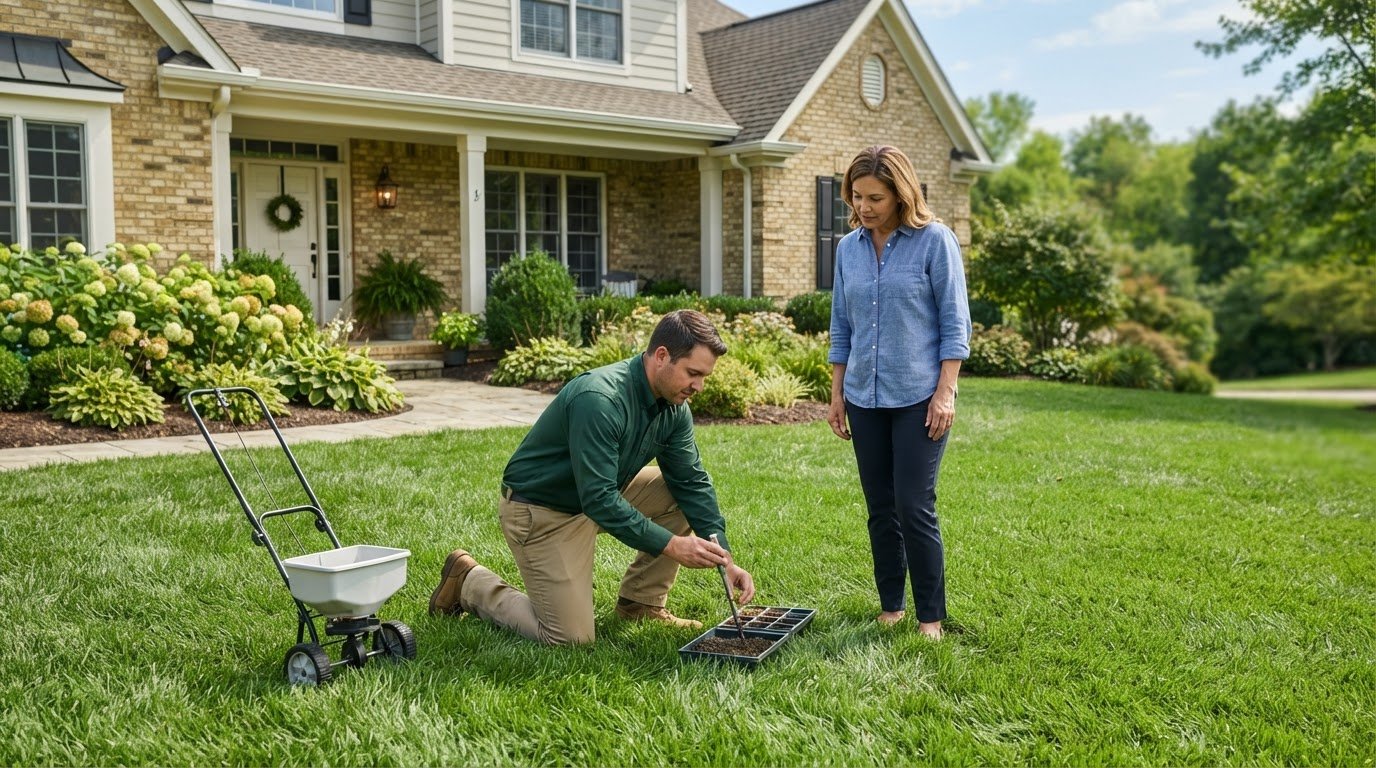
When different parts of the lawn have different needs, an assessment can help guide seed selection and care. Discuss your lawn’s conditions with Palisades Outdoor Solutions.
How to choose grass seed in Nicholasville without trusting a one-size-fits-all ranking
A top-ranked bag can still be a poor match for your lawn. Marketing claims can’t account for the shade under your trees, compacted soil along a play path, or water that collects in a low spot. Before comparing options, identify what’s limiting growth in each area. The best grass seed for Nicholasville KY is the one suited to the lawn’s main growing conditions and intended use.
A five-step checklist for narrowing down grass seed
- Map sunlight. Note areas that receive full sun, partial shade, or persistent shade.
- Identify what’s already growing. Look at the existing grass and mark thin or bare patches.
- Track use and wear. Note where people or pets walk, play, or repeatedly cross the lawn.
- Check drainage and soil conditions. Watch for standing water, runoff on slopes, or areas that seem compacted.
- Choose your main goal. Decide whether you need durable coverage, shade adaptation, a dense appearance, or faster establishment, then compare seed types that suit the site.
Decision rule: Choose seed for the lawn’s toughest regular condition, such as limited sunlight or heavy foot traffic, rather than the feature that sounds best on the bag.
What to check on a grass seed label
Look beyond the large-print claims. Check which grass species are included and, for a blend, the proportion of each. A mix dominated by one species may perform differently from one with only a small amount of that grass. Compare the stated growing conditions and directions for seeding rate and establishment with your site and planting plan.
Coatings or added fertilizer may be features of a seed product, but they don’t make it the right match for every lawn. Coated seed still needs suitable light, prepared soil, and appropriate care. A shade claim won’t overcome deep, persistent shade where turf struggles to grow.
If the lawn is thinning, the seed may not be the only issue. Compaction can restrict root growth, poor drainage can leave soil saturated, and insufficient moisture can interrupt establishment. Dense shade may call for a different ground-cover plan rather than repeated seeding. Address the site problem alongside seed selection to give new grass a more suitable start.
For mixed conditions or recurring bare areas, a lawn assessment can connect seed choices with practical care. Palisades Outdoor Solutions supports ongoing lawn care with aeration and overseeding, fertilization, weed control, and irrigation maintenance. Discuss lawn care for your property.
When to Seed and Establish a Nicholasville Lawn
For cool-season grasses such as tall fescue and Kentucky bluegrass, Central Kentucky’s primary seeding window is mid-August through late September. A secondary window runs from mid-February to mid-April, though weather and current soil conditions affect practical timing. Seeding after the first week of October is riskier because young grass may not develop enough root growth before winter. Check the seed label and conditions at planting time. Cool-season grass seed generally germinates best when soil is between 55°F and 70°F.
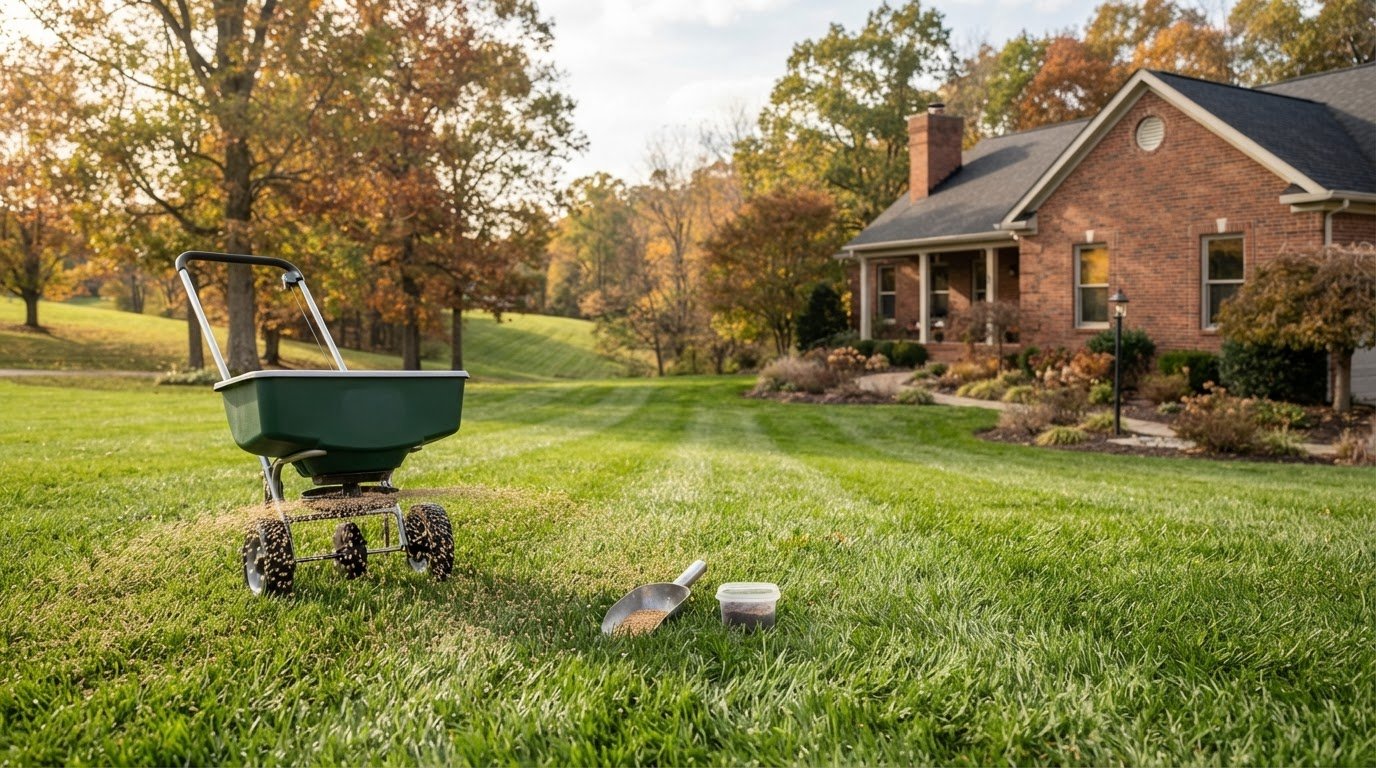
Choosing the best grass seed for Nicholasville KY is only part of the job. Prepare the site, distribute seed evenly, then maintain appropriate moisture while seedlings establish.
Prepare the lawn before spreading seed
Clear leaves, sticks, and other debris so seed can reach the soil. Address bare or compacted areas instead of scattering seed over thatch or hard ground. For a renovation, loosen the surface as appropriate and create good seed-to-soil contact. In an established lawn, aeration can relieve compaction and provide openings for seed during overseeding. See the aeration and overseeding guidance for more on this approach.
Follow the seed label for application rate and distribution. Spreading too heavily can crowd seedlings, while uneven coverage can leave thin patches. Avoid disturbing seed after sowing, and keep foot traffic off newly seeded areas as much as practical.
Follow through with watering and routine care
New seed needs suitable moisture through germination and early growth. Follow the label’s watering directions and adjust for rainfall and the site. Aim for consistent moisture without soaking the soil. Slopes may shed water before it soaks in, while low spots can become waterlogged. Uneven irrigation coverage can leave some sections dry while others stay too wet. Irrigation maintenance can help address system performance as part of an establishment plan.
Weeds can compete with seedlings, but weed control applied without considering the seed’s stage may interfere with establishment. Follow product labels and use a lawn-care plan suited to newly seeded turf. Fertilization should also match the soil and grass needs rather than being applied automatically.
Careful preparation and follow-up make seed selection more effective, but recurring bare areas may need a closer look at compaction, shade, drainage, or irrigation. Plan your lawn’s seeding and establishment care with Palisades Outdoor Solutions.
Choose grass seed with a complete lawn-care plan for Nicholasville
Choosing seed is one part of establishing or renewing a lawn. Even a suitable grass type can struggle if the soil is compacted, the site drains poorly, or young seedlings don’t receive consistent care. Pair your seed choice with site preparation and a practical maintenance plan, then adjust care as the lawn develops.
When professional lawn care can support a seed plan
The lawn’s condition helps determine what kind of renovation makes sense. Widespread thinning, compacted ground, and isolated bare patches point to different needs. Aeration and overseeding can support improvement in an established lawn, while ongoing lawn care helps maintain the property as new grass develops. Irrigation maintenance can address inconsistent watering coverage. Fertilization and weed control should be coordinated with the lawn’s condition and new seed.
Palisades Outdoor Solutions provides these lawn-care services for Nicholasville homeowners. For routine upkeep, explore lawn care and mowing. Consistent mowing and attentive maintenance complement a seed plan, but newly seeded areas need care suited to their stage of growth.
A practical next step for homeowners in Nicholasville
Before making a plan, gather a few details about your yard. Note which areas get full sun or shade, where people or pets use the lawn most, and where grass is thin or bare. Include slopes or spots where water collects, along with how the lawn is currently watered. These observations help connect seed selection with preparation and follow-up care.
The best grass seed for Nicholasville KY is a site-specific choice, and seed alone can’t correct every underlying lawn issue. Match the grass to the yard, then support it with appropriate care. Palisades Outdoor Solutions can help with lawn care, aeration and overseeding, fertilization and weed control, and irrigation maintenance as part of that broader approach.
Share your lawn’s conditions and care goals to discuss a practical next step. Talk with Palisades about your lawn-care needs.
Make your next lawn-seeding decision with confidence
The best grass seed for Nicholasville KY is the type that fits your lawn’s sunlight, soil, traffic, and maintenance needs. Tall fescue is a practical option for many local properties, while bluegrass, fine fescue, ryegrass, or a blend may better suit particular areas and goals. Check the seed label, and remember that sound preparation and steady care matter as much as the seed itself.
Before choosing, note where the lawn gets shade, where it wears thin, and how water reaches each section. A plan based on those details can guide your next steps, whether that means routine lawn care, aeration and overseeding, fertilization and weed control, or irrigation maintenance.
Palisades Outdoor Solutions serves homeowners in Nicholasville and surrounding Central Kentucky communities with these lawn-care services. Share what you’ve noticed about your yard and what you’d like to improve. Discuss your Nicholasville lawn-care needs and take an informed step toward a healthier lawn.
Frequently Asked Questions
What is the best grass seed for Nicholasville, KY?
Turf-type tall fescue is a strong starting point for many Nicholasville lawns, but the best grass seed for Nicholasville KY depends on your yard’s sunlight, soil, traffic, and care needs. Kentucky bluegrass or a blend may fit other goals, while fine fescue may suit some shadier areas. Check the seed label for species and proportions, then address site conditions and establishment care so the grass has a suitable place to grow.
Is tall fescue a good choice for Central Kentucky?
Yes. The University of Kentucky recommends turf-type tall fescue for most lawns in Central Kentucky. It’s a practical option for a durable cool-season lawn, though results still depend on seed quality, site conditions, and ongoing care. Check that the label identifies turf-type tall fescue rather than assuming all fescue seed is alike. Consider the lawn’s light, use, drainage, and watering needs before deciding.
Can Kentucky bluegrass grow well in Nicholasville?
Yes, Kentucky bluegrass can grow in Nicholasville and is suitable for Central Kentucky lawns. It can form dense turf and recover from wear through underground rhizomes, but it may take more maintenance than tall fescue. Consider it if dense growth and recovery potential suit your priorities. As with any grass, establishment depends on appropriate timing, prepared soil, and care matched to the seed label.
What grass seed is best for a shady lawn in Kentucky?
Some fine fescue types can suit shaded lawn sections, but check the seed label for the species included and its intended growing conditions. Partial shade differs from dense, persistent shade, where turf growth may remain limited regardless of seed choice. Observe how much light the area receives and whether existing grass thins in the same spots. If shade is severe, repeated seeding alone may not resolve the problem.
When should I plant grass seed in Nicholasville, KY?
For cool-season grasses, the primary seeding window in Central Kentucky is mid-August through late September. A secondary window is mid-February through mid-April. Local weather and soil conditions matter, so follow the seed label and check conditions at planting. Seeding after the first week of October is riskier because young grass may not establish enough root growth before winter. Cool-season grass seed generally germinates best with soil temperatures between 55°F and 70°F.
How do I choose between grass seed blends and single varieties?
Compare the grass species with your lawn’s conditions and goals. A single variety gives you one main grass type to match to the site, while a blend combines species or cultivars that may offer different characteristics. Read the label carefully: identify each species and its proportion, then check the stated growing conditions and directions. A blend isn’t automatically better; its composition must suit the areas you plan to seed.
Will grass seed fix a patchy lawn by itself?
No. Seed can fill thin areas, but it won’t correct the underlying cause of bare patches. Compaction, poor drainage, insufficient moisture, heavy wear, or persistent shade may continue to limit growth. Look for patterns before reseeding, then prepare the soil and follow watering guidance on the label. Aeration and overseeding can support renovation of an established lawn, while appropriate lawn care helps maintain it as new grass develops.