What if the reason your grass fails every August isn't just the heat, but the structure of the ground beneath it? In Central Kentucky, we live in the transition zone, a region where the weather is often too hot for cool-season grasses and too cold for warm-season varieties. You've likely watched your vibrant spring yard turn into a parched, brown landscape by late July despite your best efforts. Discovering how to improve lawn health Kentucky yards require starts with moving past basic watering and focusing on the biology of our heavy clay soil. It's exhausting to battle persistent henbit and crabgrass while your grass struggles to take deep roots.
You deserve a property that reflects your pride without the constant stress of troubleshooting patchy spots. This guide provides the professional framework to transform your yard into a resilient, lush landscape that thrives in our local environment. We'll examine the timing for aeration and overseeding, the precision of seasonal nutrient management, and the steps to protect your turf during the harshest summer weeks. By mastering these fundamentals, you can enjoy a thick, green lawn that increases your property value and stands up to the Bluegrass climate.
Understanding the Central Kentucky Transition Zone
Maintaining a property in Central Kentucky requires more than just a mower and a garden hose. Our region occupies the transition zone, a geographic belt where the climate fluctuates between extremes that challenge both northern and southern turf varieties. Learning how to improve lawn health Kentucky homeowners often struggle with means acknowledging that our weather rarely stays in the "sweet spot" for long. Most local yards rely on Kentucky Bluegrass or Tall Fescue. While these species are beautiful, they face an uphill battle against our limestone legacy. The high calcium content in our soil can sometimes lock up essential micronutrients, making professional fertilizer and weed control vital for maintaining color and vigor.
Lawns in Central Kentucky enter a state of dormancy during July and August as a natural defense mechanism to preserve moisture and energy during periods of extreme heat and low rainfall.
Cool-Season Grasses vs. Kentucky Heat
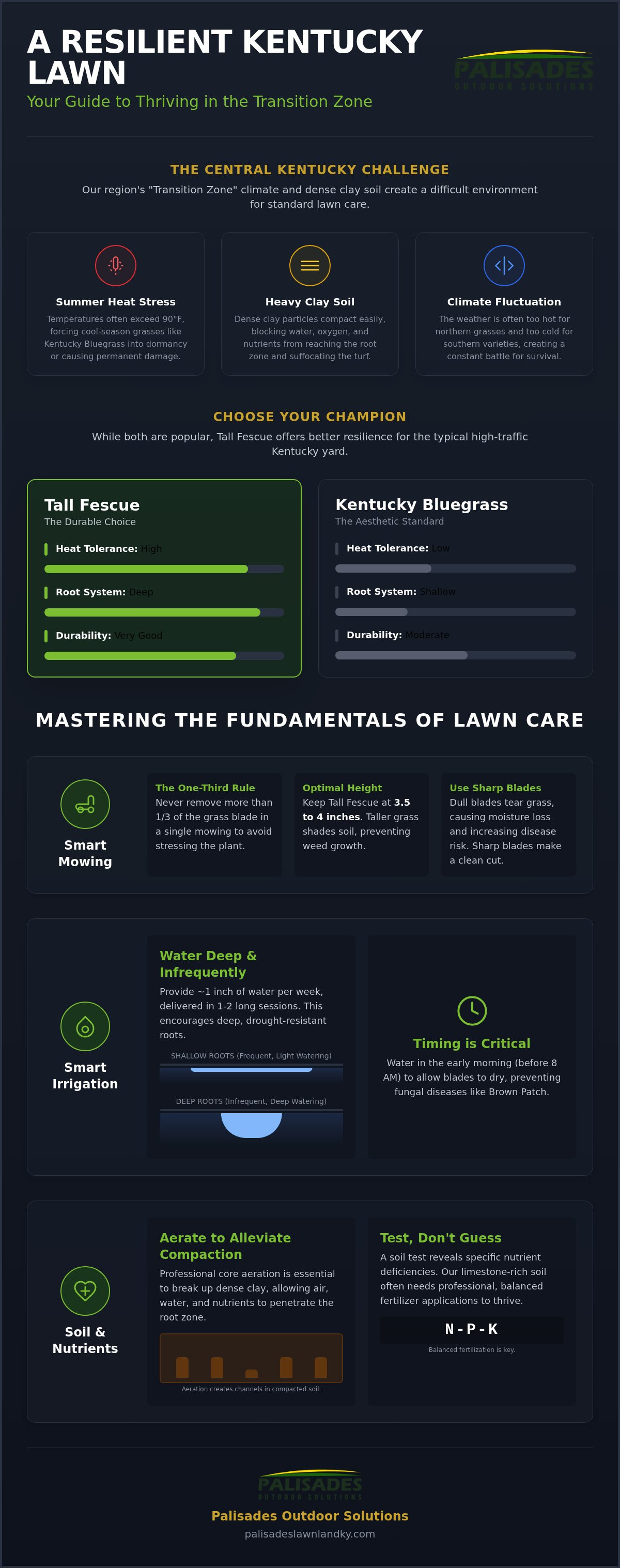
Kentucky Bluegrass is the gold standard for aesthetics, yet it often falters when humidity levels spike and temperatures stay above 90 degrees. This species thrives in the cool, moist spring but requires meticulous care to survive a harsh summer. For many high-traffic yards in Nicholasville, Tall Fescue offers a more durable alternative due to its deeper root system and better heat tolerance. Understanding Lawn Basics helps homeowners recognize that while grass may turn brown, it isn't necessarily dead. However, if the turf remains brittle and fails to recover after a week of cooler temperatures, the dormancy may have transitioned into permanent heat damage.
The Role of Local Soil Composition
The heavy clay soil common in Jessamine and Fayette counties presents a significant hurdle for root development. Clay particles are tiny and pack together tightly, creating a dense barrier that prevents oxygen and water from reaching the root zone. Over time, foot traffic and lawn equipment cause further compaction, effectively suffocating the grass. This is why surface-level watering often fails; the water simply runs off the hard-packed surface instead of penetrating deep into the earth. To combat this, professional aeration and overseeding are necessary to break up the soil structure and allow the lawn to breathe and drink. Proper soil management ensures that your investment in seed and water actually reaches the plants that need it most.
Mastering Mowing and Irrigation for Resilient Turf
Healthy grass begins with the edge of your mower blade. Many homeowners overlook the impact of mechanical stress, but a dull blade shreds the grass tissue instead of slicing it cleanly. This leaves the plant vulnerable to moisture loss and opportunistic fungal pathogens. Following the "One-Third Rule" is a fundamental step in how to improve lawn health Kentucky residents can implement immediately. By never removing more than one-third of the leaf tissue during a single mowing session, you ensure the plant remains vigorous enough to support deep root growth and photosynthesis.
Optimal Mowing Heights for Nicholasville Lawns
While some prefer a short, golf-course aesthetic, keeping your Tall Fescue at 3.5 to 4 inches is the safest strategy for our local climate. This height provides critical shade to the soil surface, which prevents the sun from reaching weed seeds like crabgrass and henbit. Scalping your lawn in the middle of a July heat wave is a recipe for disaster. It forces the plant to use its limited energy reserves on leaf repair rather than root survival. You should adjust your mower height as the seasons change; keep it slightly shorter in the early spring and raise it to its maximum setting as the summer heat peaks. Referencing a Seasonal Lawn Care Calendar can help you stay on track with these essential height adjustments throughout the year.
Smart Irrigation and Sprinkler Maintenance
Watering your lawn every day for ten minutes is a common mistake that leads to shallow roots and weak turf. Instead, adopt a "Deep and Infrequent" watering schedule. Aim for about one inch of water per week, delivered in one or two long sessions. This method encourages roots to push deeper into the clay soil to find moisture, creating a more resilient landscape that can withstand drought. Timing is equally important for plant health. Watering in the early morning, ideally before 8:00 AM, allows the grass to dry quickly as the sun rises. Evening watering keeps the blades wet overnight, which is the primary cause of fungal diseases like Brown Patch in our humid Kentucky summers.
If you notice dry spots or uneven growth despite regular watering, your system may have clogged nozzles or broken heads. Professional irrigation repair services can identify these inefficiencies before they lead to significant turf loss. A mid-season tune-up ensures that every drop of water is used effectively and distributed evenly across your property. If you aren't sure if your system is performing at its peak, you can reach out for a professional assessment to ensure your property remains a source of pride rather than a source of stress.
Strategic Fertilization and Weed Defense
Applying nutrients without a plan often leads to wasted resources and lackluster results. To truly understand how to improve lawn health Kentucky homeowners must start with a comprehensive soil test. Our limestone-rich geography often results in soil with high phosphorus levels but fluctuating pH balances. A professional soil analysis identifies exactly what your turf lacks, whether it is nitrogen for color or potassium for stress tolerance. In 2026, the focus has shifted toward balanced N-P-K ratios that prioritize soil biology over simple top-growth. Using the right fertilizer and weed control program ensures your grass has the fuel it needs to build a deep, resilient root system in our challenging clay environment.
Timing your applications is just as critical as the nutrients themselves. Applying high-nitrogen fertilizer during the peak of a Kentucky summer can actually kill your lawn by forcing growth that the plant cannot sustain during a heat wave. This creates excessive salt buildup and leaf burn, leaving your yard vulnerable to disease. Instead, focus on early spring and late fall applications to maximize the plant's natural growing cycles.
The Central Kentucky Fertilization Calendar
Your lawn's needs change as the seasons shift. In early spring, usually between March and mid-April, the priority is a light nitrogen application for "green-up" combined with a pre-emergent herbicide. This creates a chemical barrier that stops crabgrass seeds from germinating as the soil warms. However, the most important application occurs in late fall. This "winterizer" treatment focuses on root storage, allowing the grass to store carbohydrates that will fuel a faster, healthier recovery when spring arrives. Following a detailed Tall Fescue Maintenance Guide helps you synchronize these applications with local weather patterns for the best possible results.
Identifying and Controlling Invasive Weeds
A thick, dense lawn is your most effective defense against invasive species. When your turf is healthy, it crowds out sunlight and space that weeds need to establish themselves. Common local culprits like Henbit and Chickweed often appear in late winter, while Crabgrass takes over in the summer heat. While blanket applications are sometimes necessary for neglected properties, a more precise professional approach involves spot-treating specific problem areas. This targeted method reduces the total volume of chemicals used on your property while maintaining a pristine appearance. By combining consistent fertilizer and weed control with the mowing habits discussed earlier, you create an environment where weeds simply cannot compete.
Restoration: Core Aeration and Overseeding
While consistent mowing and balanced nutrition keep a healthy lawn stable, older or heat-damaged yards often require a physical reset. In our region, the most effective method for how to improve lawn health Kentucky properties need is a combined approach of aeration and overseeding. This process addresses the underlying soil structure while introducing modern, resilient grass varieties. Unlike spring projects that face immediate pressure from rising temperatures and aggressive crabgrass, fall restoration allows new sprouts to establish deep roots during the cool, moist months of autumn. The ideal window for this work in Central Kentucky is strictly between September and mid-October.
How Core Aeration Heals Compacted Soil
The heavy clay soil in Nicholasville and Lexington naturally compresses over time, creating a surface that is nearly as hard as concrete. Core aeration is the mechanical solution to this problem. A professional aerator pulls small soil "plugs" from the ground, which immediately relieves pressure and creates channels for oxygen, water, and nutrients to reach the root zone. You should avoid "spike" aerators, as these tools often push soil outward, which actually increases compaction around the holes. By using aeration and overseeding services, you ensure that the plugs are removed cleanly, allowing the soil to expand and breathe.
Choosing the Right Seed Mix for 2026
The grass varieties available today are significantly more drought-resistant and disease-hardy than those used a decade ago. While "Kentucky 31" was once the standard, it's now considered outdated for residential landscapes due to its coarse texture and poor summer performance. Modern turf-type fescues offer a finer blade and improved resilience against the humidity-driven diseases common in our transition zone. These high-quality, weed-free seed mixes are essential for a professional finish that lasts for years.
For successful germination, seed-to-soil contact is the most critical factor. Dropping seed on top of thatch or hard-packed clay rarely yields results. The holes created during aeration provide the perfect environment for these seeds to take hold. Once the seed is down, your primary job is moisture management. You must keep the new sprouts hydrated with light, frequent watering until the first frost. This ensures the young plants are strong enough to survive the winter and thrive the following spring. If your property has significant bare spots or thinning areas after a rough summer, you can schedule a restoration consultation to get your landscape back on track.
Developing a Professional Property Stewardship Plan
Creating a resilient yard isn't about a single weekend of work. It's about a consistent, year-round strategy. When you understand how to improve lawn health Kentucky weather demands, you realize that the most successful landscapes follow a predictable rhythm. By organizing these tasks into a stewardship plan, you move away from reactive fixes and toward a proactive system that protects your investment. A healthy, thick lawn doesn't just look better; it significantly increases curb appeal and home resale value. A well-maintained exterior provides a high return on investment by making your property more attractive to future buyers while ensuring it remains a source of personal pride.
- Spring: Perform soil testing and apply pre-emergent weed control.
- Summer: Raise mowing heights and implement deep, infrequent irrigation.
- Fall: Schedule core aeration and overseeding to repair heat damage.
- Late Fall: Apply a winterizer treatment to fuel spring root growth.
Professional stewardship also brings the advantage of specialized equipment. Commercial-grade core aerators and precision spreaders deliver a level of consistency that consumer-grade rentals simply cannot match. This precision ensures that every square inch of your soil receives the exact nutrients and airflow it needs to thrive. Partnering with a professional ensures that these tasks are completed at the optimal time, regardless of how busy your personal schedule becomes. This reliability offers peace of mind, knowing that the fundamentals of your landscape are being managed with meticulous attention to detail.
The Value of Full-Service Maintenance
True property care involves more than just keeping the grass short. A "Complete Outdoor Property" approach looks at the entire ecosystem, from the health of the soil to the vitality of the landscape beds. Engaging in comprehensive landscape maintenance allows for a higher standard of care where potential issues, like fungal outbreaks or irrigation leaks, are identified before they require expensive renovations. This consistent oversight provides the stability and peace of mind that comes from knowing your property is in safe, capable hands.
Partnering with Palisades Outdoor Solutions
Our team is deeply invested in the aesthetic and functional beauty of the Nicholasville and Lexington communities. We understand that every property has its own microclimate and soil challenges, which is why we don't believe in one-size-fits-all solutions. Our team provides the expert guidance on how to improve lawn health Kentucky homeowners need to keep their properties vibrant year-round. We develop customized plans for fertilization, mowing, and seasonal care that are tailored to the specific needs of your transition-zone turf. This professional partnership allows you to enjoy your outdoor space without the stress of troubleshooting lawn problems on your own. If you are ready to transform your yard into a lush, resilient landscape, you can request a free property consultation today to see how we can help your lawn reach its full potential.
Building a Resilient Landscape for Years to Come
Achieving a lush, green yard in the Bluegrass region doesn't happen by accident. It requires a deep understanding of our unique transition-zone climate and a commitment to the fundamentals of property stewardship. By prioritizing higher mowing heights during the summer and adopting a deep, infrequent irrigation schedule, you provide your turf with the tools it needs to survive our harsh humidity. Strategic fall restoration through core aeration and overseeding remains the single most effective way to address compacted clay soil and fill in bare spots before they become permanent problems.
Learning how to improve lawn health Kentucky properties require is a journey that pays dividends in both curb appeal and property value. As local experts serving Nicholasville, Lexington, and Versailles, our team at Palisades Outdoor Solutions is dedicated to providing comprehensive care from precision mowing to custom irrigation repair. We offer the stability and professional reliability you need to enjoy a beautiful outdoor environment without the constant stress of DIY maintenance. Get a healthier lawn today; contact Palisades Outdoor Solutions for a free estimate. Your property is a significant investment, and we're here to help it thrive.
Frequently Asked Questions
What is the best grass seed for a lawn in Central Kentucky?
Turf-type Tall Fescue is the best choice for Central Kentucky lawns. It offers superior heat and drought tolerance compared to traditional Kentucky Bluegrass. Look for blends with high germination rates and zero weed seeds. Modern fescue varieties are designed specifically for the transition zone's humidity and temperature swings. Using a high-quality seed mix ensures your property remains resilient and green throughout the year.
How often should I water my lawn during a Kentucky summer drought?
You should water your lawn once or twice a week, aiming for a total of one inch of water. This deep and infrequent schedule is essential for how to improve lawn health Kentucky yards require to survive the summer. It encourages roots to grow deeper into the clay soil to find moisture. Daily light watering is a mistake because it leads to shallow roots and significantly increases the risk of fungal disease.
When is the best time to fertilize my lawn in Nicholasville?
Late fall and early spring are the most critical times for fertilization in Nicholasville. A late fall winterizer application helps the roots store carbohydrates for the winter months. Early spring treatments provide the nutrients needed for a healthy green-up as the soil warms. You should avoid heavy nitrogen applications during the peak summer heat. Doing so prevents the grass from burning and reduces stress during drought periods.
Does my lawn really need aeration every year?
Annual core aeration is highly recommended for lawns with heavy clay soil common in our area. Clay particles pack together tightly over time, which prevents air, water, and nutrients from reaching the root zone. Regular aeration pulls plugs of soil to break up this compaction. It's the most effective mechanical way to maintain long-term soil health and ensure your fertilizer and overseeding efforts are successful.
Why is my grass turning brown even though I water it every day?
Daily watering often keeps the grass blades wet for too long, which invites fungal diseases like Brown Patch to take hold. It also creates a shallow root system that can't handle the afternoon heat. Your grass might be entering a protective state of dormancy or suffering from a fungal infection. Switching to an early morning, deep-watering schedule usually helps the turf recover and stay vibrant throughout the season.
Can I improve my lawn health without using harsh chemicals?
You can certainly reduce chemical reliance by focusing on the fundamentals of turf health. Maintaining a higher mowing height of 4 inches and ensuring proper annual aeration creates a thick canopy that naturally crowds out weeds. Healthy soil biology and proper irrigation are the best long-term defenses against pests and invasive plants. A dense, well-managed lawn is the most effective natural way to improve lawn health Kentucky homeowners can achieve.
How high should I set my mower blade for a Tall Fescue lawn?
Set your mower blade to a height of 3.5 to 4 inches for a Tall Fescue lawn. This height provides critical shade for the soil surface, which keeps the roots cool and prevents weed seeds from germinating. Taller grass also supports a much deeper root system than closely cropped turf. Lowering the blade too much stresses the plant and invites crabgrass infestations during the peak of the summer.
What should I do if my lawn is infested with grubs?
Identifying a grub infestation early is key to preventing major root damage to your property. Look for irregular brown patches that can be pulled up easily like a piece of carpet. Professional fertilizer and weed control programs often include preventative treatments to stop these pests before they hatch. If you see signs of active damage, a curative application in late summer can stop the larvae immediately before they destroy the turf.