A weed’s growth habit can tell you more than its name alone. Identifying common lawn weeds in Kentucky starts with clues such as leaf shape, stem form, flowers, and growing conditions. Crabgrass, nutsedge, chickweed, broadleaf plantain, Creeping Charlie, and dandelions are common examples. Since each spreads differently, accurate identification is essential before choosing a control method.
It’s frustrating to pull or treat a weed only to see it return, especially when it blends into thin or stressed grass. This guide explains how to distinguish common Kentucky lawn weeds and how their growth habits affect control, from preventing annual weeds to managing persistent spreading plants. You’ll also learn what to look for and which approaches can help limit regrowth while supporting healthier turf.
1. Weed growth habits and identification features
Examine the plant’s leaves, stem, and growth pattern before choosing a control method. In Kentucky, crabgrass often appears in thin turf, beside hardscaping, or where a trimmer has scalped grass. Nutsedge offers a different clue: its stem feels triangular, not round or flat. These features help distinguish grassy weeds from sedges and broadleaf plants.
Growth habits offer another useful clue. Crabgrass germinates in spring, grows through summer, and dies at the first frost. A single plant can produce around 150,000 seeds in one growing season, allowing it to spread into bare lawn spaces. Nutsedge grows quickly in warm weather and tends to favor moist areas. Its underground nutlets, rhizomes, and seeds help it persist.
For a visual guide to weed leaves, flowers, and growth habits, watch this identification video:
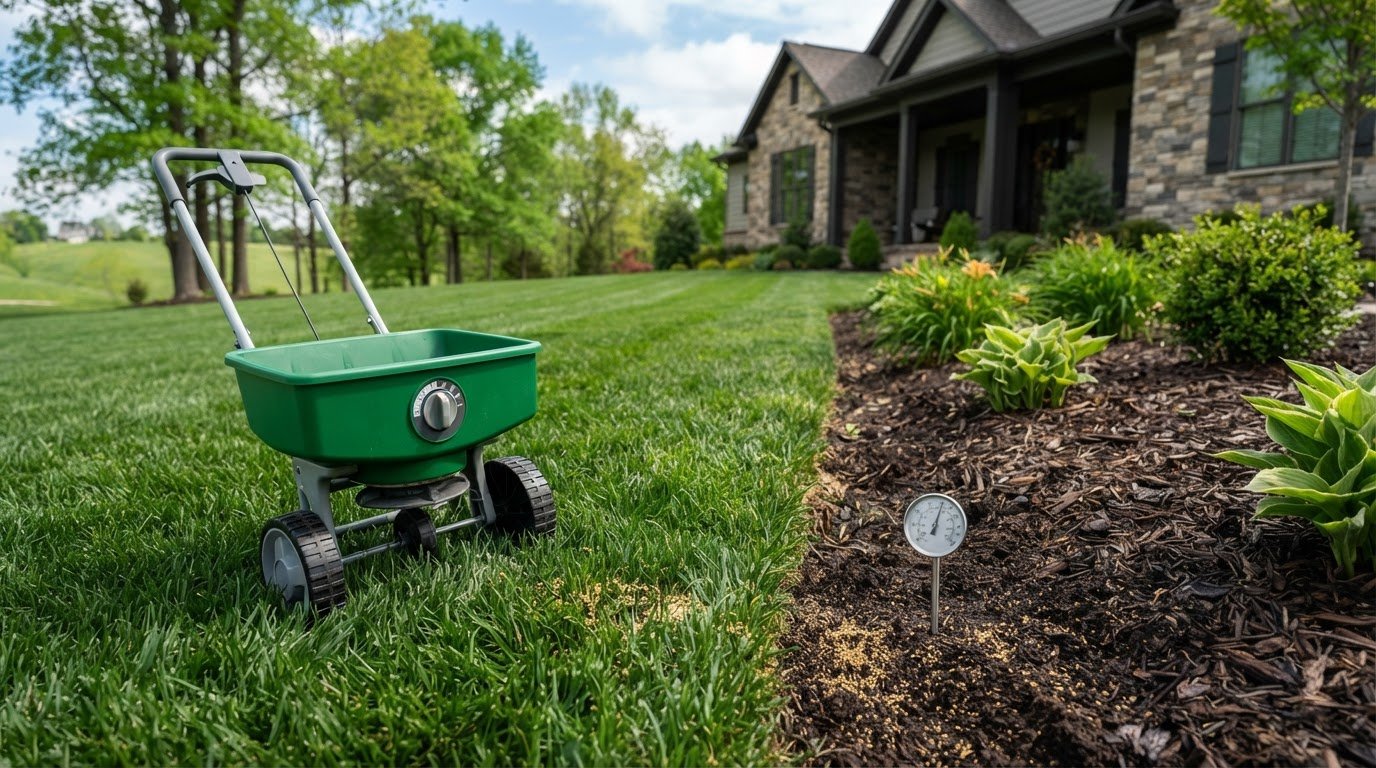
Crabgrass control depends on timing as well as identification. A pre-emergent herbicide can form a barrier that prevents crabgrass seeds from germinating. In Kentucky, apply it in spring when soil temperature reaches 50 to 55 degrees Fahrenheit. This approach targets annual weeds before seedlings emerge; it won’t remove established plants. Follow the product label for application directions and lawn-use limits.
Wild violets are broadleaf perennials with rounded leaves and small purple flowers. Their thick mats can compete with lawn grass for nutrients and space. Extensive roots make removal difficult, while waxy leaves can prevent control products from sticking well. Pulling the leaves without removing the roots may let the plant return. Dense patches may require repeated control applications.
Look closely at nutsedge before treating it. Its upright, grasslike leaves often grow faster than nearby turf, and its triangular stem distinguishes it from true grasses. Nutsedge reproduces underground through nutlets, so pulling visible shoots may leave underground growth behind. Moist patches are a useful clue, especially in warm weather. Correct identification matters because a product intended for crabgrass may not control nutsedge.
Use the same inspection routine across the lawn: note whether the plant grows upright or spreads low, check its leaf and stem shapes, and look for flowers or seedheads. Then consider the location, such as compacted soil, shade, or damp ground. These details help you identify the weed and choose a suitable control method, while showing where lawn conditions may be giving it an advantage.
In Cincinnati, Dayton, and Northern Kentucky, a single crabgrass plant can produce up to 75,000 seeds during one growing season. Kentucky plantain seed heads can produce up to 20,000 seeds.
3. What are the Worst Weeds in the Lawn?
The toughest lawn weeds spread quickly, crowd turf, or return from persistent roots. In Kentucky, crabgrass is an annual grassy weed that thrives in hot, dry weather and competes with lawn grass. Look for low, spreading growth that fills thin spots rather than blending with established turf. As crabgrass dies back, it can leave bare areas where more plants may take hold.
Other grassy weeds have different identifying clues. Goosegrass has a distinctive white or silver center where its leaves emerge, separating it from other coarse grasses. Annual bluegrass germinates in fall, so new patches may appear as temperatures cool. Grasslike appearance alone isn’t enough to identify a plant. Check the center of the growth, leaf arrangement, and season, and compare these features with the surrounding lawn.
Broadleaf weeds stand out through their leaves, flowers, or low mats. Broadleaf plantain is a perennial with large leaves and pronounced parallel veins, often growing in compacted soil. Common chickweed is a winter annual that can form dense mats in bare or thin lawn areas. In Kentucky, it grows 2 to 6 inches high and can spread into a mat 3 to 8 inches wide. Its five white petals look divided into ten, a useful close-up clue.
Henbit is another winter annual to recognize. Its square stems carry slender pink flowers, distinguishing it from many grassy weeds. Creeping Charlie, also called ground ivy, is a perennial with small, round leaves and purple flower clusters. Its creeping stems spread across the lawn, so pulling individual leaves may not remove connected growth. Follow the stems along the ground to see how far the patch extends.
A weed-control program works best when it distinguishes annual weeds from perennials. Annual bluegrass and chickweed emerge on seasonal schedules, while plantain and Creeping Charlie can persist. Match the timing and method to the weed’s life cycle, then address the lawn conditions supporting its growth. Compacted soil can favor plantain, while thin turf gives spreading weeds room to establish. A method suited to one category may not work for another.
Kentucky bluegrass and Bermudagrass can crowd out weeds when they suit the lawn and grow thickly. Healthy turf competes for light, water, and space, limiting opportunities for new plants. Identify the weed first, then consider whether thinning, compaction, or seasonal growth explains its location. For recurring patches that remain difficult to identify or manage, share your lawn concerns and discuss suitable next steps.
4. White clover lawn characteristics
White clover is easiest to recognize by its leaves: each has three rounded leaflets. The leaves often have pale markings, and the plant grows low, spreading outward across the lawn. Small white flower clusters provide another clue when present. These features help distinguish clover from grass, dandelion leaves, and other broadleaf plants.
Three leaflets alone don’t always settle identification. Black medic can also have three rounded leaflets, so compare the whole plant rather than relying on one feature. Check the flowers, leaf markings, and growth pattern together. Woodsorrel has three heart-shaped leaflets, unlike clover’s rounded leaves. Examining several leaves can help prevent a mistaken weed-control choice.
Soil conditions can help explain clover patches. White clover tends to perform best in Kentucky lawns with low soil pH. Its shallow roots also let it spread quickly where grass is thin and offers little competition. In those areas, clover can occupy open space that healthy turf might otherwise fill. Low pH and sparse grass are clues to investigate, not proof of a single cause.
Clover also fixes nitrogen, setting it apart from weeds that simply compete for lawn resources. That trait doesn’t mean every homeowner wants clover in a uniform turf lawn. Decide whether you want to retain or reduce it before starting weed control. If removing clover is the goal, also address thin turf and soil conditions, or open spaces may remain available for new plants.
Start with a practical inspection. Find a patch, examine several leaves, and note whether the surrounding grass looks thin. Then consider soil pH rather than assuming leaf color explains the spread. A soil test can clarify whether the lawn’s acidity needs attention. Improving soil conditions can help Kentucky grass grow under conditions less favorable to clover and other weeds.
Seasonal checks add context but don’t replace identification. During a winter walk, note where clover remains visible and where turf looks sparse, then revisit those spots as growth resumes. Compare the same patches over time instead of judging one isolated leaf. Spreading clover in thin turf, for example, suggests a different underlying issue than a few isolated plants in dense grass. Pair accurate identification with a plan for soil health and turf coverage.
5. Identifying common Kentucky lawn weeds
Identifying common lawn weeds in Kentucky is easier when you compare several features. Check leaf shape, stem form, flowers, growth direction, and the ground around each plant. A single clue can mislead: three rounded leaflets suggest clover, while three heart-shaped leaflets point to woodsorrel. Purple flowers and creeping stems help distinguish ground ivy, also called Creeping Charlie, from upright weeds.
At the seedling stage, weeds may have only a few small leaves, with flowers and mature growth patterns not yet visible. Check leaf arrangement and stem shape, then note whether the plant grows upright, forms a low mat, or spreads from a central point. Young broadleaf weeds such as dandelion, for example, begin with leaves rather than grasslike blades.
Season and growing conditions can narrow the possibilities. Henbit is a winter lawn weed with square stems and slender pink flowers as it matures. Common chickweed forms low mats, while prostrate knotweed grows close to the ground. Annual bluegrass germinates in fall, and purple dead-nettle prefers full sun. Note whether a patch is in shade, compacted ground, or a moist area; those conditions add useful context to lawn-care decisions.
Some weeds can harm people or animals. Pokeweed berries and roots are toxic and should not be eaten, while poison ivy causes a contact rash when touched. Keep children and pets away from unknown plants, especially if they might chew them or brush against irritating foliage.
To confirm a lawn weed’s identity using University of Kentucky resources, compare clear photos and observed features with the university’s weed-identification guidance. Include close views of leaves, stems, flowers, and the whole plant, plus notes about its location and growth habit. If the plant is still a seedling, photograph it again as it develops; later features can separate lookalikes.
Before choosing a control method, photograph the plant, note its location, and compare its visible features with a reliable identification guide. Goosegrass, for instance, has a white or silver center, while woodsorrel has heart-shaped leaflets. A triangular stem indicates a sedge rather than a grass. These details help prevent treating a plant based only on its color or the shape of one leaf.
Once you identify the weed, consider how it spreads and which lawn conditions support it. Creeping stems, underground growth, seedheads, and seasonal emergence each point to different control needs. A plant thriving in thin turf may also signal that the surrounding grass needs attention. Matching the weed to its growth habit and environment gives you a clearer basis for management.
5. How do you distinguish weeds from common Kentucky lawn grasses?
Compare the plant’s growth pattern with the nearby turf. Kentucky bluegrass and Bermudagrass can crowd out weeds when they grow thickly. A weed may differ in blade width, color, growth direction, or how it joins neighboring plants. Check several shoots across the patch rather than judging a single blade.
Look at the leaf and stem together. True grasses generally have narrow blades, while broadleaf weeds such as dandelion have wider leaves. Sedges resemble grasses, but a triangular stem is a clue that the plant is a sedge. Creeping Charlie differs from turf with its rounded leaves and creeping stems. These contrasts help separate grasslike weeds from desirable lawn plants.
Compare the suspected plant with these visible clues:
- Kentucky bluegrass: Observe whether the grass forms part of the established turf rather than a separate coarse patch.
- Bermudagrass: Check whether its growth blends into the lawn or appears as a distinct, unwanted plant.
- Goosegrass: Look for its white or silver center, which distinguishes it from ordinary turf growth.
- Nutsedge: Feel the stem carefully; its triangular shape separates it from true grasses.
Growth habit can clarify a confusing patch. Crabgrass spreads low through thin areas, while uniform lawn grass usually grows as part of the existing turf. Annual bluegrass may appear after fall germination, so the season can help explain new growth. A patch that stands apart in texture, color, or direction deserves a closer look before treatment.
Check how the plant attaches and spreads across the ground. Creeping stems can connect leaves that appear separate, while a clump may emerge from one central point. Broadleaf weeds often have a distinct shape unlike narrow grass blades. Examine the plant’s base and nearby shoots, then note whether it forms a mat, a clump, or part of the lawn’s continuous cover.
Identification matters because controls intended for broadleaf weeds can affect desirable plants differently from treatments for grassy weeds. First determine whether the target is a grass, sedge, or broadleaf plant. Then consider the lawn species and the weed’s location. Kentucky bluegrass and Bermudagrass can compete with weeds when healthy and dense, but bare or thin areas leave room for unwanted growth.
For recurring patches that are difficult to distinguish from turf, request help identifying your lawn’s weed problem. A clear description of the patch, its leaves, and growth pattern helps guide the next step.
Palisades Outdoor Solutions: Lawn Care & Mowing
Palisades Outdoor Solutions provides Lawn Care& Mowing and Landscape Maintenance for homeowners managing uneven or weed-affected lawns. After identifying a weed, consider the condition of the surrounding turf and whether ongoing lawn care could support a more consistent appearance. Mowing is part of routine property upkeep, while broader landscape maintenance helps keep outdoor spaces cared for as conditions change.
If weeds have left thin patches, lawn care can complement the identification and control steps discussed above. For a broader property refresh, Palisades Outdoor Solutions also offers Mulch & Rock Installation and Landscape Construction. These services enhance landscape areas rather than identify weeds.
Contact Palisades Outdoor Solutions to discuss lawn care and maintenance for your property.
Build a Steadier Plan for Your Lawn
Correct identification is a useful starting point, but lasting lawn care also means noticing how the property changes through the seasons. Track recurring patches, bare areas, and places where turf struggles to fill in. These observations can guide practical maintenance decisions and help address the conditions behind weed growth, not just the visible plants.
Use identifying common lawn weeds in Kentucky as part of a broader approach to a healthy, well-kept outdoor space. Palisades Outdoor Solutions offers Lawn Care & Mowing, Landscape Maintenance, and Mulch & Rock Installation to support property upkeep. The right next step depends on whether you’re focused on lawn condition, general maintenance, or improving landscape beds.
For a thoughtful conversation about maintaining your outdoor space, contact Palisades Outdoor Solutions. A clear plan can help you care for your lawn with confidence through the seasons.
Frequently Asked Questions
What are the Worst Weeds in the Lawn?
The most challenging lawn weeds spread aggressively, persist after removal, or create safety concerns. Crabgrass can seed thin areas, while nutsedge can return from underground nutlets. Creeping Charlie and wild violet can form dense growth that competes with turf. Poison ivy presents a different concern because touching it can cause a contact rash. Set priorities based on whether the main issue is turf loss, regrowth, or exposure risk.
What are the tallest weeds in Kentucky?
Johnsongrass can grow up to 10 feet tall in Kentucky if left alone, making it one of the most conspicuous weeds in an unmanaged area. Its height sets it apart from low-growing lawn weeds such as chickweed and Creeping Charlie. Check whether a tall grasslike plant stands apart from the lawn before mowing or removing it. The plant’s size and growth habit can help distinguish it from maintained turf.
What are the most common lawn weeds in Kentucky?
Common Kentucky lawn weeds include crabgrass, nutsedge, dandelion, broadleaf plantain, chickweed, henbit, white clover, and Creeping Charlie. Which ones appear depends partly on lawn conditions: crabgrass often occupies thin turf, while nutsedge favors moist areas. First note whether the plant grows as grasslike blades, a broadleaf rosette, or a low creeping mat. Grouping it this way narrows identification.
How can you identify crabgrass, nutsedge, and goosegrass in Kentucky lawns?
Crabgrass grows low and spreads outward, often in thin or scalped spots. Nutsedge looks grasslike but has a triangular stem, unlike true grasses. Goosegrass is recognizable by the white or silver center where its leaves emerge. Compare several plants in the patch, since mowing can change their visible shape. These clues help distinguish the weeds before you select a control approach.
How can you identify clover, dandelion, and plantain in Kentucky lawns?
White clover has three rounded leaflets and may produce small white flower clusters. Dandelion has yellow flowers followed by fluffy seedheads, with leaves growing from a central base. Broadleaf plantain has broad leaves with pronounced parallel veins, often close to the ground. Examine the whole plant, including its flowers and leaf arrangement, rather than relying on color alone. These features distinguish the broadleaf weeds from one another.
How can you identify broadleaf weeds such as chickweed, henbit, and ground ivy?
Common chickweed grows close to the ground and bears small white flowers with five petals that appear divided into ten. Henbit has square stems and slender pink flowers. Ground ivy, also called Creeping Charlie, spreads through creeping stems and has rounded leaves with purple flower clusters. Check the stem and growth pattern as well as the flowers to distinguish similar low-growing weeds in Kentucky lawns.
When do common Kentucky lawn weeds germinate, flower, and spread?
Crabgrass germinates in spring, grows through summer, and dies at the first frost. Annual bluegrass germinates in fall. Common chickweed can appear in mid-to-late summer and produce seeds until its life cycle ends in spring. Henbit is a common winter lawn weed. Since weeds follow different seasonal patterns, note when new growth appears and whether flowers or seedheads develop before choosing a control method.
Which Kentucky weeds are annual, perennial, or grassy weeds?
Crabgrass and annual bluegrass are annual grassy weeds, while nutsedge is a sedge, not a true grass. Common chickweed and henbit are winter annual broadleaf weeds. Dandelion, broadleaf plantain, and Creeping Charlie are perennial broadleaf weeds. White clover is a broadleaf plant that can persist and spread in thin turf. Sorting weeds by life cycle and plant type helps explain why one-time removal may not resolve recurring growth.