A mild fall day can make winter seem distant, but water left in irrigation lines or components may freeze and cause damage when a hard freeze arrives. For homeowners, irrigation system winterization Nicholasville is a seasonal task to plan before temperatures drop to around 28°F or lower for several hours.
In Kentucky, the recommended window is October 10 through October 26, before the first hard freeze. Treat those dates as a planning guide, not a guarantee: fall weather varies, and each system has its own layout and components. The right preparation depends on what is installed and how water can be cleared from vulnerable parts.
This guide explains why winterization matters, what a typical service may involve, and how to decide between basic DIY shutdown tasks and professional help. You’ll also find practical steps to prepare for seasonal irrigation maintenance in Nicholasville. Palisades Outdoor Solutions provides irrigation maintenance to help homeowners care for their systems as the seasons change.
Why Irrigation System Winterization Matters in Nicholasville
Winterization prepares an irrigation system for colder weather by reducing water left in components that may be vulnerable to freezing. In Nicholasville, fall conditions can shift quickly, so plan around the local forecast as well as the calendar. The system’s layout, component locations, and existing protections all affect how it should be prepared.
Turning off the controller stops scheduled watering, but it doesn’t necessarily remove water from supply lines, valves, sprinkler heads, or backflow equipment. Those components can hold water even when the system isn’t running. A complete seasonal shutdown needs to account for the equipment itself, not just the controller.
How freezing weather can affect an irrigation system
When water freezes, it expands. If water remains in a confined or exposed component, that expansion can put stress on the material and joints. Depending on the system, damage may appear as a cracked pipe, a leaking valve, a split sprinkler head, or a problem with backflow equipment. Component location and design affect exposure, so freeze risk and preparation needs differ from property to property.
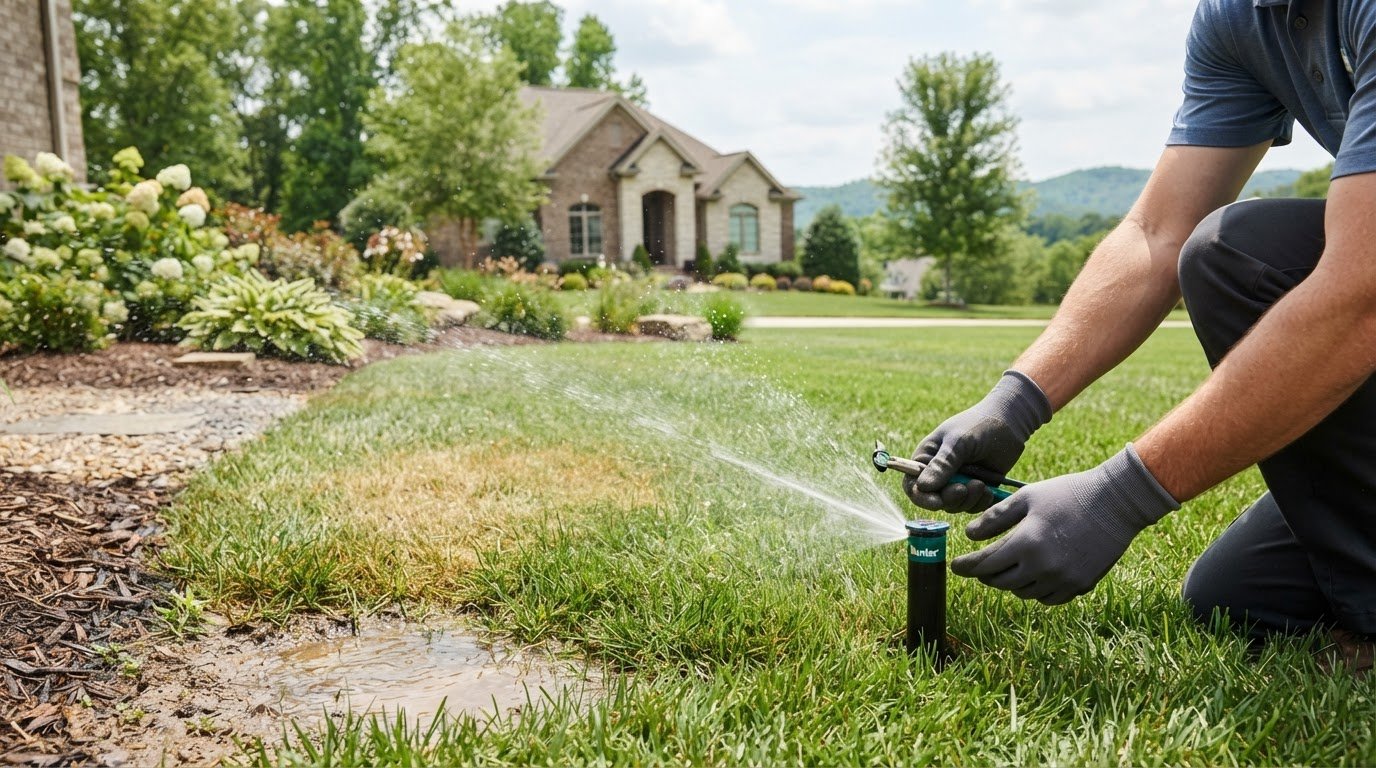
Sprinkler heads deliver water to the landscape, while underground lines and valves have different locations and conditions. Backflow equipment may be above ground and exposed, or arranged differently depending on the installation. The irrigation sprinkler systems overview offers general context on how sprinklers distribute water, but winter preparation should be based on the specific system at your Nicholasville property.
What winterization can and cannot do
Winterization is preventive care, not a promise that every component will remain problem-free. It can reduce freeze-related risk, but it won’t fix an existing leak, worn connection, or damaged part. Note any areas that leaked, heads that didn’t operate properly, or changes in water coverage during the growing season. Those observations can help distinguish routine seasonal preparation from a problem that needs separate attention.
Irrigation repair is a separate concern from winterization. If you’ve noticed a fault, mention it when arranging seasonal care so it can be considered alongside preparation. Winterization and repair may relate to the same system, but they address different needs.
As colder weather approaches, follow the forecast and plan to prepare vulnerable components before freezing conditions arrive. Allow time to account for your system’s setup rather than treating one calendar date as the right answer for every Nicholasville property.
What Professional Irrigation System Winterization Involves
Professional winterization is a system-specific seasonal shutdown intended to reduce the risk of freeze damage. It isn’t one procedure that suits every property. The layout, piping, valves, sprinkler heads, backflow equipment, and controller all affect what preparation is appropriate. For irrigation system winterization Nicholasville homeowners can plan with confidence, the work should match the installed system rather than follow a one-size-fits-all checklist.
A typical service begins with understanding the system, then addresses its water supply, water that may remain in vulnerable components, and controls or exposed equipment that need off-season attention. The exact steps depend on the installation. The University of Georgia irrigation winterization guide also describes how winter preparation can vary with irrigation components and technology.
Inspection and system-specific preparation
Preparation starts with identifying what is installed and how it is arranged. A review may include locating irrigation zones and shutoff points, looking at controller settings, and noting visible concerns such as damaged heads or signs of leakage. These details help determine which parts need seasonal attention. A system with unfamiliar component locations or configurations may need a different approach from one with clearly identified controls.
Before service, note which zones had uneven coverage, leaks, or operating problems during the season. You don’t need to diagnose the cause. Sharing what you observed helps focus attention on the system’s condition as well as its routine shutdown needs.
Water removal and protecting exposed components
The right way to clear water depends on the system and its installation. Compressed air is one possible method, but it isn’t appropriate for every setup. Air pressure that’s too high can damage pipes, valves, sprinkler heads, or other components. A qualified technician should determine whether compressed air suits the system and how to use it responsibly, rather than treating a powerful compressor as a universal solution.
Other components need attention, too. The controller may need an appropriate seasonal setting or shutdown, while backflow equipment may require preparation based on its design and exposure. Switching off the controller alone doesn’t prepare these components or remove water that may remain elsewhere in the system.
Winterization is part of seasonal irrigation maintenance. Leaks and broken components call for separate repair attention rather than shutdown alone. If you’d like to discuss seasonal irrigation service for your Nicholasville property, contact Palisades Outdoor Solutions.
DIY or Professional Winterization in Nicholasville: How to Decide
The decision depends less on whether you’re handy and more on how well you know your irrigation system. If you can identify the layout and follow the manufacturer’s instructions, you may be comfortable with basic shutdown tasks. Unfamiliar zones, hard-to-reach components, or uncertainty about drainage make a system-specific assessment a more practical choice. Irrigation system winterization Nicholasville homeowners arrange should fit the equipment on their property, not rely on a generic rule.
A common mistake is assuming that turning off the controller completes the job. It stops scheduled watering, but doesn’t necessarily clear water from pipes, valves, sprinkler heads, or backflow equipment. If you’re unsure what remains in the system, pause before attempting more involved steps.
When a homeowner may manage basic shutdown tasks
DIY work is most appropriate when you can identify the system’s controls and designated shutoffs and follow the manufacturer’s directions. You may be able to adjust a controller setting or close a clearly identified shutoff if the instructions explain how. Stick to tasks you understand and can perform safely. Don’t assume that basic controls remove water from irrigation lines or components.
Before starting, review the system manual and make a note of unfamiliar labels or components. If the instructions don’t match what you see, or you’re unsure whether a step affects the water supply or a particular zone, don’t guess. Avoid forcing a valve or changing settings when you don’t understand their purpose.
When professional irrigation maintenance may be the practical choice
Professional help can be useful when the system has multiple or unfamiliar zones, components you can’t readily identify, or drainage you don’t know how to assess. A technician can review the layout and components, then determine which preparation method is appropriate. This is particularly important if compressed air is being considered: unsuitable equipment or excessive pressure can harm irrigation components.
Use these questions to guide your decision:
- System familiarity: Can you locate the relevant controls, shutoffs, and zones without guessing?
- Method and equipment: Do you know what the system requires, and can you carry out the steps correctly?
- Component complexity: Are backflow equipment, valves, or other parts arranged in a way you don’t understand?
- Confidence in the result: Can you tell whether vulnerable components have received the attention they need?
There isn’t one right answer for every Nicholasville homeowner. You may handle straightforward controller tasks while arranging help for parts of the system you can’t confidently prepare. Or you may prefer seasonal irrigation maintenance that accounts for the full setup. Choose an approach that matches your knowledge and the system’s complexity, rather than relying on the controller alone.
When to Schedule Irrigation Winterization in Nicholasville
Plan winterization before freezing conditions become imminent. Central Kentucky fall weather can shift from mild days to colder nights, so timing depends on the forecast and your irrigation setup. There isn’t one date that suits every fall or every Nicholasville property. Scheduling ahead gives you time to understand what your system needs and arrange seasonal work before a hard freeze.
Use weather conditions, not a guaranteed calendar date
Monitor local forecasts as temperatures change, paying attention to the possibility of sustained freezing conditions rather than reacting only to a single cool night. The recommended Kentucky window, October 10 through October 26, is a useful prompt to plan, but it can’t guarantee safe timing every year. If colder conditions are forecast earlier, prepare accordingly instead of waiting for the calendar window to end.
System details matter as well. A property with exposed equipment or an unfamiliar layout may require more planning than one with clearly identified components and shutoffs. If the forecast turns colder sooner than expected, don’t assume controller shutdown alone will prepare the system. Identify what your setup requires and leave time to address it.
Prepare your property before the service visit
A few simple steps can make seasonal service more organized. Gather what you know about the system, note visible issues, and make the controller and relevant information accessible. This preparation doesn’t replace winterization, but it helps the work account for your property’s setup and any problems you noticed during the watering season.
Use this checklist as you plan:
- Locate the controller and note its current settings or any instructions you use to operate it.
- Identify known shutoff points and list any zones or components whose locations you already know.
- Record visible concerns , such as leaks, damaged sprinkler heads, or areas that didn’t water as expected.
- Share prior issues or repairs that could affect how the system is assessed for winter.
- Watch the forecast and arrange seasonal attention before freezing conditions become imminent.
Fall preparation often includes more than irrigation. Coordinating system shutdown with broader landscape maintenance can help organize seasonal property care, while still giving the irrigation system attention suited to its components.
For irrigation system winterization Nicholasville homeowners can plan around local conditions, start monitoring forecasts early and gather system notes before scheduling. Contact Palisades Outdoor Solutions to arrange seasonal irrigation service.
Arrange Irrigation Winterization Service in Nicholasville
Seasonal irrigation maintenance gives your system attention as the watering season ends and colder weather approaches. Palisades Outdoor Solutions provides irrigation maintenance for homeowners in Nicholasville. Winterization prepares the system for the season ahead, while repair addresses damage or faults that have already been identified. If you’ve noticed a leak or broken component, mention it when discussing seasonal care so it can be treated as a separate concern.
A little information about your property can make a conversation about irrigation system winterization Nicholasville needs more productive. You don’t need a technical inventory. Share what you know, point out anything that has changed, and note which parts of the system are unfamiliar. Your observations help describe the system’s needs without requiring you to diagnose the cause.
What to share when arranging seasonal irrigation care
Helpful details include the number or names of zones, where you believe the shutoffs are, and any controller information you can readily find. Mention visible leaks, damaged sprinkler heads, uneven watering, or areas that didn’t operate as expected. If the system has had previous leaks or freeze-related concerns, share that history too. These observations help explain what you’ve noticed; you don’t need to know the technical cause.
If you have a system manual or notes from prior maintenance, keep them nearby to help clarify unfamiliar labels or settings. Don’t operate components just to gather information if you’re unsure how they work. A clear description of what you’ve observed is enough to start a practical discussion.
Connect winter preparation with ongoing property care
Winter preparation is one part of caring for an outdoor irrigation system through changing seasons. Seasonal attention keeps the system’s condition in view, while repair focuses on specific problems such as leaks or damaged components. These needs may arise together, but they call for different attention. Palisades Outdoor Solutions provides irrigation maintenance for seasonal property care.
As you plan, consider what you noticed during the watering season, which parts of the system you can identify, and how the fall forecast is changing. Sharing those points keeps the conversation grounded in your Nicholasville property rather than a generic checklist. You can also discuss seasonal irrigation care alongside other outdoor maintenance as part of a plan for your landscape.
For homeowners who want help preparing an irrigation system before freezing weather, seasonal service provides a way to address the system while keeping existing repair needs distinct. Discuss irrigation service for your property with Palisades Outdoor Solutions.
Give Your Irrigation System a Thoughtful Seasonal Plan
Use the transition between watering seasons to make a clear plan for your property. Note any concerns you’ve observed and decide whether you’re comfortable handling basic controller tasks or would prefer help with seasonal preparation. A considered approach to irrigation system winterization Nicholasville homeowners can use starts with understanding the needs of the specific system.
Palisades Outdoor Solutions provides irrigation maintenance for Nicholasville homeowners. Seasonal maintenance supports care as the weather changes, while repair addresses identified damage or operating problems. Keeping those needs distinct can help you explain what you’ve noticed and focus on the right next step.
You don’t have to work out every technical detail before starting the conversation. Share what you know about your irrigation system and the concerns you’ve observed. Contact Palisades Outdoor Solutions to discuss irrigation winterization and plan seasonal care for your landscape.
Frequently Asked Questions
When should I winterize an irrigation system in Nicholasville?
For irrigation system winterization in Nicholasville, Kentucky’s recommended window is October 10 through October 26, with preparation completed before a hard freeze. A hard freeze is around 28°F or lower for several hours. Treat those dates as a planning guide, not a guarantee: monitor local forecasts and consider your system’s layout. If colder conditions are forecast earlier, plan accordingly rather than waiting for the calendar window to end.
Is turning off the sprinkler controller enough to winterize an irrigation system?
No. Turning off scheduled watering prevents the controller from calling for irrigation, but it doesn’t necessarily shut off the water supply or remove water from lines and equipment. A system can be inactive at the controller while a valve or pipe still contains water. Follow the controller’s instructions for its seasonal setting, then consider the other components separately. Controller shutdown alone isn’t complete winter preparation.
Can I winterize my sprinkler system without an air compressor?
Possibly. The appropriate water-removal method depends on the system’s design and whether it has components intended for manual drainage. Check the manufacturer’s instructions for your specific setup before operating drains or shutoffs. If you can’t tell how the system is configured, don’t improvise a method or assume gravity will empty every section. A system-specific assessment can help determine whether an alternative to compressed air is suitable.
What happens if water freezes inside an irrigation pipe?
Freezing water expands and can put pressure on a pipe, fitting, or nearby component. If the material or joint can’t withstand that stress, a crack or leak may result. Damage isn’t inevitable each time water freezes, and it may not be visible immediately, especially in buried sections. After a freeze, watch for unexpected wet areas or loss of pressure when the system is later checked, and have suspected damage assessed before normal use.
Does winterization protect sprinkler heads and backflow equipment?
It can reduce freeze-related risk for sprinkler heads and backflow equipment when preparation suits their design and placement, but it doesn’t guarantee that every component will be protected from every failure. Exposed equipment, for example, may have different needs from buried lines. Note where visible components are located and mention any known problems. Backflow equipment may also have specific care instructions, so follow the guidance for its particular model and installation.
Can irrigation winterization be done after the first freeze?
Yes, winter preparation can still be useful after an early freeze, but it can’t reverse damage that may already have occurred. Don’t assume the system is unharmed or that a later shutdown will fix a cracked part. Before the next watering season, look for visible leaks, broken heads, or areas that stay wet, and address concerns before regular operation. If another freeze is forecast, arrange appropriate preparation as soon as practical.
How should I set my irrigation controller for winter?
Use the controller manufacturer’s instructions to select the appropriate seasonal shutdown or suspension setting. Models differ, so use functions such as off or rain delay only if your unit provides them and its manual explains their use. Changing a controller setting affects scheduled operation, not necessarily water in the irrigation system. Record your usual program first if you’ll want to restore it during spring startup.