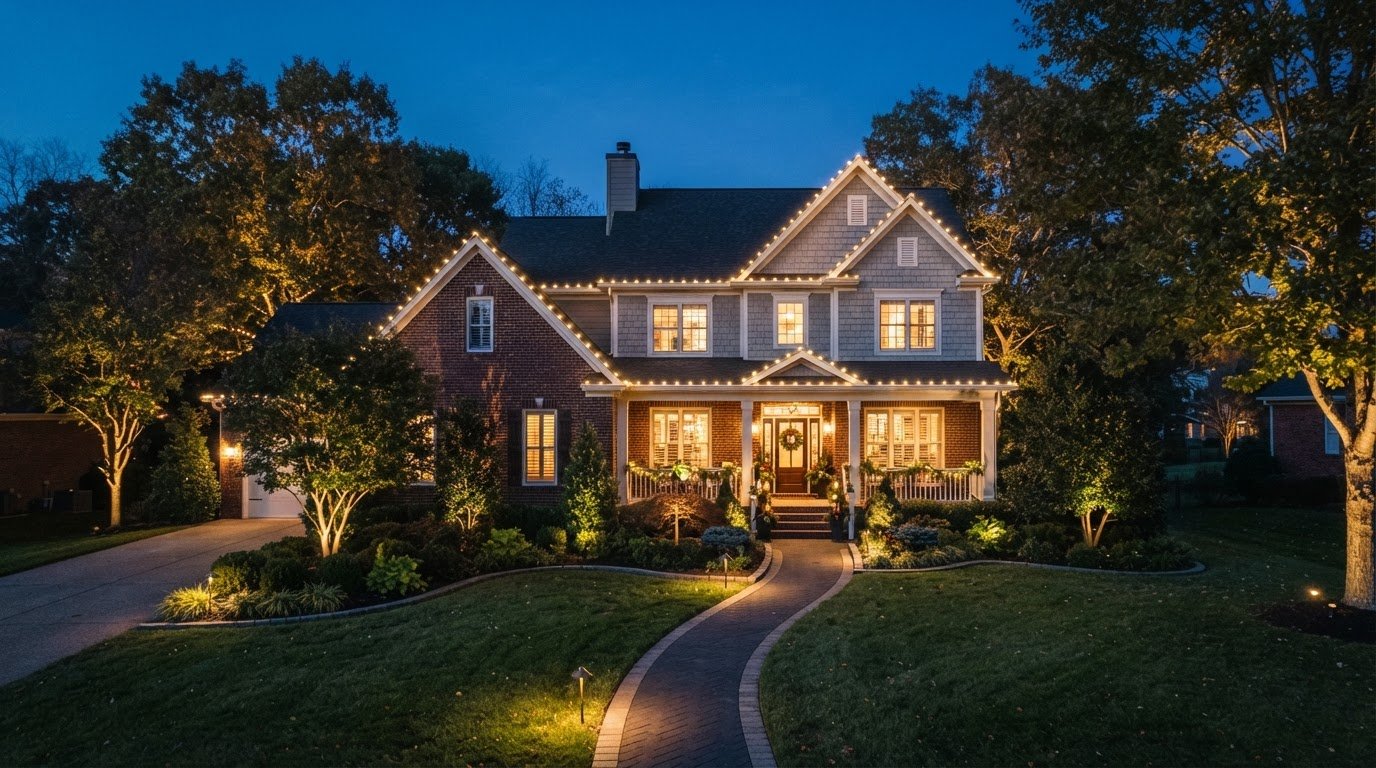
Darkness shouldn’t decide when your patio stops being useful. Thoughtful deck and patio lighting in Nicholasville can make steps, transitions, and seating areas easier to see while giving the space a welcoming feel after sunset. LED outdoor fixtures also draw roughly one-seventh the power of equivalent halogen fixtures.
It makes sense to want more than a bright deck. The right lighting should support comfortable movement and preserve the atmosphere of your outdoor space. A thoughtful plan balances useful illumination with softer accents, so the light feels intentional rather than harsh.
This guide explains how to plan fixture placement, lighting effects, and practical design features. You’ll also learn how landscape lighting can make a patio more useful in the evening and what to consider when planning a project for your home.
Outdoor lighting projects in Nicholasville, Kentucky
In Nicholasville, outdoor lighting works best when it supports safe movement and makes each patio area useful after dark. A plan can combine practical illumination, architectural lighting, and automated controls without flooding the entire outdoor space.
For a visual example, watch this overview of deck fixtures and evening design:
Lighting Zones for Patios and Fences
Plan lighting around activities: steps and paths need clear visibility, while seating areas benefit from softer, directed light. For deck lighting, consider fixtures at stair risers and rail posts, then add focused light near dining or conversation areas. Fence lights can define the patio edge, while a downlight in a nearby tree can filter through branches and cast patterned shadows.
Give each zone a clear purpose. A bright fixture aimed across the whole yard can create glare, while layered lights distinguish the deck, fence line, and garden border. For deck and patio lighting in Nicholasville, consider how people move between doors, steps, and seating before choosing fixture positions.
Outdoor Lighting Planning and Installation
Walk the deck and patio after sunset, noting dark steps, doorways, and transitions to the yard. Sketch fixture locations, the power source, wiring route, and control points before installation. This helps coordinate architectural lighting with everyday needs and prevents chairs, railings, or plants from blocking a fixture’s beam.
Low-voltage systems can use app controls, voice commands, schedules, scenes, and remote troubleshooting. Group fixtures by purpose, such as a step-light scene and a softer seating scene. A Nicholasville outdoor lighting plan can bring those functional and visual details together.
Permits and Code Requirements
For Nicholasville projects, permit and code requirements depend on the work, especially if the plan adds or alters fixed wiring or connects fixtures to household power. Identify the wiring approach and fixture locations first, then have a qualified electrical professional determine the applicable local requirements before fixed electrical work begins.
For a DIY project, map fixture locations, follow product instructions, and turn off power before handling existing electrical connections. Avoid working on household-voltage wiring yourself, as incorrect connections can create shock or fire risks. A qualified professional can handle wiring changes and assess whether the installation suits the project.
Energy Use and Operating Costs
LED outdoor fixtures draw roughly one-seventh the power of equivalent halogen fixtures. Actual use depends on system wattage, operating hours, and which fixtures run together.
Timers and schedules can limit unnecessary operating hours, while separate scenes let homeowners use only the lights they need. For example, a step-light setting can illuminate the route to the door without running every patio and fence fixture. Compare fixture wattage and planned schedules when considering energy use.
The company says it uses exclusively solid brass and copper outdoor lighting fixtures in Nicholasville, Kentucky. LED outdoor lighting fixtures draw roughly 1/7 the power of equivalent halogen fixtures. Outdoor lighting repair in the United States typically costs 100 to 400, averaging 100 to 300 per fixture.
Deck and patio lighting contractors in Nicholasville
A useful lighting plan connects fixture placement, controls, and maintenance to how people use each outdoor area. For deck and patio lighting in Nicholasville, start with the problem to solve, such as a dark stairway, a dim dining table, or lights that are difficult to manage.
During planning, map the deck, patio, doors, steps, and nearby landscape features. Mark where people walk, sit, and gather, then note which fixtures should provide clear task lighting and which should create a softer architectural effect. This inventory gives the system a purpose before installation begins.
Ask the design team to explain how each fixture suits the layout. A stair light, for example, should illuminate each tread without shining directly into someone’s eyes. A post light can define a railing, while a focused fixture near a table can support evening meals. Review the beam direction from both seated and standing positions.
Smartphone controls make it easier to adjust outdoor lighting for different uses. Lighting systems installed in Nicholasville can include app and voice controls, scheduling, scenes, and remote troubleshooting. A homeowner might create one scene for dinner and another for moving between the patio and back door.
Smart-home controls work best when the lighting plan fits how you already manage your home. Consider whether voice commands, scheduled operation, or app adjustments suit your routine. Set a schedule for regular evening use, then use manual controls when guests stay outside later. Scenes can group selected fixtures, so one setting changes several lights together.
Maintenance matters when a fixture dims, shifts, or stops working. Outdoor lighting repairs can involve diagnosing the fault, replacing components, rewiring, or repositioning a fixture. Start by noting which lights are affected and whether the problem involves one fixture or an entire section. This distinction can help narrow down the issue before repair work begins.
Keep the layout accessible for inspection after installation. Clear leaves or plant growth from fixture lenses, check that fixtures still point toward steps and seating, and note repeated outages. These observations can guide landscape lighting maintenance and help preserve the intended coverage as the outdoor space changes.
If you’re planning a new layout or reviewing an existing one, share the areas you use and the control style you prefer through the project contact page. That gives the design conversation a practical starting point, from stair visibility to app-controlled scenes.
Landscape lighting for home security and nighttime safety
Landscape lighting can make exterior routes easier to see and help homeowners notice activity around a patio. It works best as part of a layered plan, with clear light at steps and doors and softer illumination across the surrounding landscape. The goal is useful visibility, not a guarantee against falls or unwanted entry.
Walk the property after dark and note where light changes abruptly. A back door may open onto a dim landing, or a path may disappear beside a planting bed. Prioritize these transitions, where people need to see changes in surfaces, edges, and routes.
For nighttime safety, direct light toward walking surfaces rather than into someone’s eyes. Step lights can reveal stair edges, while a shielded fixture near a doorway can illuminate the threshold. Check each fixture from standing and seated positions: a beam that seems comfortable near the door may shine toward patio seating.
Perimeter lighting can define the boundary between a patio and the yard without making every corner equally bright. Low fixtures along a fence can mark the edge, while a downlight in a nearby tree can create a broader pool of light. Leave darker areas between selected points when continuous brightness would cause glare or flatten the landscape’s appearance.
Use light to highlight useful features as well as walking routes. A focused beam can bring a stone wall, garden bed, or mature tree into view, helping homeowners understand the outdoor space after sunset. Keep decorative lighting separate from stair and path lighting, so an attractive focal point does not replace practical illumination.
Review sightlines from the house, patio chairs, and gates. A fixture aimed across a window, for example, may create reflections indoors, while an exposed bulb near a seating area can feel harsh. Adjusting the angle or adding a shield can keep light on the intended surface and reduce spill into neighboring spaces.
Keep landscape lighting effective as the property changes. Trim branches that block a path fixture, clear leaves from lenses, and look for shifted lights after garden work. A simple nighttime walk can reveal a new shadow near a step or a dark patch beside a gate. Record the location and adjust the fixture before that area becomes a regular route.
Balance safety and appearance by giving each fixture a clear job: mark a stair, illuminate a doorway, define a patio perimeter, or highlight a landscape feature. This creates a coherent exterior plan and helps avoid adding lights without a specific purpose.
Lighting layouts can be refined over time by checking whether each light still serves its intended purpose and whether the overall scene remains comfortable from common viewing points. Palisades Outdoor Solutions has been in business since 2016, a detail readers may consider when researching deck and patio lighting Nicholasville services. For additional guidance on lighting design, The Masters of Landscape Lighting book was expected to be available in bookstores and on Amazon in Summer of 2026. Treat any design advice as a complement to an after-dark walk around the property, since the best placement depends on the routes and sightlines already identified.
Custom patio lighting design
A tailored lighting design starts with how you use the patio, then matches fixtures to those activities. A pergola used for dinner, for example, needs a different light pattern from a path leading to the garden. A clear plan can enhance the outdoor setting while supporting visibility and security.
For pergolas, place light where it reaches the table without shining into seated guests’ eyes. A fixture beneath a beam can illuminate the dining surface, while softer perimeter lights define the structure. Direct the beam downward and consider how the pergola’s posts and roof affect shadows after dark.
Identify the dining table’s position before selecting fixture locations. A focused light above the table supports meals and cleanup, while nearby accent fixtures can highlight stonework or planting beds. Avoid relying on one bright source. Coordinated fixtures can make the space feel balanced without washing out its details.
Pathways need a continuous visual cue between the patio, steps, and garden entrance. Low fixtures can mark turns and changes in direction, while a light near a gate can reveal the final transition. Check the route from the patio door at night and adjust placements where plants or furniture interrupt the view.
For a distinctive effect, moonlighting uses a downlight placed high in a tree near the patio. Light passes through branches and creates moving shadows across the ground. This adds depth to an outdoor lighting design, especially when paired with restrained path lights rather than competing decorative fixtures.
Choose fixtures for their role and placement, not appearance alone. A shielded fixture can focus light on a wall or walkway, while an open beam may create glare near seating. Finish and scale matter too: a prominent fixture can suit a large pergola, while a smaller fitting may complement a narrow path.
Before installation, mark the dining area, pergola beams, path edges, and focal features on a simple sketch. Review the intended view from the house and each seat. This can reveal a fixture that would obstruct a sightline or cast an unwanted shadow across a frequently used surface.
For deck and patio lighting in Nicholasville, combine task lighting in dining and walking areas with selective accents. The result should make each zone easy to see while preserving the patio’s evening character, with every fixture serving a clear purpose.
LED deck lighting vs solar deck lighting cost and performance
LED and solar deck lights differ in their power source, consistency, and installation needs. Compare the fixture location, available sunlight, desired brightness, and the route people use. A light beside a shaded stair may need a different solution from an accent fixture on an open railing.
LED fixtures connect to an electrical lighting system, which can provide dependable illumination where sunlight is limited. Their placement can follow the deck’s layout, including covered steps, railings, and seating areas. Consider the wiring route and control plan alongside fixture positions, so practical lighting is part of the installation plan from the start.
Solar fixtures collect energy through their panels, so performance depends on access to sunlight. A panel beneath a deep pergola or beside a shaded wall may receive less exposure than one on an open railing. Before choosing solar, observe the proposed panel location during the day and consider shade from trees, rooflines, and nearby structures.
Operating costs also depend on system type and use. Solar fixtures draw power from collected sunlight, while an electrically powered system’s use depends on wattage and operating hours.
Installation costs depend on the equipment, wiring needs, fixture locations, and labor involved. For a fair comparison, list the same lighting goals for each option, such as illuminating steps, marking a path, or highlighting a seating area. Then compare the equipment and installation requirements for those goals rather than comparing fixture prices alone.
Maintenance differs, too. Keep solar panels clear of leaves and dirt, and check whether nearby plants shade them. For wired LED fixtures, inspect lenses, connections, and aiming after landscape work. If a light dims or stops working, note whether one fixture or a whole group is affected. That detail can help identify whether the issue concerns a single fitting or the wider system.
Choose based on function. Solar can suit an open location where a simpler installation is useful; wired LED lighting can better serve a shaded stair or a route requiring consistent illumination. Some patios can combine both, using wired fixtures for essential steps and solar accents where sunlight reaches the panel.
Compare the site conditions and lighting goals before settling on a system. Discuss your deck lighting project and the layout you want to illuminate.
Palisades Outdoor Solutions: Lawn Care & Mowing
Palisades Outdoor Solutions can maintain the broader property around a deck or patio lighting project. Lawn Care & Mowing and Landscape Maintenance support a tidy setting, while Mulch & Rock Installation and Landscape Construction can address surrounding landscape features.
Consider these services when overgrown lawn edges, untidy planting areas, or changing landscape features affect how you use the outdoor space. Regular property care can help keep paths and patio approaches clear, complementing a thoughtful lighting layout without replacing electrical installation or fixture repairs.
For a coordinated plan, describe the outdoor areas you want to maintain and how you use them after dark. Contact Palisades Outdoor Solutions to discuss your property.
Make Your Outdoor Space Ready for Evening
Choose your next step by considering how you want your outdoor space to work after sunset. A considered plan for deck and patio lighting in Nicholasville can begin with a priority, such as making a favorite seating area more inviting or improving the route between the house and garden. From there, the layout can develop around your routines and the character of your property.
Palisades Outdoor Solutions can also care for the surrounding landscape with Lawn Care & Mowing, Landscape Maintenance, and Mulch & Rock Installation. These services help maintain the broader outdoor setting alongside your lighting plans.
Bring your goals, preferred lighting atmosphere, and property needs together in a conversation with the team. Contact Palisades Outdoor Solutions to discuss a direction for your outdoor space. A thoughtful plan can help you enjoy your evenings outside with greater comfort and pride in your home.
Frequently Asked Questions
Why Add Landscape Lighting to Your Home?
Landscape lighting can make outdoor areas useful after dark and draw attention to features that disappear at dusk. Lighting a garden wall, for example, can make a patio feel more defined, while a fixture near a side entrance can distinguish the doorway from nearby planting. A planned layout can support evening activities such as dining, reading, or greeting guests while preserving a calm atmosphere indoors and outdoors.