You spend a Saturday morning applying a store-bought treatment only to find that by Tuesday, the dandelions and crabgrass are taller than ever. It's frustrating to invest your hard-earned money and limited time into a yard only to have invasive species take over, leaving you with a lawn that feels more like a burden than a source of pride. You aren't alone in wanting a thick, green carpet that enhances your home's curb appeal while staying well within the City of Nicholasville's eight-inch height ordinance. This guide provides the professional strategies and local timing required for effective weed control Nicholasville KY property owners need to reclaim their outdoor spaces.
We'll explore how a structured approach to fertilization, aeration, and precision timing creates a resilient landscape that naturally crowds out weeds. By understanding the specific needs of Central Kentucky soil and our local climate cycles, you can move away from reactive treatments and toward a predictable, professional maintenance schedule. This expert approach protects your property value and restores the peace of mind that comes from a well-maintained environment.
Understanding Common Weeds in Nicholasville, KY
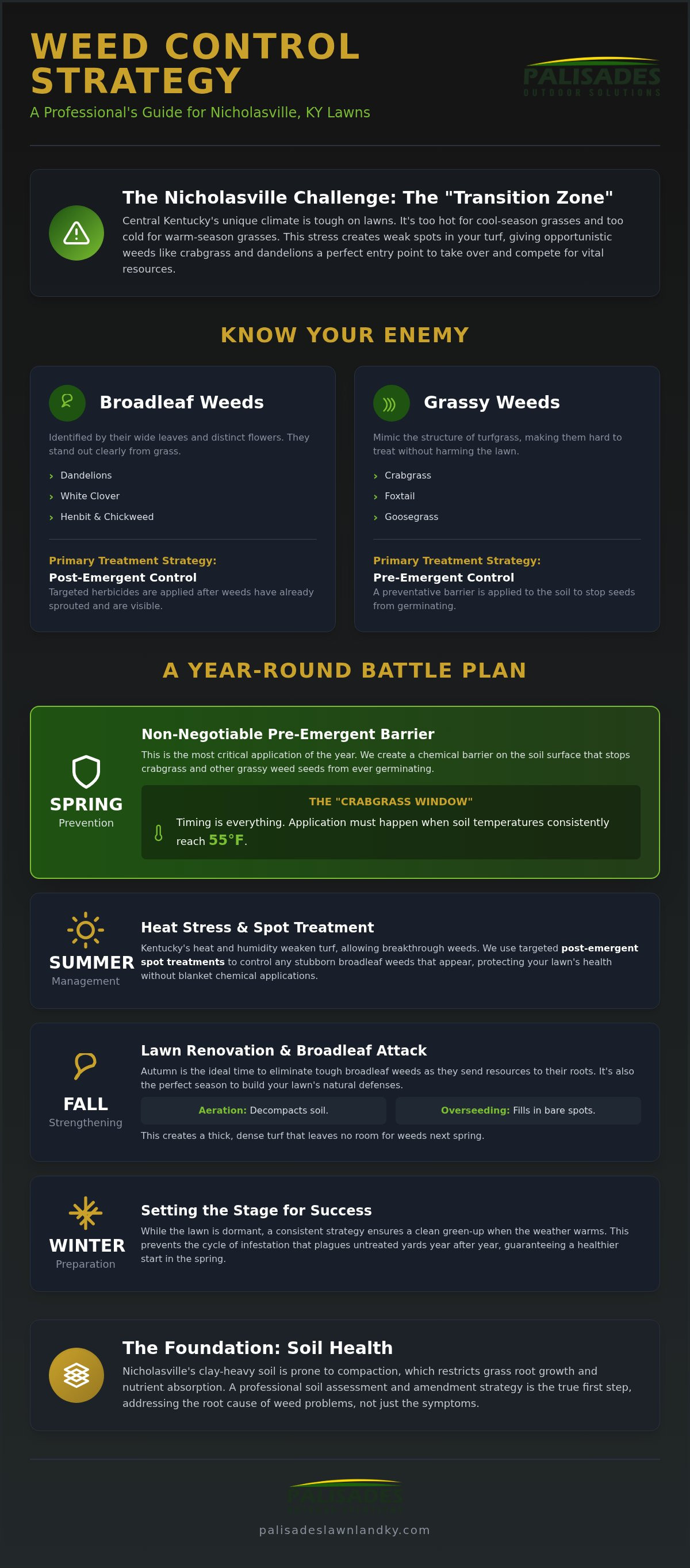
Nicholasville homeowners face a unique set of challenges because Central Kentucky sits in the transition zone. This geographical area is often too far north for warm-season grasses to thrive year-round and too far south for cool-season grasses to stay green without significant stress. This environmental tension creates natural gaps in your turf, giving invaders like crabgrass, dandelions, white clover, and henbit an opportunity to take root. These weeds don't just occupy space; they aggressively compete with your grass for nitrogen, phosphorus, and moisture. When your lawn is thin or stressed, these opportunistic plants quickly establish dominance. Professional weed control Nicholasville KY is essential because it addresses these invaders before they can choke out your grass.
When weeds move in, they act as parasites on your landscape's resources. They have evolved to grow faster and deeper than most turfgrasses, stealing the water and nutrients you've provided for your lawn. This competition creates a downward spiral where the grass becomes weaker, creating even more space for weeds to spread. Breaking this cycle requires a deep understanding of local plant biology and the specific growth patterns of Kentucky's most common weeds.
To better understand the types of weeds you might encounter and how they are addressed, watch this helpful overview:
Broadleaf Weeds vs. Grassy Weeds
Effective management starts with accurate identification, as not all weeds respond to the same treatment. Broadleaf weeds like dandelions and chickweed are easily identified by their wide leaves and distinct flowering patterns. These species often require selective post-emergent herbicides that target the weed's unique physiology without harming the surrounding turf. In contrast, grassy weeds like crabgrass are much harder to eliminate once they've matured. Because they share a similar botanical structure with your lawn, many over-the-counter sprays will kill your grass along with the weed. Professional weed control methods rely on carefully timed pre-emergent barriers to stop these seeds from germinating in the early spring.
The Impact of Local Soil Conditions
Our local soil is famously clay-heavy, which leads to compaction and restricted drainage. This dense environment often limits the root depth of desirable species like Kentucky Bluegrass, while resilient weeds find ways to thrive in the tough conditions. Soil pH also determines which plants will succeed in your yard. If your soil is too acidic, your grass cannot absorb nutrients efficiently, leaving it weakened and vulnerable. A professional soil assessment is the first step in any reliable program for weed control Nicholasville KY . By combining fertilizer and weed control, you address the root cause of the problem rather than just treating the symptoms. This methodical approach ensures your lawn has the structural strength to resist future infestations while maintaining long-term health.
The Science of Timing: Pre-Emergent and Post-Emergent Strategy
Effective weed control Nicholasville KY relies on a strategic combination of two primary methods: pre-emergent and post-emergent applications. Pre-emergent control works by creating a chemical barrier at the soil surface that stops weed seeds from successfully germinating. It's a preventative measure that stops the problem before it starts. In contrast, post-emergent control targets weeds that have already sprouted and are visible in the turf. While both are necessary for a pristine lawn, the preventative approach is significantly more efficient for long-term maintenance.
Precision timing is the most critical factor in this process, especially during the early months of the year. The soil temperature threshold for effective pre-emergent application in 2026 is typically 55 degrees, which marks the exact point when invasive seeds begin to germinate. Professionals refer to this as the "crabgrass window." If you apply the barrier too early, it may dissipate before the seeds wake up; if you apply it too late, the weeds have already established roots that the barrier cannot reach.
Spring and Summer: Prevention and Management
Early spring applications are non-negotiable for anyone wanting to avoid a summer weed explosion. Once the barrier is set, the focus shifts to managing the stress of Kentucky's humid summers. High temperatures can weaken your grass, making it easier for opportunistic species to break through. During this time, we use targeted spot treatments for stubborn perennials. Many of these, such as marestail or poison hemlock, are recognized under the Kentucky Noxious Weed Law for their aggressive nature and ability to spread rapidly across local properties.
Fall and Winter: Setting the Stage for Next Year
Autumn is often the best time to eliminate tough broadleaf weeds like clover and henbit. As these plants prepare for winter dormancy, they transport nutrients down to their root systems, which allows systemic treatments to be more effective. This season is also the perfect time to strengthen your lawn's natural defenses. Utilizing aeration and overseeding helps fill in thin patches with fresh, healthy grass, leaving no room for weeds to take hold in the spring.
A consistent winter strategy ensures a clean green-up when the weather warms. By maintaining a predictable schedule, you prevent the cycle of infestation that plagues many untreated yards. If you're looking for a reliable partner to manage these critical windows, you can request a professional assessment to get started on a year-round plan.
Why Professional Weed Control Trumps DIY Methods
Many homeowners start their lawn care journey with the best intentions, browsing the aisles of local hardware stores for a quick fix. However, the products available to the general public are often diluted versions of the specialized formulas used by experts. Professional weed control Nicholasville KY services utilize commercial-grade herbicides that offer superior efficacy against resilient Kentucky weeds. These products are backed by scientific research, such as the professional weed control recommendations provided by the University of Kentucky, ensuring every application is grounded in proven horticultural data. This level of potency is essential for managing invasive species that have already established deep root systems in our local clay soil.
Beyond the chemicals themselves, the equipment used plays a vital role in the final results. Professional-grade sprayers and spreaders are meticulously calibrated to deliver an exact dosage across every square inch of your lawn. DIY equipment often results in uneven application, leading to "tiger stripes" or patches where weeds continue to thrive while the grass suffers from chemical burn. This precision also supports environmental stewardship. By applying the right amount at the right time, we reduce unnecessary chemical runoff. This targeted approach ensures only the intended plants are affected, protecting the local ecosystem and your desirable turfgrass.
Expertise in Chemical Selection
A "one size fits all" weed killer rarely works in the complex transition zone of Central Kentucky. Using the wrong herbicide at the wrong concentration can lead to significant turf damage, turning a minor weed problem into a costly lawn restoration project. Professionals understand how to identify specific species and select the appropriate selective herbicide that kills the weed without harming the grass. We also rotate these products throughout the season. This rotation prevents weeds from developing a resistance to specific treatments, a common issue for those who use the same retail spray year after year.
The ROI of Professional Lawn Care
While DIY might seem cheaper initially, the hidden costs add up quickly. Wasted product, the purchase of specialized tools, and the time spent researching and applying treatments can outweigh the cost of a professional service. Investing in fertilizer and weed control directly increases the property value of Nicholasville homes by enhancing curb appeal. More importantly, it gives you back your weekends. You can enjoy a lush, green lawn without the stress of managing a complex chemical schedule or maintaining bulky equipment. The peace of mind that comes from a dependable, scheduled service is a luxury that pays for itself in both time and aesthetic quality.