If your lawn seems to struggle despite regular watering and feeding, the problem isn't your effort; it's likely the dense Central Kentucky clay choking the life out of your grass roots. It's a common frustration for property owners in our region. You likely want a lawn that feels thick underfoot, yet you're stuck battling bare patches that weeds easily invade. You aren't alone in feeling that your standard fertilization routine just isn't delivering the results you expected.
By choosing a professional overseeding service Lexington KY, you can finally move past these seasonal struggles and build a resilient landscape. This guide explains how the right approach to soil restoration and seed selection can naturally crowd out weeds and increase your home's curb appeal. We'll cover everything from managing our local transition zone climate to why Turf-Type Tall Fescue is the gold standard for Fayette County lawns in 2026. You'll learn the methodical steps required to turn hard, compacted ground into a healthy, vibrant environment that your family can enjoy all year long.
Why Your Lexington Lawn Needs a Professional Overseeding Service
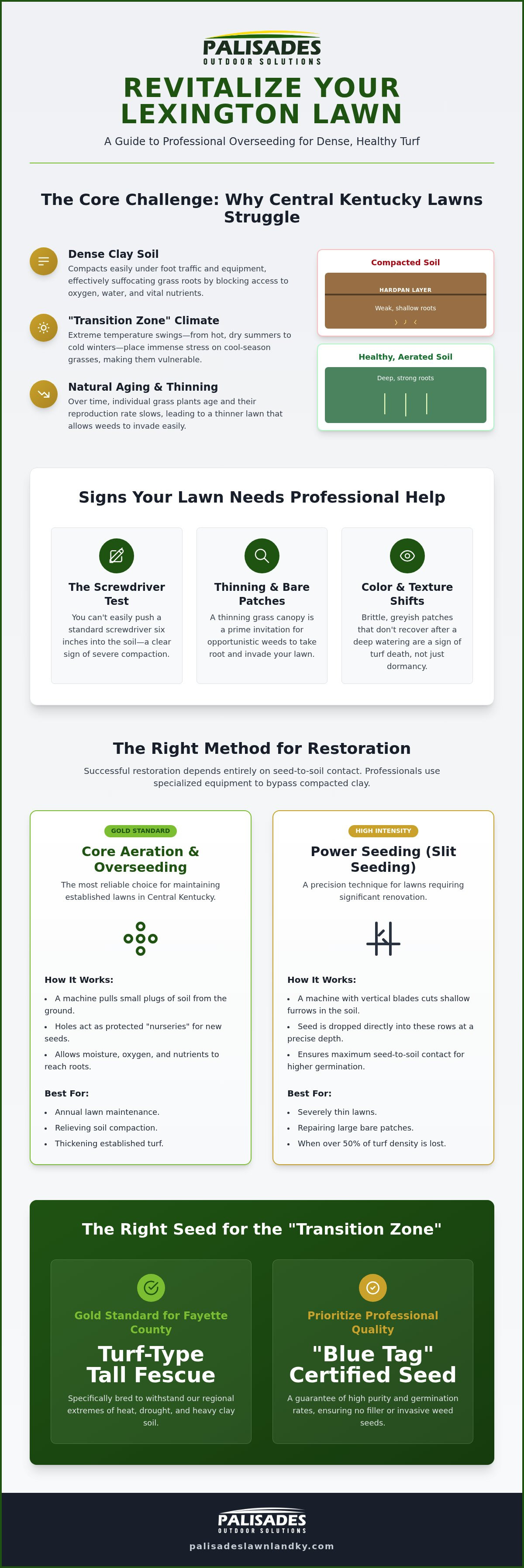
A vibrant lawn doesn't stay that way by accident. While routine mowing is vital, modern lawn care requires a more technical approach to maintain long term health. Over time, individual grass plants naturally age and their reproduction rate slows down. This leads to a gradual thinning of the canopy, which creates openings for opportunistic weeds to take root. A professional overseeding service Lexington KY acts as a vital restoration tool to counteract this natural decline, ensuring your landscape remains thick and resilient.
In Fayette County, our primary challenge is the heavy clay soil. This dense earth compacts easily under the weight of foot traffic and equipment, effectively sealing off the root zone. When soil is compacted, oxygen, water, and nutrients can't reach the roots. This leads to a cycle where the grass weakens, the soil hardens further, and the lawn eventually fails to respond to standard fertilization.
The Science of Turf Density and Soil Compaction
Central Kentucky sits in what professionals call the transition zone. This means our lawns face extreme temperature swings that stress cool season grasses. When you combine this climate pressure with compacted clay, the result is often a 'suffocating' root system. By introducing younger, more vigorous cultivars, we help the lawn naturally crowd out invasive species without relying solely on chemical interventions. Overseeding is the process of planting new seed into existing turf to increase density.
Signs Your Lawn is Ready for Restoration
It's helpful to identify thinning areas before they turn into complete bare spots. You can perform a simple 'screwdriver test' at home; if you can't easily push a standard screwdriver six inches into your soil, your lawn is likely too compacted for healthy growth. You should also look for shifts in color or texture. While grass naturally enters dormancy during hot or cold spells, actual turf death appears as brittle, greyish patches that don't recover after a deep watering. If you notice these signs, it's time to consider a professional overseeding service Lexington KY to restore the integrity of your property.
Methods of Seeding: Aeration vs. Slit Seeding
Success in lawn restoration depends entirely on seed-to-soil contact. If a seed doesn't touch the earth, it simply won't grow. In Lexington, our hard-packed clay makes this foundational requirement difficult to achieve. Simply throwing seed over your existing grass, a practice known as broadcast seeding, often results in wasted time and resources. The seeds sit on the hardened surface, exposed to hungry birds and the drying sun, unable to penetrate the dense clay crust. A professional overseeding service Lexington KY uses specialized equipment to ensure every seed is placed where it can actually germinate and thrive.
Core Aeration and Overseeding: The Gold Standard
Core aeration is the most reliable choice for maintaining established lawns in Central Kentucky. The process involve using a machine to pull small cylinders of soil, or plugs, directly from the ground. These resulting holes act as protected nurseries for new seeds. They catch moisture and provide pockets of loose soil where tiny roots can easily take hold without fighting through compaction. Combining lawn aeration and overseeding Kentucky homeowners trust is the most effective way to manage clay soil while thickening the turf. Because our cool-season grasses grow best when temperatures are moderate, early fall is the best time to aerate lawn Kentucky properties for long-term success.
Power Seeding: High-Intensity Restoration
When a lawn is severely thin or has large bare patches, power seeding, also called slit seeding, is often the necessary solution. This method uses a machine with vertical blades to cut shallow furrows directly into the soil. The equipment then drops the seed into these rows at a precise depth. This mechanical placement ensures a significantly higher germination rate than traditional methods because the seed is literally tucked into the earth. A professional overseeding service Lexington KY can evaluate if your lawn needs this "reboot" approach. While aeration is a dual-purpose maintenance tool, power seeding is a precision restoration technique designed for properties that have lost more than half of their original turf density.
Choosing the right method depends on your lawn's current health and your specific goals for the season. If you're unsure which path is right for your property, you can request a professional assessment to determine the most effective course of action for your landscape.
The Transition Zone: Selecting the Right Seed for Lexington
Lexington sits in a unique geographic location known as the transition zone. This means our climate is often too cold for warm-season grasses like Bermuda to stay green year-round, yet our summers are frequently too hot and dry for many traditional cool-season varieties. Choosing the wrong seed can lead to a lawn that looks great in May but dies off by August. A professional overseeding service Lexington KY understands these local environmental pressures and selects cultivars specifically bred to withstand our regional extremes.
Generic seed blends found at large retailers often contain "filler" seeds or varieties that aren't suited for Central Kentucky's heavy clay. These products may also have higher percentages of weed seeds or inert matter. To ensure the longevity of your landscape, we prioritize "blue tag" certified seed. This certification is a guarantee of purity and high germination rates, ensuring you aren't accidentally planting invasive species along with your new grass. We also match the specific seed variety to your property's unique conditions, such as heavy shade under mature oak trees or the scorching full sun of an open backyard.
Tall Fescue: The Backbone of Central Kentucky Lawns
Turf-Type Tall Fescue (TTTF) is the preferred choice for most residential properties in our area. Unlike the coarse, light-green "K-31" fescue of the past, modern TTTF varieties are dark green, fine-textured, and incredibly hardy. They feature deep root systems that can reach far into the soil to find moisture during a dry July. We typically use a blend of three or more TTTF cultivars. This genetic diversity is vital because if one variety is susceptible to a specific fungus or pest, the others remain strong to maintain the lawn's overall density.
Kentucky Bluegrass and Ryegrass: The Support Cast
While fescue does the heavy lifting, adding other species creates a more versatile "Lexington Mix." Kentucky Bluegrass is valued for its ability to spread via underground stems called rhizomes. This allows the lawn to "self-repair" small divots or worn paths without needing immediate intervention. Perennial Ryegrass is often included for its exceptionally fast germination, providing quick erosion control and a vibrant green-up while the slower-growing fescue establishes itself. This combination ensures your property remains lush and colorful throughout the changing seasons. If your lawn is currently struggling with patches that won't fill in, our overseeding service Lexington KY can introduce these high-performance blends to restore your turf's health.
Evaluating an Overseeding Service in Lexington, KY: A Checklist
Selecting an overseeding service Lexington KY requires looking beyond a simple quote. You're entrusting a professional with the long-term health of your property, so it's vital to vet their technical approach. Start by asking about their equipment. High-quality core aerators are non-negotiable for our clay soil because they must pull deep, consistent plugs to be effective. A company using professional-grade machinery demonstrates a commitment to the fundamentals of turf restoration rather than just surface-level fixes.
Transparency regarding seed is equally important. A reliable partner will provide specific details about the cultivars in their mix. You should expect high-quality, weed-free seed that matches the unique demands of our transition zone climate. If a provider can't name the varieties they use, they might be relying on generic, low-performance blends that won't survive a typical Kentucky summer. Professional reliability means knowing exactly what is being put into your soil.
Timing and preparation often separate masters of the craft from amateur operations. Your service provider should offer clear guidance on how to prepare your lawn. This usually includes mowing the grass shorter than usual and ensuring the soil is moist but not saturated before they arrive. They should also be able to explain why they've scheduled your service for a specific window in the fall, as this is the most critical factor for germination success.
Questions to Ask Potential Lawn Care Partners
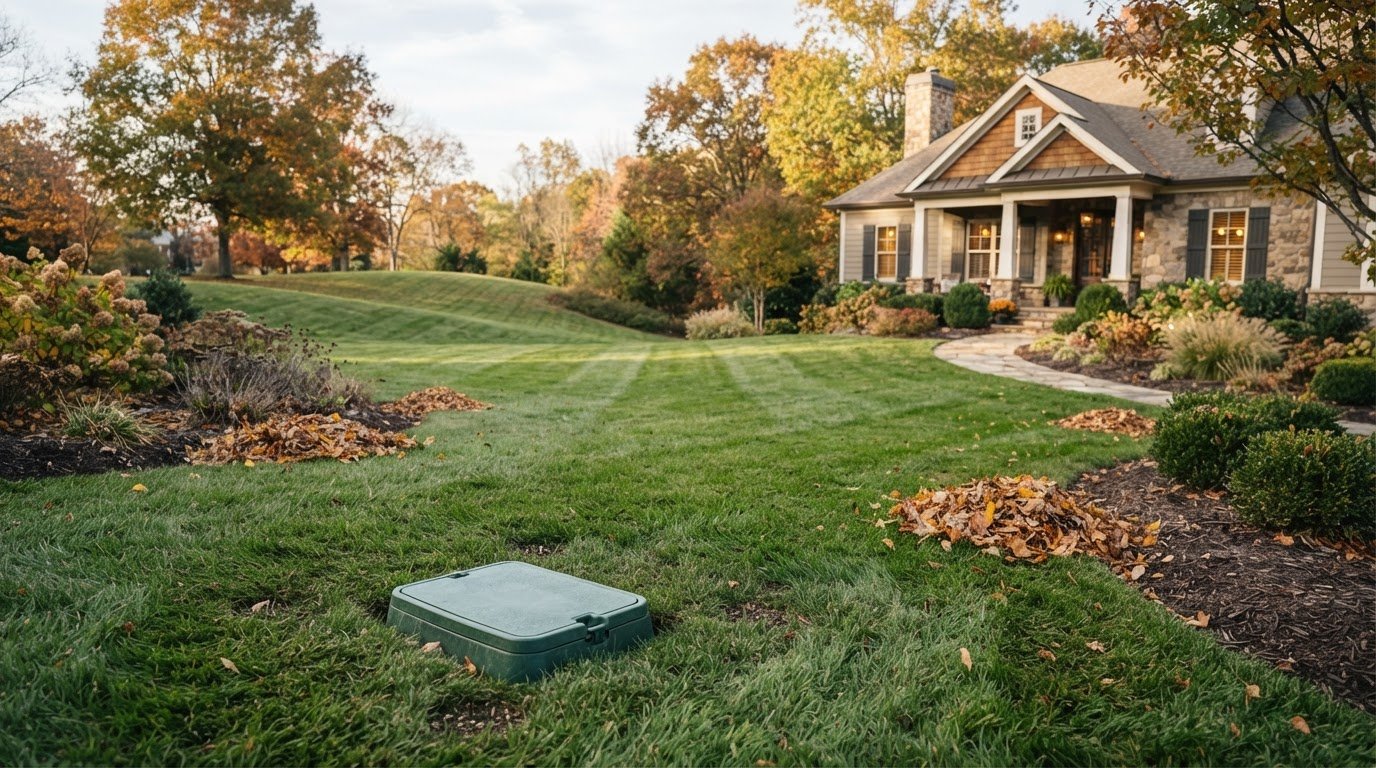
It's vital to understand how seeding fits into your total property care plan. Ask how they coordinate their fertilizer and weed control applications with the seeding process. Applying certain weed preventers too close to seeding can stop your new grass from growing. You should also check if they provide a comprehensive aeration and overseeding package to address both compaction and density in one visit. Finally, confirm their process for protecting your property. They should remind you to mark irrigation heads, hidden dog fences, or shallow utilities to prevent accidental damage during the process.
Professional Reliability and Local Expertise
Working with a local Nicholasville-based team offers a distinct advantage. We understand the specific nuances of Central Kentucky soil and how it reacts to seasonal shifts. Consistent communication is a hallmark of professional reliability; you should feel informed at every stage of the restoration. Always verify that any company you hire is fully licensed and insured for residential work. This protects your investment and provides peace of mind that your landscape is in capable hands. If you're ready to schedule a thorough evaluation of your property's needs, you can reach out to our team today.
Maximizing Your Investment: Post-Seeding Care and Integration
The successful application of a professional overseeding service Lexington KY is only the first step toward a lush landscape. The following three weeks represent a critical window where the vulnerability of new seedlings requires disciplined stewardship. While the heavy lifting of soil preparation and seed placement is complete, your role in managing moisture and traffic determines whether those seeds reach their full potential. Integrating this care into your broader property maintenance plan ensures the results of your restoration last for years rather than just a single season.
Watering for Success
Moisture management is the most significant factor in germination success. The golden rule is to keep the seed bed consistently moist without creating standing water. This typically requires light, frequent watering—often two to three times daily—rather than the deep, infrequent soaking used for established turf. Before your service date, it's wise to ensure your irrigation system is fully functional and programmed correctly for this specific schedule. If a heavy Lexington rainstorm occurs shortly after seeding, check for areas where seed may have washed away or pooled; these spots might require a light touch-up of seed and mulch to maintain even coverage.
The First Mow and Future Fertilization
Protecting vulnerable seedlings means strictly limiting foot and pet traffic for at least 21 days. New grass plants are delicate and easily crushed before they establish a firm root structure. During this time, you'll need to pause your standard lawn care and mowing routine to allow the canopy to fill in undisturbed. When you eventually resume maintenance, ensure your mower blades are sharp to prevent tearing the young plants. Wait until new grass is 3 inches tall before the first post-seeding mow.
Nutrient timing is the final piece of the restoration puzzle. We often recommend a specialized starter fertilizer during the seeding process, which provides the phosphorus necessary for rapid root development. This differs from standard maintenance fertilizer and is designed specifically to support the high metabolic needs of germinating seeds. By coordinating these efforts with your seasonal property care, you create a systematic environment where your lawn can naturally crowd out weeds and withstand the challenges of the Central Kentucky climate. This methodical approach protects your investment and ensures your landscape remains a point of pride for your home.
Transform Your Central Kentucky Landscape
A thick, resilient lawn is more than just an aesthetic choice; it's the result of technical precision and a commitment to soil health. By addressing compaction through core aeration and selecting high-performance cultivars for the transition zone, you protect your property from invasive weeds and the stress of our local climate. Success depends on the synergy between professional equipment, certified seed, and a disciplined post-care routine. Choosing a professional overseeding service Lexington KY ensures these fundamentals are handled with the expertise your property deserves.
At Palisades Outdoor Solutions, we provide master-level attention to turf density and soil health across Lexington and Nicholasville. Our integrated approach combines fertilization and irrigation expertise to ensure your new seedlings have the support they need to thrive. If you're ready to restore your lawn's vitality and enjoy a lush, barefoot-ready landscape, we are here to help. Request a Professional Overseeding Quote from Palisades Outdoor Solutions to begin your property's transformation. We look forward to partnering with you to create a beautiful, lasting outdoor environment.
Frequently Asked Questions
When is the absolute best time for an overseeding service in Lexington, KY?
The ideal window for an overseeding service Lexington KY falls between late August and early October. During this period, the soil remains warm enough to encourage rapid root development while the cooler air temperatures reduce heat stress on young plants. This timing also allows new grass to establish itself before the first hard freeze of winter. Waiting too late into the fall can result in poor survival rates as the plants won't have sufficient time to mature.
Can I overseed my lawn without aerating it first?
You can technically apply seed without aerating, but it is rarely successful on Central Kentucky clay. Without the holes created by core aeration, seeds often sit on top of the hardened soil where they cannot sprout. Aeration ensures the necessary seed-to-soil contact and provides a protected environment for growth. For most local properties, skipping this step often leads to wasted seed and disappointing results in turf density.
How long does it take for new grass seed to germinate in Central Kentucky?
Germination times vary based on the specific grass species used in your blend. Perennial Ryegrass often shows growth within 5 to 7 days, while Turf-Type Tall Fescue typically takes 10 to 14 days to emerge. Kentucky Bluegrass is the slowest, often requiring 21 days or more to germinate. Consistency in soil moisture is the most important factor in meeting these standard industry benchmarks during the 2026 growing season.
Will overseeding fix the bare spots under my large shade trees?
Overseeding can improve these areas if we use specialized shade-tolerant cultivars. However, large trees present two challenges: limited sunlight and intense competition for water and nutrients from the tree roots. While a professional overseeding service Lexington KY helps thicken these patches, you may also need to thin the tree canopy to allow more light to reach the ground. We evaluate these specific micro-climates to choose the best seed for your property.
Should I mow my lawn before the overseeding service arrives?
We recommend mowing your lawn to a height of approximately 1.5 to 2 inches immediately before our team arrives. This shorter height reduces the existing grass canopy, which allows the new seeds to reach the soil surface more easily. It also ensures that you won't need to mow again for several weeks, giving the new seedlings a chance to establish themselves without being disturbed by mower blades or heavy equipment.
Can I apply weed control at the same time as my overseeding service?
Standard weed control products should not be applied at the same time as new seed. Most pre-emergent herbicides are designed to prevent seeds from germinating, meaning they will stop your new grass just as effectively as they stop crabgrass. We generally suggest waiting until you have mowed your new grass at least three times before resuming a standard weed control program. This allows the root systems to become strong enough to handle the application.
How much should I water my lawn after it has been professionally overseeded?
You should water lightly and frequently to keep the seed bed consistently moist. This usually means running your irrigation for 5 to 10 minutes, two to three times per day, depending on the weather. The goal is to prevent the soil surface from drying out without creating puddles or runoff. Once the new grass reaches about two inches in height, you can begin transitioning back to a deeper, less frequent watering schedule.
Is it too late to overseed if we have already had a light frost?
A light frost doesn't always end the seeding season, but it is a strong signal that the window is closing. For successful germination, soil temperatures need to remain consistently between 50 and 65 degrees Fahrenheit. Once the ground cools significantly, the seeds may stay dormant until spring, where they face much higher competition from weeds. If we've already had multiple frosts, it's often better to wait and plan for a late summer restoration.
Recent Posts