If you're simply tossing seed onto bare spots and hoping for rain, you're likely wasting your weekend and your budget. Most homeowners in Nicholasville and Lexington have felt the frustration of watching expensive grass seed fail to sprout in our stubborn, compacted clay. It's exhausting to put in the work only to be left with the same brown patches and declining curb appeal. You deserve a property that reflects the pride you take in your home, not one that leaves you feeling defeated by the transition zone climate.
This guide reveals the professional secrets to how to fix patchy lawn Kentucky by working with our unique soil conditions rather than against them. You'll discover how to restore a lush, resilient lawn specifically tailored for Central Kentucky's demanding environment. We'll walk through the essential steps of soil preparation; the critical September seeding window; and why professional-grade aeration is the foundation of any successful restoration. By the end of this article, you'll have a clear, methodical plan to eliminate bare spots and maintain a thick, healthy lawn for years to come.
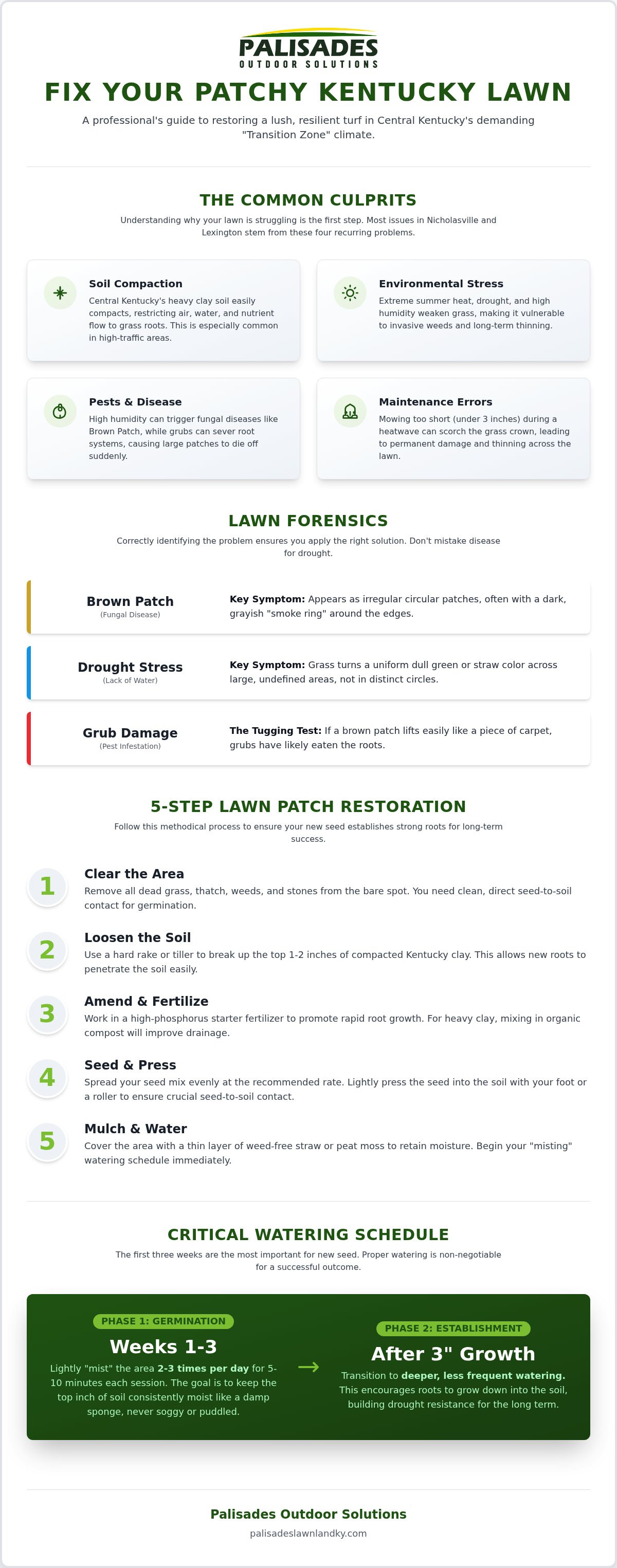
Identifying the Culprit: Why is Your Kentucky Lawn Patchy?
Kentucky sits in the "Transition Zone," a unique geographic region where summers are too hot for many cool-season grasses and winters are too cold for southern varieties. This creates a constant struggle for homeowners trying to figure out how to fix patchy lawn Kentucky . Before you can restore your property, you must understand the specific local factors causing the decline. Most lawn issues in Nicholasville and Lexington stem from a handful of recurring problems that target our local turf varieties.
- Soil Compaction: Central Kentucky is famous for its limestone-based clay. While rich in minerals, this soil compacts easily, especially after heavy spring rains followed by high summer temperatures.
- Environmental Stress: Periods of drought or extreme humidity can cause grass to enter a weakened state, making it vulnerable to weeds.
- Pests and Disease: High humidity often triggers fungal outbreaks like Brown Patch, while underground pests can destroy roots before you notice a change.
- Maintenance Errors: Mowing your lawn shorter than three inches during a Nicholasville heatwave can scorch the crown of the plant, leading to permanent thinning.
Spotting Disease vs. Drought
Many homeowners in Lexington mistake fungal damage for simple thirst. Brown Patch often appears as circular or irregular patches with a "smoke ring" of dark, grayish grass around the edges. In contrast, drought-stressed grass turns a uniform dull green or straw color across larger areas. To check for pests, perform a "tugging test." If a patch of brown grass lifts easily like a piece of carpet, grubs have likely severed the root system. If the grass stays firmly rooted but looks dry, it may just be dormant. Distinguishing between these issues ensures you apply the correct fertilizer and weed control strategy rather than making the problem worse.
The Impact of Local Soil Compaction
Our local clay acts like a sponge that has been squeezed dry and left in the sun. Soil compaction occurs when soil particles are pressed together, reducing the pore space for air and water to reach the root systems of Kentucky turf grass. This is particularly common in high-traffic areas where children or pets play on damp ground. Once the clay hardens, surface watering simply runs off rather than penetrating to the roots. Understanding these variables is the first step in learning how to fix patchy lawn Kentucky for good. Addressing this through professional aeration and overseeding is often the essential foundation for any successful restoration plan.
The Step-by-Step Guide to Patching Your Lawn in 2026
Restoring a damaged yard requires more than just a bag of seed and a prayer for rain. To understand how to fix patchy lawn Kentucky , you must treat the process like a construction project where the foundation is the most critical element. A methodical approach ensures that your investment in premium seed isn't lost to the first heavy thunderstorm or a week of high humidity. Following a step-by-step lawn renovation guide helps you avoid common pitfalls like poor germination or weak root systems.
- Step 1: Clear the Area. Remove all dead thatch, weeds, and stones from the bare spot. You need to see the bare soil clearly to ensure proper contact.
- Step 2: Loosen the Soil. Use a sturdy rake or a hand tiller to break up the top two inches of Kentucky clay. This prevents the "concrete effect" that blocks root penetration.
- Step 3: Amend and Fertilize. Incorporate a high-phosphorus starter blend to encourage rapid root development. This is the only time high phosphorus is typically recommended for established yards.
- Step 4: Seed and Press. Spread the seed at the recommended rate and then lightly press it into the soil with your foot or a roller. This "seed-to-soil" contact is non-negotiable for success.
- Step 5: Mulch and Water. Cover the patch with a thin layer of weed-free straw or peat moss to retain moisture and protect the seeds from birds.
Preparing the Foundation
In Central Kentucky, the quality of your soil determines the longevity of your repair. You should rake the area deep enough to loosen the soil without turning it into a dust bowl; about one inch of loose earth is usually sufficient. If your soil is particularly heavy, mixing in a small amount of organic compost provides better drainage than standard topsoil. Compost introduces beneficial microbes that help break down the limestone-heavy clay over time. If you find the task of manual soil preparation overwhelming, you can contact our team for professional assistance with larger restoration projects.
Watering for Success
The first three weeks after seeding are the most delicate. You should implement a "misting" schedule, watering the patches two to three times a day for five to ten minutes each session. The goal is to keep the top inch of soil consistently moist without creating puddles that wash the seed away. Kentucky's unpredictable weather often brings sudden downpours or unexpected dry spells, so you must adjust your habits daily. For those who want a more "set it and forget it" approach, investing in professional irrigation maintenance ensures your system delivers the precise amount of water needed for new growth to thrive during the critical establishment phase. Once the grass reaches three inches in height, you can transition back to deeper, less frequent watering.
Choosing the Right Seed for Central Kentucky
Selecting the right grass variety is the most impactful decision you'll make when learning how to fix patchy lawn Kentucky . Since Central Kentucky experiences both freezing winters and humid, scorching summers, your choice must survive both extremes. Selecting a seed that's not adapted to the Transition Zone is a primary reason why many DIY efforts fail within the first year. Professional-grade results require a seed that can handle the specific stressors of our local environment.
- Turf-Type Tall Fescue: This is the most recommended variety for Central Kentucky. It possesses deep root systems that can penetrate clay and survive drought better than almost any other cool-season species.
- Kentucky Bluegrass: Known for its deep color and soft texture, it's a popular choice but requires more consistent irrigation and fertilization to stay healthy during a Nicholasville summer.
- Perennial Ryegrass: This variety germinates quickly, often within seven days, making it useful for temporary green-up. However, it often dies out during the region's peak July heat.
- The Central Kentucky Mix: Professionals often use a blend of 90% Turf-Type Tall Fescue and 10% Kentucky Bluegrass. This combination provides the durability of fescue with the self-repairing ability and rich color of bluegrass.
Fescue vs. Bluegrass: The Local Debate
Fescue is the clear winner for drought resistance. Its roots can reach depths of two to three feet, while bluegrass roots remain much shallower. In high-traffic backyards in Lexington, fescue stands up to foot traffic without thinning as quickly. Bluegrass is better at filling in small gaps on its own due to its rhizomes, but it requires significantly more water to maintain that growth. Transition Zone homeowners often prefer Fescue blends because they provide the best balance of heat tolerance and deep rooting in our heavy clay soil.
Understanding Seed Quality
Don't settle for the cheapest bag at a local big-box store. These products often contain "filler" or higher percentages of weed seeds that introduce new problems to your yard. Always check the analysis tag on the back of the bag. You should aim for a "Weed Seed" content of 0.0% and a "Crop Seed" percentage as close to zero as possible. For the best results, look for blue-tag certified seed. This certification ensures the variety inside the bag matches the label and has been tested for high germination rates and purity. If you aren't sure which blend is right for your property's specific shade levels, our aeration and overseeding service uses premium, locally-tested seed blends to ensure long-term success.
Professional Secrets: Aeration and Overseeding
While hand-patching individual spots is effective for minor damage, the most reliable method for how to fix patchy lawn Kentucky properties face is a combination of core aeration and overseeding. This professional duo addresses the root cause of thinning grass: our dense, limestone-heavy soil. By mechanically opening the soil, you create a direct pathway for nutrients, water, and new seed to reach the root zone. Without this step, new seeds often sit on top of the hard clay, where they are easily washed away or eaten by birds. You can find more detail on this systematic approach in The Homeowner’s Guide to Lawn Aeration and Overseeding in Kentucky.
The Core Aeration Advantage
Core aeration involves removing small cylinders of soil, or "plugs," from the ground. This process relieves the internal pressure within the soil profile, allowing the surrounding earth to expand and breathe. Many DIY spike aerators merely push the clay aside, which actually increases compaction around the holes. For a long-term solution, our professional aeration and overseeding services use specialized equipment designed to pull clean cores. These holes act as tiny "incubation chambers" for new seeds, protecting them from the elements and ensuring the essential seed-to-soil contact discussed in earlier sections.
The Fall Seeding Window
Timing is everything in the Bluegrass region. For cool-season grasses like Tall Fescue, the optimal window for these services is between September 1st and September 25th. During this period, soil temperatures remain warm enough for rapid germination, while the cooling air temperatures reduce the risk of heat stress. You should aim to have all seeding completed by mid-October at the latest to ensure the young plants are established before the first hard frost. Spring seeding often fails because the young grass isn't strong enough to survive a Kentucky July, and it must compete with aggressive crabgrass. To plan your maintenance schedule, consult our guide on the Best Time to Aerate Your Lawn in Kentucky. If you're ready to schedule your fall restoration, reach out to our team today to secure your spot in the autumn window.
Long-Term Prevention: Maintaining a Patch-Free Lawn
Maintaining the results of your restoration efforts requires a shift from temporary fixes to long-term preservation. While knowing how to fix patchy lawn Kentucky homeowners often struggle with is essential, the ultimate goal is to create a turf density that naturally prevents bare spots from returning. Central Kentucky's Transition Zone climate demands specific cultural practices, particularly regarding mowing heights and nutrient management, to keep the grass resilient against the summer heat.
- Mowing Height: You should maintain a cutting height of 3.5 to 4 inches during the summer. This height shades the soil, which lowers soil temperatures and prevents sunlight from reaching dormant weed seeds.
- Fertilization and Weed Control: A consistent fertilizer and weed control program keeps the "good" grass healthy enough to outcompete opportunistic weeds.
- Annual Maintenance: Core aeration should be a recurring annual event rather than a one-time fix. Given our heavy clay, annual aeration prevents the compaction that leads to the very patches you just repaired.
Developing a Local Care Schedule
Timing is critical for preventative care in our region. In Nicholasville and Lexington, pre-emergent herbicides should be applied in early spring to stop crabgrass before it takes hold in thin areas. As the season winds down, fall fertilization becomes the priority. This late-season feeding focuses on root development, providing the energy reserves needed for a rapid spring green-up. Comprehensive landscape maintenance ensures these tasks are handled with professional precision, keeping your property healthy throughout the 7-8 month mowing season.
When to Call Palisades Outdoor Solutions
There are instances where a yard is too far gone for simple DIY patching. If more than 40% of your yard is bare or dominated by invasive weeds, a professional restoration is often the most cost-effective path. Professional-grade equipment covers large areas more uniformly and penetrates our clay more deeply than most rental tools. If you're unsure of the next steps, you can contact us for a free lawn evaluation. We'll help you determine if your property needs a simple overseeding or a complete systematic overhaul to restore its functional beauty.
Take Control of Your Curb Appeal
Restoring a damaged lawn in Central Kentucky doesn't have to be a recurring cycle of frustration. By understanding how to fix patchy lawn Kentucky homeowners often encounter, you can move away from temporary patches and toward a permanent solution. Success starts with addressing the underlying soil compaction through core aeration and selecting high-quality, Transition Zone-adapted seed blends. Timing your restoration for the September window ensures your new grass has the best chance to establish deep roots before the winter frost.
At Palisades Outdoor Solutions, we bring expert knowledge of Central Kentucky soil and climate to every project. We utilize professional-grade core aeration equipment and comprehensive fertilization and weed control programs to give your grass the foundation it needs to thrive. Ready for a lush, patch-free lawn? Schedule your professional aeration and overseeding with Palisades Outdoor Solutions today!
You've taken the first step by learning the science behind a healthy lawn, and now it's time to see those results grow. Your property is a significant investment; with the right systematic care, it will provide beauty and pride for years to come.
Frequently Asked Questions
When is the best time to fix a patchy lawn in Kentucky?
The optimal window to address how to fix patchy lawn Kentucky properties is between September 1st and September 25th. This allows cool-season grasses to germinate in warm soil while avoiding the heat stress of July and August. While spring repairs are possible, they often fail because young grass cannot survive the rapid transition to high summer temperatures or compete with aggressive, opportunistic crabgrass.
Can I just throw grass seed on top of my existing lawn?
Simply tossing seed onto the surface rarely produces lasting results because the seeds cannot penetrate the layer of dead thatch or reach the soil. For successful germination, you must ensure direct seed-to-soil contact by raking away debris and loosening the top layer of earth. Without this preparation, the seed remains vulnerable to drying out, being washed away by rain, or becoming a meal for local birds.
Why does my grass keep dying in the same spots every summer?
Recurring bare spots are usually a sign of an underlying issue like heavy soil compaction or localized pest problems. In Central Kentucky, limestone-heavy clay can become so dense that water and oxygen cannot reach the roots, causing the grass to thin out during periods of high heat. Other common culprits include fungal diseases like Brown Patch or underground grubs that sever the root systems during their peak feeding cycles.
How long does it take for new grass patches to grow?
Germination times vary based on the specific seed variety you choose for your yard. Perennial Ryegrass often shows green shoots within 7 to 10 days, while Turf-Type Tall Fescue typically takes 10 to 14 days to emerge. Kentucky Bluegrass is the slowest, often requiring 21 days or more to sprout. You should wait until the new grass is at least three inches tall before its first mowing to protect the roots.
Do I need to use topsoil when patching my lawn?
You don't always need additional topsoil, but amending the area with organic compost is highly beneficial for the heavy clay found in Nicholasville and Lexington. Compost improves the soil structure and drainage, which helps the new roots establish more quickly than they would in native clay alone. If you do use topsoil, ensure it is certified weed-free to avoid introducing invasive species into your newly restored patches.
How much should I water a newly patched area in Nicholasville?
Consistency is more important than volume during the first few weeks of growth. You should water newly patched areas two to three times per day for approximately five to ten minutes per session. The goal is to keep the top inch of soil consistently moist without creating runoff that washes seed away. Once the grass reaches two inches in height, you can gradually transition to deeper, less frequent watering sessions.
Is Kentucky Bluegrass or Tall Fescue better for patching bare spots?
Turf-Type Tall Fescue is generally the superior choice for patching lawns in our region due to its exceptional drought tolerance and deep root systems. While Kentucky Bluegrass offers a beautiful color and fine texture, it struggles more during our humid, high-heat summers and requires more intensive irrigation. Most professional restorations utilize a fescue-dominant blend to ensure the patch remains resilient against the varying Kentucky climate and heavy foot traffic.
Why is my soil so hard and how do I fix it for my grass?
Your soil is likely hard because the high clay content has become compacted by foot traffic and environmental cycles. This density chokes off the air and water that grass roots need to survive. The most effective way to address this is through professional core aeration, which removes soil plugs to relieve pressure. This process allows the ground to expand and creates a better environment for healthy root development and seed germination.
Recent Posts