Most homeowners in Nicholasville wait until the first warm days of spring to fix their patchy grass, but that single decision is often why so many lawns fail before the first July heatwave hits. It's deeply frustrating to watch your investment disappear into a sea of weeds or stubborn brown patches. Knowing exactly when to overseed lawn in Kentucky is the difference between a wasted weekend and a thick, resilient yard that can handle our difficult Transition Zone climate.
The good news is that achieving a professional-grade landscape isn't about luck; it's about precision. This guide provides the precise window for 2026 to ensure your grass has the deep roots and strength it needs to thrive. We will walk through the critical mid-August to mid-September window, explain why Turf-Type Tall Fescue is the gold standard for Central Kentucky soil, and provide the specific weeks you need to schedule your service to guarantee success. You can finally stop guessing and start building a landscape that brings you pride and peace of mind.
The Best Months to Overseed in Kentucky: Your 2026 Calendar
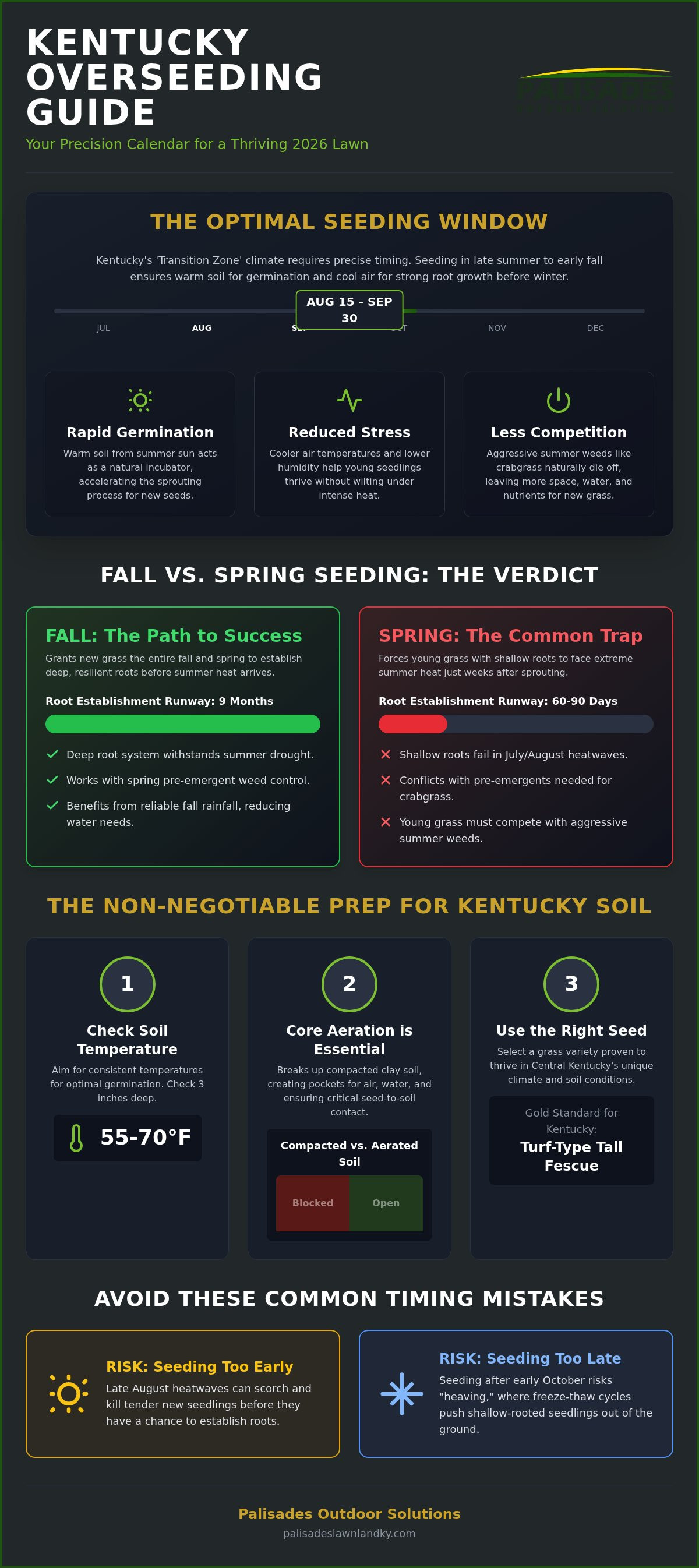
Determining when to overseed lawn in Kentucky requires looking past the daily forecast and focusing on the ground beneath your feet. Our state sits in the Transition Zone, a unique climate region where summers are too hot for cool-season grasses and winters are too cold for warm-season varieties. For 2026, the primary window for success falls between August 15th and September 30th. This period provides "Goldilocks" conditions where the soil is warm enough to trigger germination, while the air is cool enough to prevent young seedlings from wilting under the sun.
The September Sweet Spot
September is the most reliable month for local lawn restoration. By this time, the soil has soaked up months of summer sun, creating a natural incubator for new seeds. Starting in mid-September helps you avoid the "false spring" of late August heatwaves that can scorch tender new growth. It also ensures the grass has at least six weeks to establish a root system before the first hard frost hits Central Kentucky. A thick, well-timed lawn is a cornerstone of organic lawn management, as dense turf naturally prevents weed seeds from ever reaching the soil. Key benefits of this window include:
- Rapid Germination: Warm soil temperatures accelerate the sprouting process.
- Reduced Stress: Lower humidity and cooler nights keep moisture in the soil.
- Less Competition: Summer weeds like crabgrass begin to die off, leaving more room for new grass.
Monitoring Local Kentucky Weather Patterns
While the calendar provides a guide, the actual soil temperature dictates the results. In Nicholasville and Lexington, our heavy clay soils hold heat longer than sandy soils found elsewhere. You should aim for a consistent soil temperature between 55°F and 70°F. You can check this easily with a basic soil thermometer pushed three inches into the ground. If the soil is still hovering above 75°F, it's better to wait a week than to risk the seed drying out.
Waiting too long into October carries its own risks. If you seed after the first week of October, the young plants may not develop deep enough roots to survive "heaving." This occurs when the frequent freeze-thaw cycles of a Kentucky winter push shallow-rooted seedlings out of the soil, killing them before spring arrives. For homeowners looking to maximize their results, professional aeration and overseeding ensures the seed is placed at the correct depth to survive these temperature swings. The 2026 outlook suggests a standard transition, so aiming for that mid-September start will provide the most stable path to a lush, green yard.
Fall vs. Spring Overseeding: Why Autumn Wins in the Transition Zone
While the vibrant colors of April often spark a desire for yard work, spring is frequently a "trap" for new grass in our region. When deciding when to overseed lawn in Kentucky, choosing the autumn months provides a strategic advantage that spring simply cannot match. It shifts the growth cycle in favor of the plant, rather than forcing it to fight against the coming summer heat. This timing is essential for homeowners who want a lawn that stays green through the entire year, not just for a few weeks in May.
Beating Summer Heat Stress
Fall seeding grants your grass a nine-month runway to establish deep, resilient roots before the humidity of July 2027 arrives. In contrast, spring-seeded turf only has about 60 to 90 days to grow before the soil temperature spikes. These young plants often possess shallow root systems that fail when the surface soil dries out. There is also a practical conflict with weed prevention. Most pre-emergent herbicides that stop crabgrass also stop grass seed from germinating. By adhering to the University of Kentucky Turf Care Calendar, you can maintain your spring weed barrier and reserve seeding for the more hospitable fall window.
Lowering Your Maintenance Burden
Autumn in Nicholasville and Lexington usually offers more reliable rainfall patterns and cooler air. This environment reduces the evaporation rate, meaning your new seed stays moist with less supplemental irrigation. You also benefit from a significant drop in weed pressure. Aggressive summer annuals like crabgrass begin their natural decline in September, leaving open soil and more nutrients for your new seedlings. This natural cycle allows the grass to thicken without the constant threat of being choked out by invasive species.
Establishing proper weed control during the fall creates a clean slate for your new grass to thrive. This method results in a denser lawn that naturally resists pests and diseases by leaving no room for them to take hold. If you want to ensure your soil is prepared for this seasonal transition, you can reach out for a professional site assessment to plan your timing perfectly.
Preparing Central Kentucky Soil: Why Aeration is Non-Negotiable
Many homeowners spend weeks researching when to overseed lawn in Kentucky, yet they often overlook the physical state of their soil. Success in lawn restoration depends entirely on the "Seed-to-Soil" rule. If a grass seed remains trapped in a layer of thatch or sits on top of sun-baked ground, it won't germinate. In Central Kentucky, our dense, limestone-based clay requires more than just a surface-level application of seed to achieve lasting results.
Mechanical core aeration is the most effective way to prepare this difficult terrain. By removing small plugs of soil, you create thousands of "growth pockets" that allow air, water, and nutrients to reach the root zone. This process breaks the surface tension of the clay, providing fescue seeds with a protected environment to sprout. Relying on professional aeration and overseeding ensures that the equipment used is heavy enough to penetrate our local soil, which often resists smaller, DIY rental units. While some products claim to loosen soil chemically, they rarely penetrate Kentucky’s dense clay effectively; mechanical removal remains the gold standard.
Addressing Soil Compaction in Nicholasville
Nicholasville properties often suffer from heavy compaction due to high clay content and frequent foot traffic. You can identify this by looking for thinning grass or areas where water stands for hours after a rainstorm. Unlike "spike" aeration, which simply pushes the soil aside and increases compaction, core aeration physically removes material to relieve pressure. This is a critical step recommended in the NC State Extension Lawn Calendar, which highlights how proper soil preparation in the fall supports cool-season grass varieties. Additionally, our local limestone bedrock can influence soil pH; aerating helps any necessary lime applications reach the root zone more efficiently.
Creating the Perfect Seedbed
Preparing the surface is just as vital as addressing what's beneath it. Before the aeration equipment arrives, we recommend mowing your existing grass to a height of about two inches. This "scalping" technique reduces the canopy and allows more sunlight to reach the soil surface where new seeds will sit. It's also necessary to clear away excess thatch and fallen leaves that could block contact with the dirt. Without these steps, germination rates often plummet to as low as 20 percent. By contrast, a properly aerated and cleared seedbed provides the structural support new seedlings need to survive the winter and thrive in the spring. Knowing when to overseed lawn in Kentucky is only half the battle; giving that seed a place to grow is what guarantees a thick, green result.
Choosing the Best Grass Seed for Nicholasville and Lexington
Selecting the right cultivar is just as important as knowing when to overseed lawn in Kentucky. Because our region sits in the Transition Zone, your lawn must be hardy enough to survive freezing winters while remaining resilient through sweltering, humid summers. If you choose a variety that isn't suited for our local environment, even perfect timing and soil preparation won't prevent the grass from thinning out by next July. For most homeowners in Central Kentucky, the solution lies in high-quality cool-season grasses that prioritize deep root development and heat tolerance.
Why Tall Fescue is King in Central Kentucky
Turf-Type Tall Fescue (TTTF) is widely considered the gold standard for residential landscapes in Nicholasville and Lexington. Unlike older "Kentucky 31" varieties that feel coarse and look like pasture grass, modern TTTF cultivars offer a deep green color and a much finer leaf texture. Its greatest strength is its root system, which can reach depths of up to three feet. This allows the plant to access moisture deep within our heavy clay soil long after the surface has dried out. This durability makes it the ideal choice for families with children or pets who need a lawn that can withstand frequent foot traffic without showing immediate wear.
While TTTF is the primary component, many professionals include a small percentage of Kentucky Bluegrass in their seed blends. Kentucky Bluegrass spreads through underground stems called rhizomes, which provide a "self-repair" mechanism. If a small patch of your lawn is damaged, the bluegrass can naturally fill in the gap. This combination creates a thick, uniform turf that is both aesthetically pleasing and structurally sound.
Avoiding Low-Quality "Big Box" Seed
It is tempting to pick up a generic bag of seed from a local hardware store, but these often contain "filler" varieties that cause long-term issues. One of the most common traps is Annual Ryegrass. It germinates in just a few days, providing a quick burst of green that makes the homeowner feel successful. However, Annual Ryegrass is not perennial; it will die off as soon as the summer heat arrives, leaving your lawn patchy once again. You should also avoid any label marked "Variety Not Stated" (VNS), as this indicates the seed lacks the consistent growth characteristics of certified cultivars.
When reviewing a seed tag, always look for the "Blue Tag" certification, which guarantees the purity and germination rate of the seed. Pay close attention to the percentages listed for "weed seed" and "other crop." High-quality professional seed should have a weed seed percentage as close to zero as possible. Investing in premium seed ensures that you aren't accidentally planting invasive species in your yard. If you are unsure which blend is right for your property's specific shade and sun conditions, you can consult with our team for a professional seed recommendation tailored to your soil.
Post-Seeding Care: Protecting Your Investment
Once you've determined when to overseed lawn in Kentucky and finished the physical labor of aeration and spreading seed, the focus shifts to stewardship. The first 21 days represent the most vulnerable period for your new turf. Without a disciplined follow-up plan, even the highest quality seed can fail to thrive. Protecting your investment means managing water, traffic, and mower height with precision to ensure those young seedlings become a permanent part of your landscape.
Mastering the Irrigation Schedule
Proper hydration is a two-phase process that changes as the plant develops. During Phase 1, which lasts until you see visible green shoots across the yard, you must keep the seedbed consistently moist. This usually requires light, frequent misting two to three times daily. If the seed dries out after the germination process has begun, the plant will die before it ever breaks the surface. You don't want the soil to be soggy, just damp enough to sustain life.
Once the new grass reaches approximately one inch in height, you should transition to Phase 2. This involves deeper, less frequent watering to encourage those roots to dive into the soil pockets created during aeration. Ensuring your system provides even coverage is vital to prevent brown spots; professional irrigation maintenance can identify and fix clogged nozzles or misaligned heads that might leave parts of your new lawn thirsty.
The First Mow and Beyond
Patience is required before you bring the mower back out. We recommend waiting until the new seedlings reach a height of 3.5 to 4 inches. Cutting too early can stress the young plants or pull them entirely out of the loose soil. When you do perform that first cut, follow the "3-inch rule" by setting your mower deck high. Never remove more than one-third of the grass blade at once, as this preserves the plant's ability to photosynthesize and grow.
It's equally important to ensure your mower blades are professionally sharpened. Dull blades tear the grass rather than slicing it, which creates an opening for disease and causes the tips to turn brown. As the 2026 season winds down, planning your landscape maintenance for the winter will protect this new growth. Avoid applying heavy nitrogen fertilizers immediately after seeding, as this can burn tender roots. Most importantly, keep pets and children off the area for at least four weeks. This physical protection allows the roots to anchor firmly into the Kentucky clay without the stress of compaction from foot traffic.
Transform Your Kentucky Lawn for the 2026 Season
A thick, green lawn is more than just curb appeal; it's a testament to proper timing and meticulous care. By targeting the mid-August through September window, you give your grass the best possible start before the winter dormancy begins. Remember that breaking through the dense Central Kentucky clay with core aeration is the only way to ensure your seed reaches the soil and germinates effectively. Simply broadcasting seed over hard ground often leads to wasted resources and frustrating results.
Knowing exactly when to overseed lawn in Kentucky is the first step toward a resilient yard that can withstand our local humidity and heat. Palisades Outdoor Solutions is locally owned and operated in Nicholasville, and we've served the Central Kentucky community with professional lawn care for years. We use specialized equipment designed for our local soil to maximize seed-to-soil contact, giving your property the professional finish it deserves.
If you're ready to stop struggling with patches and weeds, we're here to help you plan your 2026 restoration. You can Get a Free Estimate for Aeration & Overseeding in Nicholasville today. We look forward to helping you build a landscape you'll be proud of for years to come.
Frequently Asked Questions
Can I overseed my lawn in Kentucky in the spring?
While you can plant seed in the spring, it is generally not recommended for our region. Spring-seeded grass often fails to develop the deep root systems necessary to survive the intense heat and humidity of a Kentucky July. Additionally, the pre-emergent herbicides required to control spring crabgrass will also prevent your new grass seed from germinating, forcing you to choose between a weedy lawn or poor grass growth.
How much does professional overseeding cost in Nicholasville?
The cost of professional service depends primarily on the total square footage of your lawn and the volume of seed required for adequate coverage. Other factors include the level of soil compaction and whether you choose a specialized seed blend. Because every property has different requirements, the most accurate way to determine your investment is to request a professional estimate based on your specific yard dimensions and soil health.
Do I need to put straw down over new grass seed?
Using straw is often unnecessary and can actually introduce unwanted weed seeds into your clean lawn. While straw helps retain moisture, it can be messy and difficult to remove without pulling up tender new seedlings. A better approach for residential yards is to use a light layer of peat moss or a professional-grade mulch. These alternatives provide excellent moisture retention and protection without the risk of contaminating your new fescue.
What happens if I overseed and then it freezes?
A light frost won't usually kill un-germinated seeds, but a hard freeze can be fatal to young seedlings that have just sprouted. This is exactly why knowing when to overseed lawn in Kentucky is so important for long-term success. By planting in the late summer or early fall window, you ensure the grass has enough time to mature and harden off before the ground temperatures drop below freezing in late autumn.
How long does it take for Tall Fescue to germinate in Kentucky?
Turf-Type Tall Fescue typically begins to sprout within 7 to 14 days when soil conditions are ideal. This timeline depends on maintaining consistent moisture and soil temperatures between 55°F and 70°F. If the weather is unseasonably cool or if the soil is allowed to dry out between waterings, germination can take up to 21 days. Consistent daily misting is the most reliable way to keep this process on track.
Can I overseed without aerating first?
You can spread seed without aerating, but you will likely see a significant waste of time and money. Our local clay soil is often too dense for seeds to penetrate on their own. Without core aeration to create physical openings in the earth, the seed sits on the surface where it is easily washed away or eaten by birds. Aeration provides the essential seed-to-soil contact required for a thick, healthy lawn.
Should I fertilize at the same time I overseed?
Applying a starter fertilizer at the same time you seed is a highly effective way to boost early growth. These specific fertilizers contain higher levels of phosphorus, which is essential for rapid root development in new seedlings. You should avoid using standard "weed and feed" products during this time. The chemicals designed to stop weeds will also prevent your new grass from growing, leading to a thin and patchy result.
How soon can my dog play on the lawn after overseeding?
It is best to keep dogs off the newly seeded areas for at least four weeks. The young grass plants are extremely fragile and haven't yet anchored their roots into the soil. Heavy activity or running can easily tear the seedlings out of the ground, leaving bare spots. Once you have performed the first mow and the grass feels sturdy underfoot, you can gradually allow your pets back onto the turf.
Recent Posts