If your Central Kentucky lawn looks like a patch of straw in July, it isn't necessarily failing; it's likely just protecting itself. You've probably spent hours dragging hoses across the yard or staring at the water bill, wondering why your lawn is turning brown in summer despite your best efforts. It's frustrating to see your investment fade just when you want to enjoy the outdoors, and the fear that you'll have to replace the entire yard is a heavy burden for any homeowner.
You can stop the guesswork and discover whether your grass is truly dying or simply entering a natural state of dormancy to survive the humidity and heat. We'll examine the specific causes of browning in areas like Lexington and Nicholasville, from seasonal heat stress to common fungal diseases. This guide provides a clear diagnosis of those brown spots and a practical plan to restore your lawn's health. You'll gain the peace of mind that comes from knowing your grass can survive the summer and return to its vibrant, green state with the right care.
Is Your Grass Dead or Just Sleeping? Understanding Summer Dormancy
Seeing your lush spring turf turn into a crisp, tan carpet can be alarming. For many homeowners in Lexington and Nicholasville, the question of why is my lawn turning brown in summer becomes a daily concern as temperatures climb. In most cases, this shift isn't a sign of permanent failure but a strategic biological defense known as summer dormancy. It's the plant's way of hitting a pause button to survive conditions it wasn't designed to handle.
Kentucky sits in the transition zone, meaning we grow a mix of grass types. Most residential lawns here consist of cool-season varieties like Tall Fescue or Kentucky Bluegrass. These grasses thrive when temperatures stay between 60 and 75 degrees. Once the Central Kentucky heat consistently hits the 80s and 90s in July and August, these plants naturally shut down to preserve their internal resources. While warm-season grasses like Bermudagrass stay green in the heat, our common cool-season lawns prefer to sleep through the harshest weeks of the year. Brown leaves don't necessarily mean dead roots; they're simply a protective shield.
The Science of Grass Survival
During this phase, the grass plant stops sending energy to its blades. It focuses entirely on protecting the crown, which is the vital growing point located just at the soil surface. By allowing the leaves to turn brown and wither, the plant reduces moisture loss through transpiration. The root system remains alive but moves into a low-energy state. This is why a brown lawn can green up with surprising speed. Once the soil cools and autumn rains arrive, the crown sends out new shoots almost immediately, fueled by the energy it saved during its summer rest.
Signs Your Lawn Is Dormant, Not Dead
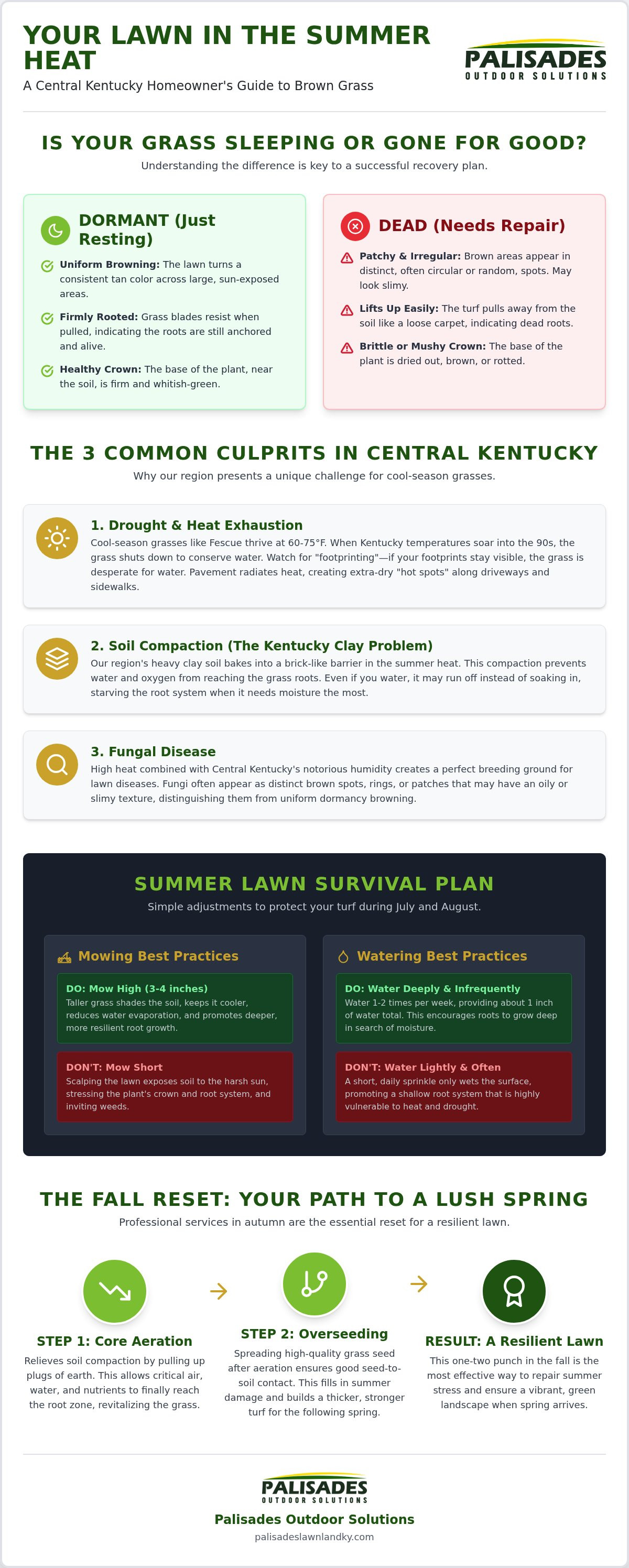
Distinguishing between a sleeping lawn and a dying one provides immediate peace of mind. A dormant lawn usually changes color uniformly across the yard or in large, sweeping sections that receive the most sun. If you see small, irregular circles or spots that look oily or "slimy," you might be dealing with a disease rather than heat stress. Use these indicators to check your turf's health:
- The Tug Test: Firmly pull a handful of brown grass. If it stays rooted, it's dormant. If it lifts up effortlessly like a piece of loose carpet, the roots may be dead or damaged by pests.
- Crown Inspection: Look at the base of the plant near the soil. A healthy, dormant plant will have a firm, whitish-green crown hidden beneath the brown outer leaves.
- Water Response: If you apply a significant amount of water to a small area and it begins to show green within a few days, the grass is definitely dormant.
Performing these quick checks helps you understand why is my lawn turning brown in summer and prevents the unnecessary stress of thinking your entire landscape needs to be replaced. Most Kentucky lawns are remarkably resilient and are simply waiting for the cooler days of September to return.
The 3 Most Common Reasons Kentucky Lawns Turn Brown
While dormancy is a natural defense, several external factors often accelerate the browning process in Central Kentucky. Our region sits in what professionals call the "transition zone." This is a challenging climate where it's too hot for cool-season grasses to thrive in July, yet often too cold for warm-season varieties to survive our winters. When you combine Lexington's high humidity with sustained summer heat, your turf faces a triple threat of environmental stress, soil limitations, and seasonal pests. Understanding these factors is the first step toward moving past the frustration of a fading landscape.
Drought Stress and Heat Exhaustion
Most residential lawns in Nicholasville and Lexington rely on Tall Fescue or Bluegrass blends. These varieties struggle when daytime temperatures consistently exceed 90 degrees. Before the grass turns brown, it often enters a "footprinting" stage. If you walk across the lawn and your footprints remain visible rather than the blades bouncing back, the grass is critically low on moisture. Areas near concrete driveways or sidewalks often become "hot spots" because the pavement radiates heat, drying out the adjacent soil faster than the rest of the yard. This localized heat exhaustion is a primary reason why is my lawn turning brown in summer even when parts of the yard stay green.
Soil Compaction and the Kentucky Clay Problem
The specific composition of Central Kentucky clay adds another layer of difficulty to summer lawn care. In the intense summer heat, this clay soil can harden like a kiln-fired brick. This compaction creates a physical barrier that prevents water, oxygen, and nutrients from reaching the root zone. Even if you water regularly, the liquid may simply run off the surface rather than soaking in, leading to root suffocation and poor drainage. Addressing this through professional aeration and overseeding in the fall is often the only way to break this cycle and ensure the soil remains porous enough for deep root growth.
Summer Pests: Grubs and Sod Webworms
Sometimes the answer to your lawn's color change isn't the weather, but what's living beneath the surface. Grubs are the larvae of beetles that feed on grass roots during late summer. Because they sever the roots, the grass browns in patches that can sometimes be rolled up like a piece of loose carpet. Similarly, sod webworms chew on grass blades at night, leaving behind thinned, brown areas. These pests are particularly deceptive because their damage often mimics drought stress, making diagnosing a brown lawn a critical step before you decide to simply increase your irrigation frequency.
The Diagnostic Checklist: How to Identify the Culprit
Identifying why is my lawn turning brown in summer requires a methodical approach. It's rarely just one issue; often, a combination of environmental stress and biological threats works together to thin out your turf. You don't need specialized scientific equipment to get a clear diagnosis. By using a few common household tools and observing the specific patterns of browning, you can determine if your grass needs a drink, a treatment, or simply more time to rest.
The Screwdriver Test for Compaction
In Nicholasville and Lexington, our heavy clay soil is the most frequent obstacle to a green lawn. To check for compaction, take a long screwdriver and try to push it into a brown area of your yard. In a healthy, well-hydrated lawn, the tool should slide in at least 6 inches with minimal resistance. If it stops after an inch or two, your soil has likely hardened into a "brick" state. This confirms that your roots are suffocating and that any water you apply is likely running off the surface rather than reaching the plant's core.
Identifying Fungus and Brown Patch
Lexington’s summer humidity creates a perfect environment for fungal diseases like Brown Patch. To distinguish this from simple heat stress, look closely at the individual grass blades at the edge of a brown area. Heat-stressed grass simply looks withered and thin. In contrast, fungal infections often leave tan lesions with dark, chocolate-colored borders on the blades. In the early morning, you might even see a "smoke ring," which is a dark, grayish-black border around the perimeter of the patch. If the grass feels greasy or looks "melted," fungus is the likely culprit.
The Grub Inspection
If your grass is turning brown in patches that seem to expand daily, it’s time to look beneath the surface. Use a spade to cut a one-foot square of turf about 2 inches deep and peel it back like a piece of carpet. If the roots are gone and you see more than 10 C-shaped, white larvae, you have a significant grub infestation. You should also watch for increased bird activity or skunks digging in your yard. These animals are often the first to know you have a pest problem, as they'll tear up the brown turf to reach the grubs underneath.
Once you've completed these checks, you'll have a much clearer picture of your lawn's health. Understanding these specific symptoms ensures you don't waste money on treatments that won't solve the underlying problem. Whether the issue is soil density, a seasonal fungus, or a hidden pest, a correct diagnosis is the only way to build an effective restoration plan.
Summer Lawn Survival: Mowing and Watering Best Practices
Once you understand why is my lawn turning brown in summer , you can shift your focus from worry to active management. In Central Kentucky, summer lawn care is less about forcing growth and more about protecting the plant's existing health. Many of the most effective strategies for heat survival require no financial investment; they simply require a shift in your weekly routine. By adjusting how you mow and when you water, you provide your turf with the resilience it needs to withstand the humidity of Lexington and the dry spells of Nicholasville.
The Golden Rule of Summer Mowing
Mowing height is the single most important factor you can control during a heatwave. While many homeowners prefer the look of a short, golf-course lawn, cutting your grass too low in July is a recipe for disaster. You should raise your mower deck to at least 4 inches. Taller grass blades act as a natural canopy, shading the soil surface and keeping the delicate root zone significantly cooler. This shade also slows down soil moisture evaporation, allowing your lawn to stay hydrated longer. Scalping a stressed lawn by cutting it too short removes the plant's ability to photosynthesize and can lead to permanent damage when temperatures exceed 90 degrees.
Deep and Infrequent Watering Strategies
Daily light watering is one of the most common mistakes in residential lawn care. A quick five-minute sprinkle every evening only wets the top layer of soil, which encourages roots to stay near the surface where they are easily scorched. To build a resilient lawn, you must water deeply and infrequently. Aim for one inch of water per week, delivered in one or two long sessions. You can measure this by placing an empty tuna can in your yard; once it's full, you've reached your weekly goal. The best time to water is between 4:00 AM and 9:00 AM. This timing allows the water to soak deep into the soil before the sun rises, while ensuring the grass blades dry quickly to prevent fungal growth.
Irrigation Maintenance and Efficiency
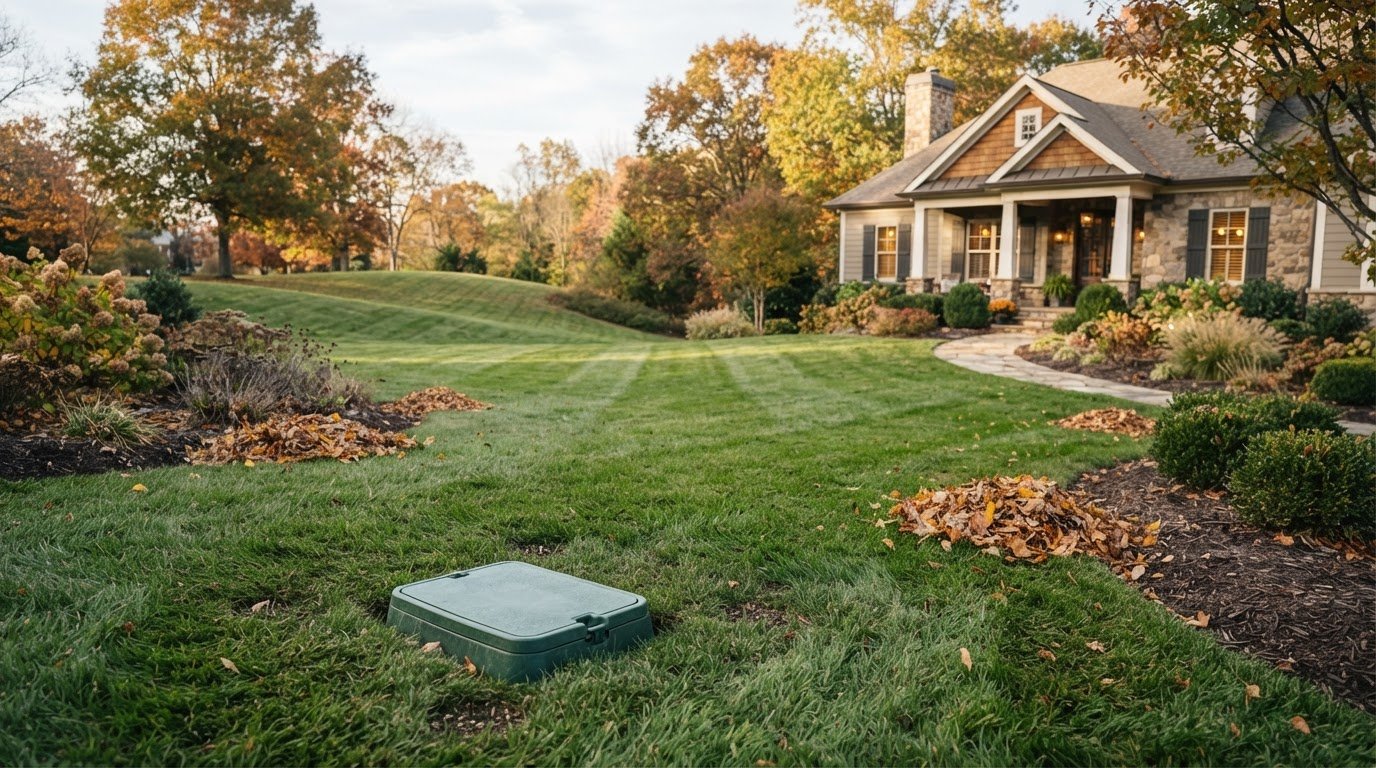
Even the best watering schedule fails if your equipment isn't performing correctly. Many "brown spots" that homeowners attribute to heat are actually caused by clogged sprinkler heads, broken lines, or poor head-to-head coverage. A single misaligned head can leave a large section of your yard completely dry while overwatering another. Regular irrigation maintenance ensures that every drop of water is delivered precisely where it's needed. Professional oversight of your system helps identify these hidden mechanical failures before they result in dead turf, providing a reliable foundation for your lawn's summer survival plan.
Restoring the Green: When to Call a Professional
While summer is a time for survival, fall is the season for restoration. If you've spent the last few months wondering why is my lawn turning brown in summer , the cooling temperatures of September provide the perfect opportunity to address the underlying damage. In Central Kentucky, the window between Labor Day and Halloween is the most critical period for turf health. This is when the soil is still warm enough for seed germination, but the air is cool enough to prevent the heat stress that causes browning in the first place.
The Fall Reset: Aeration and Overseeding
Core aeration is the most effective solution for the compacted clay soil common in Nicholasville and Lexington. By removing small plugs of soil, we create channels that allow air, water, and nutrients to reach the root zone. This physical relief is often the only way to reverse the "brick-like" compaction discussed earlier in this guide. Following aeration with overseeding using heat-tolerant Tall Fescue blends ensures your lawn grows back thicker and more resilient. A professional fall fertilization then provides the necessary nutrients to strengthen roots before winter, preparing them to better handle the intense heat of next July.
When Professional Intervention Is Necessary
Sometimes, the stressors of a Kentucky summer are too much for a DIY approach to handle. If your lawn failed the "tug test" or if large sections remain brown even after consistent rainfall and cooler weather, the turf may be dead rather than dormant. Persistent fungal infections or heavy grub infestations often require professional-grade treatments that are more precise and effective than over-the-counter options. A consistent, professional lawn care program removes the guesswork from property maintenance. It ensures that seasonal threats are identified and treated before they cause widespread damage that requires a full lawn replacement.
Contact Palisades Outdoor Solutions
At Palisades Outdoor Solutions, we understand the unique challenges of maintaining a healthy landscape in the transition zone. We serve homeowners throughout Nicholasville and Lexington with a focus on long-term stability and meticulous attention to detail. Our team provides the expert guidance and systematic care needed to transform a heat-stressed yard back into a vibrant, green environment. Don't let summer damage dictate the future of your property. Schedule your lawn health assessment today and let us help you build a more resilient landscape for the years to come.
Secure the Future of Your Central Kentucky Landscape
Understanding why is my lawn turning brown in summer is the first step toward building a more resilient property. While much of the browning we see in Lexington and Nicholasville is a temporary survival response to heat, ignoring issues like soil compaction or irrigation failures can lead to lasting damage. By adjusting your mowing height and prioritizing deep, infrequent watering, you protect the health of your turf during the harshest weeks of July and August.
Palisades Outdoor Solutions provides the expert care needed to navigate these seasonal challenges. We specialize in Central Kentucky soil conditions, offering professional irrigation maintenance and repair alongside essential fall aeration and overseeding services. Our team serves the surrounding areas with a commitment to long-term quality and meticulous property stewardship. We handle the technical details of lawn health so you can enjoy the peace of mind that comes with a well-maintained environment.
Request a Professional Lawn Assessment in Nicholasville today to ensure your grass returns even stronger next season. Your landscape is a valuable investment; with the right professional guidance, it will remain a source of pride for years to come.
Frequently Asked Questions
How can I tell if my lawn is dormant or dead?
You can distinguish between the two by performing a simple "tug test" on a patch of brown grass. If the plants remain firmly rooted, they're likely just dormant; if they pull up easily with no resistance, the root system is probably dead. Additionally, check the base of the plant for a whitish-green crown. This living center indicates the grass is resting rather than dying, providing you with the peace of mind that it will return.
Should I keep watering my lawn if it has already turned brown?
You should continue to provide minimal water to your lawn even after it enters a dormant state. While you don't need to water enough to keep it green, providing about half an inch of water every two weeks keeps the crown hydrated. This prevents the plant from drying out completely during extended droughts, ensuring it has the strength to recover once cooler weather returns and humidity levels drop in Nicholasville.
Will my brown grass turn green again in the fall?
Most dormant Kentucky lawns will naturally return to a vibrant green state once daytime temperatures drop and rainfall increases in September. This recovery happens because the grass plant has been storing energy in its roots throughout the summer. If the browning was caused by heat stress rather than permanent damage, you'll see new growth within a few weeks of the first consistent autumn rains, restoring the visual appeal of your property.
Is it okay to mow my lawn while it is dormant?
You can mow dormant grass, but you should only do so if weeds are becoming unsightly or the grass is uneven. It's critical to keep your mower deck at its highest setting, usually 4 inches, to avoid further stressing the plants. Mowing too short or too frequently during a heatwave can damage the crown and make it harder for the lawn to recover later, so it's best to minimize traffic when possible.
Does Kentucky clay soil make my lawn turn brown faster?
Central Kentucky's heavy clay soil often accelerates browning because it compacts easily and hardens under the sun. This creates a physical barrier that prevents water from reaching the roots, leading to a situation where homeowners wonder why is my lawn turning brown in summer despite regular watering. Professional aeration is usually required to break up this clay and allow the soil to breathe again, ensuring that future nutrients can reach the root zone.
What is the best type of grass for summer heat in Lexington?
Turf-type Tall Fescue is generally the best choice for Lexington lawns because of its deep root system and heat tolerance. While Kentucky Bluegrass is popular for its color, it often goes dormant much faster during a heatwave. Many local homeowners find success with a blend of Tall Fescue varieties that provide better resistance to the humidity and drought conditions common in our transition zone climate, leading to a more consistent landscape.
Can I fertilize my lawn in the middle of a summer heatwave?
You should avoid applying fertilizer when your lawn is heat-stressed or dormant. Adding nitrogen during a heatwave encourages the plant to produce new top growth it can't support, which further exhausts its energy reserves and can lead to permanent damage. It's much more effective to wait until the fall when the grass is actively growing and can properly utilize the nutrients to strengthen its root system for the winter months ahead.
Why do I have brown spots even though I have an irrigation system?
Brown spots in an irrigated lawn usually indicate poor head-to-head coverage or a mechanical failure in the system. Clogged nozzles or broken lines can leave specific zones dry while the rest of the yard stays green. This is a common reason why is my lawn turning brown in summer for residents with automatic systems, making professional irrigation maintenance an essential preventative measure for every property owner who values a healthy landscape.
Recent Posts