Salt can reduce icy conditions, but the wrong product or application can damage nearby surfaces and landscaping. Commercial salting services in Nicholasville typically pair snow clearing with a de-icer selected for the site’s surfaces and conditions. Clearing loose snow first helps the treatment reach the remaining ice, while careful application helps limit unnecessary spread.
It makes sense to want safer access without avoidable wear on pavement, concrete, or planted areas. The right approach depends on the surface, the amount of snow and ice, and how people use the property. There is no single de-icing product or clearing method for every lot, driveway, and sidewalk.
This article explains how de-icing choices can affect surfaces, what to include in a winter service plan, and which site details to map in advance. You’ll also learn how to plan seasonal snow and ice removal for a property in Nicholasville.
De-icing products for protecting surfaces
De-icers differ in how they affect pavement, nearby plants, and metal fixtures. Sodium chloride, commonly called rock salt, is widely used on paved areas. Calcium chloride, magnesium chloride, and blended products are other options. Product labels provide application directions, and the surface and site conditions should guide selection.
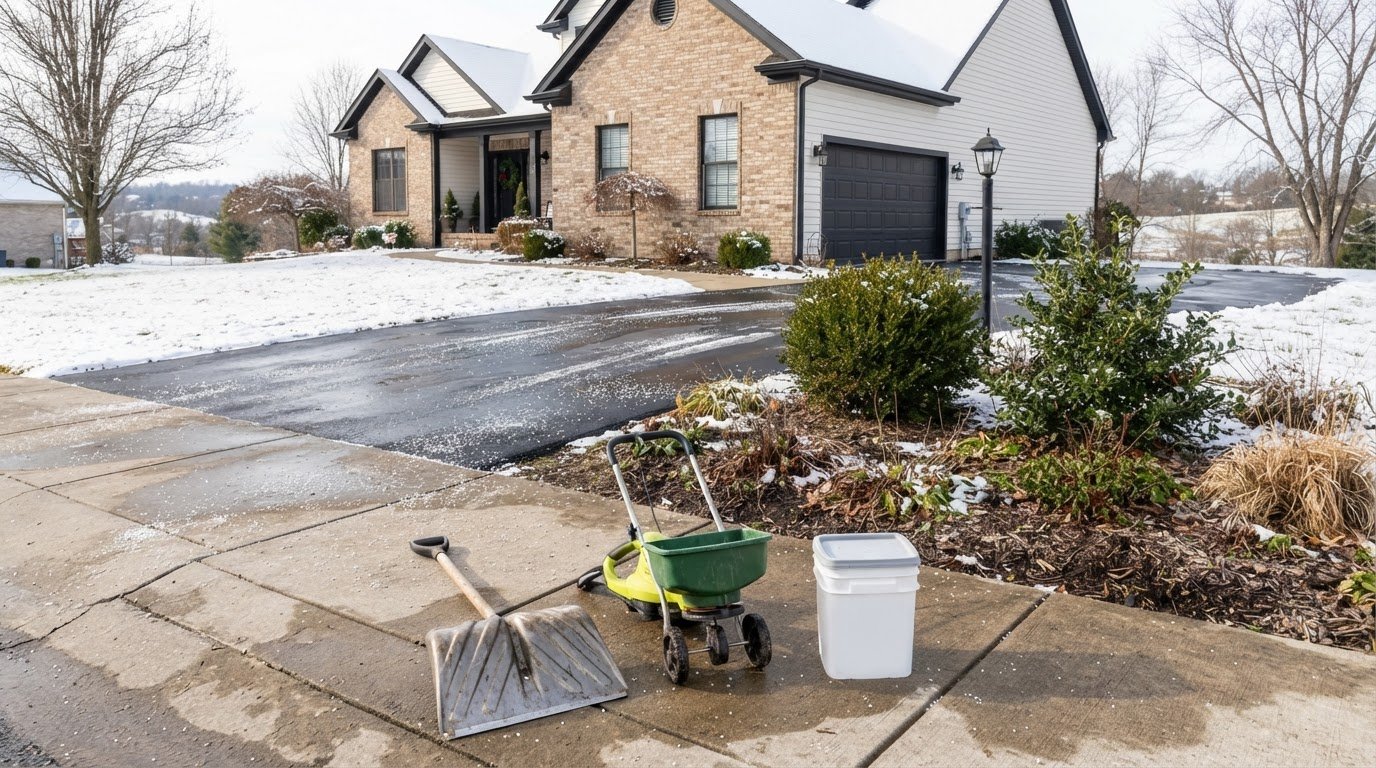
Some salt types can cause hundreds or even thousands of dollars in property damage. Concrete, masonry, vehicle finishes, and metal components can be affected by repeated exposure or poor application. Salt carried by runoff can also reach planting beds, where it may stress vegetation. For a Nicholasville business, treating only the areas that need it helps limit unnecessary contact.
Protect surfaces by following a deliberate sequence:
- Clear loose snow first. Mechanical removal exposes the pavement and reduces the amount of de-icer needed.
- Match the product to the surface. A paved loading area, concrete entrance, and landscaped edge have different exposure concerns.
- Apply evenly to icy sections. Concentrated piles can leave residue and increase exposure around pavement joints and drainage paths.
- Keep product contained. Avoid spreading salt into planting beds, near storm drains, or beyond the treated walking and driving routes.
- Reassess after treatment. Check shaded entrances, slopes, and vehicle lanes, where remaining snow and ice can create slick patches.
These considerations matter on properties with mixed surfaces. A commercial lot, for example, may include asphalt parking stalls, concrete sidewalks, and planted islands. A spreader can distribute material across paved areas, while targeted application on a narrow walkway helps limit spread into adjacent beds. Clearing loose snow before treatment can also reduce leftover material when winter conditions ease.
Businesses comparing commercial salting services in Nicholasville should look for appropriate insurance coverage and well-trained operators. Compare written response-time terms and service guarantees by their stated triggers, covered areas, exclusions, and documentation; don’t assume a promise applies to every storm.
For a Nicholasville property, keep de-icer on the pavement being treated, prevent runoff into drains and landscaped areas, and follow applicable site stormwater controls. These practices limit unnecessary spread and keep entrances, sidewalks, and traffic routes in focus. Product labels provide directions for using each material as intended.
After snow and ice removal, inspect pavement joints, curb edges, and nearby planting areas for residue. Use those observations to guide future applications, helping maintain access while limiting avoidable wear across the property.
Parking lot, driveway, and sidewalk clearing
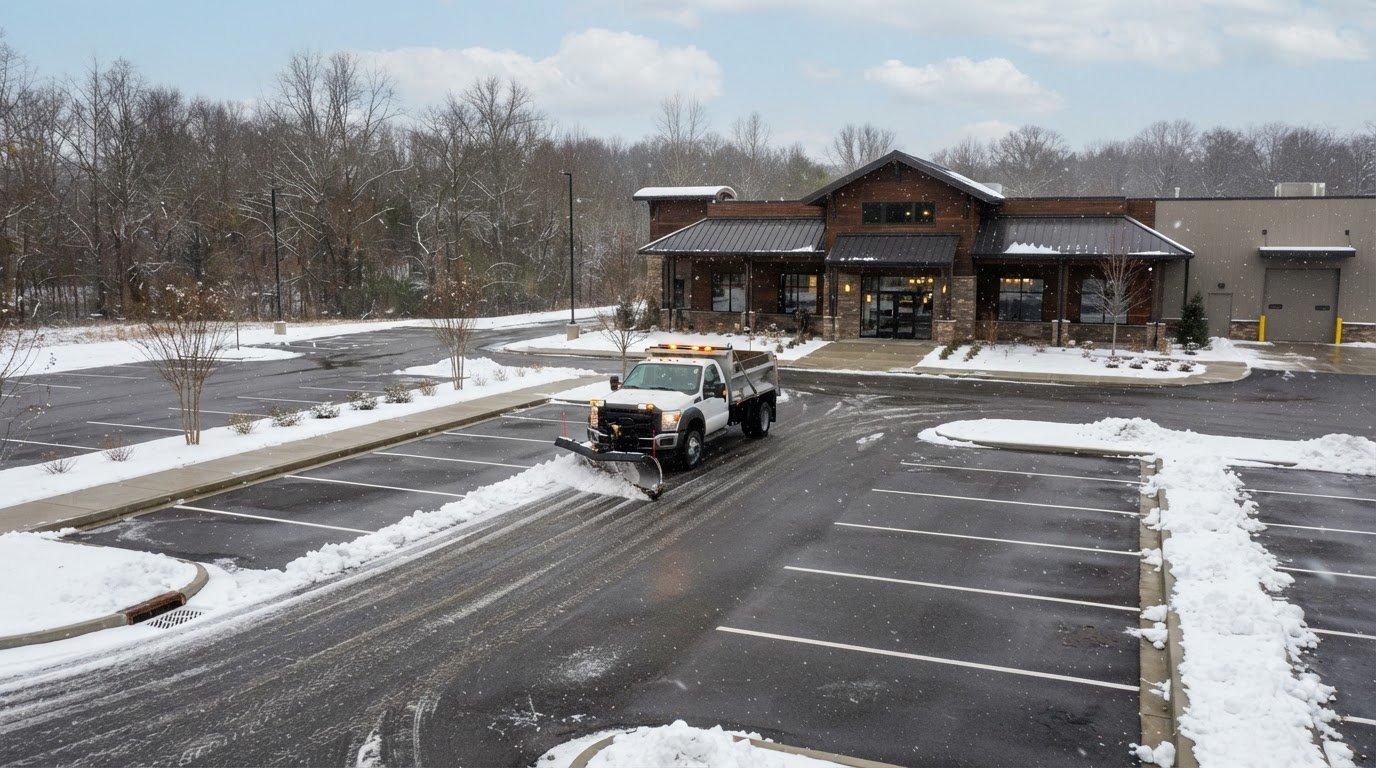
A coordinated plan separates vehicle routes from pedestrian access and treats each area according to its use. In Nicholasville, commercial snow removal can include plowing, clearing entrances, and salting priority walking and driving surfaces.
Nicholasville provider options
For commercial properties, start by listing the site’s winter needs rather than assuming every snow service includes salting. A retail lot may require attention to vehicle lanes and parking areas, while an office entrance may need a clear route across sidewalks and doorways. Write down the exact surfaces and tasks to be covered.
Before winter, map priority areas such as accessible entrances, loading zones, fire lanes, parking rows, and pedestrian routes. Mark where snow can be stored without blocking visibility or drainage. Include private driveways and connecting sidewalks if they serve the same building.
Service areas and storm response
Service-area terms should identify the Nicholasville property address and the surfaces included, not just name a broad county. Businesses can request on-demand salting, but 24/7 response should be treated as covered only when the written service terms define its availability, triggers, and included areas. Clear boundaries prevent a cleared lot from being mistaken for a cleared sidewalk.
Plan the order of work, too. A site plan can identify vehicle routes, parking areas, entrances, and walkways by priority. Specify how repeat visits should be handled as snowfall continues, where plowed snow may be placed, and which entrances matter most. Clear details help managers plan deliveries and staff access.
For a practical site plan, divide clearing into distinct zones:
- Parking lots: Identify drive aisles, accessible spaces, loading areas, and locations where snow can be piled without blocking sightlines.
- Driveways: Mark the full route, turning areas, and the approach to building entrances or service doors.
- Sidewalks: Include connections between parking, entrances, and frequently used paths, rather than stopping at the front door.
- Priority points: Note slopes, shaded sections, and doors where packed snow can interfere with safe passage.
Managers can share this map before the first storm and update it when construction or seasonal operations change access. Keep a record of completed areas and remaining trouble spots, such as a drifted loading bay. For a property-specific discussion of winter property service needs, use the contact page.
Which companies offer commercial salting services in Nicholasville, Kentucky?
For commercial salting services in Nicholasville, first establish whether the provider’s actual winter service includes salting as well as snow clearing. Palisades Outdoor Solutions provides Snow & Ice Removal for driveways and walkways. Define the site layout and access needs so the work plan clearly distinguishes snow removal from any separate de-icing requirements.
Start by defining the work at your property. A retail center may need parking areas, loading zones, and customer walkways treated. An office building may prioritize its main entrance, accessible routes, and employee parking. A written site map helps each provider estimate the scope consistently and makes it easier to compare proposals without overlooking a service area.
Commercial snow contractors should carry appropriate insurance, and operators should be well-trained. Ask for written service details that identify the covered surfaces, snow-clearing tasks, salting work, and how completed visits are recorded. These details matter when a property includes both a broad asphalt lot and narrow concrete paths, since equipment and application methods differ by area.
Compare proposals using the same practical criteria:
- Coverage: Check that the Nicholasville address, entrances, sidewalks, parking lanes, and loading areas appear in the service scope.
- Storm response: Review how service is triggered, how repeat visits are handled, and which routes receive priority.
- Materials and application: Look for clear descriptions of de-icing products and how crews limit spread onto planted areas.
- Documentation: Confirm that service records identify the date, treated areas, and work performed.
- Insurance and training: Compare the provider’s insurance documentation and operator training practices.
A request to “salt the lot” leaves important decisions open. It may not specify whether the sidewalk from accessible parking to the entrance is included, or whether another treatment is needed after additional snowfall. A detailed scope gives property managers a clearer basis for comparing commercial salting services in Nicholasville.
Consider whether the winter plan suits the way people use the property. For a multi-tenant building, identify every shared entrance and pedestrian connection on the site map. This makes it easier to set clear priorities for snow clearing and any separate salting work.
Before winter, organize the property map, priority routes, and service expectations in one document. That gives providers a consistent basis for planning and helps managers understand what the agreed snow and ice work covers.
Commercial salting services in Nicholasville may be offered by different types of providers, but service scope varies. Before arranging winter work, confirm whether the plan covers salting, snow clearing, or both, and identify the paved areas that need attention.
When evaluating providers in the local market, corporate history alone does not establish whether a company offers commercial salting at a particular Nicholasville property or what its service scope includes. Treat company background as secondary information rather than a substitute for a current proposal. Confirm the address served, covered surfaces, application details, response terms, and written service records directly with each provider before comparing options.
What areas in and around Nicholasville do commercial salting providers serve?
Commercial salting coverage in Nicholasville depends on each company’s service boundary and the property address. A provider serving Nicholasville does not automatically cover every location in Jessamine County. Define the site by street address, entrances, and paved areas before comparing service plans. This prevents a broad service-area label from obscuring which parts of a property are included.
For a business near Nicholasville’s commercial areas, a service plan should identify the exact lot, driveway, and pedestrian routes. A multi-building property may have several entrances, separate parking areas, and connecting sidewalks. A single address can still contain distinct zones with different access needs. Map them together so the service boundary reflects how people actually move across the site.
Properties near a county boundary need especially clear location details. A mailing address and the physical site location may describe different places, so use the actual entrance and paved-area map. If a business operates multiple sites, list each address separately. A route that includes one Nicholasville property should not be assumed to include another location elsewhere in Jessamine County.
Use a site map to define the coverage area before winter:
- Mark entrances: Identify public doors, employee entrances, loading doors, and emergency access routes.
- Outline paved surfaces: Show parking areas, driveways, sidewalks, ramps, and connecting paths.
- Label priority zones: Distinguish customer access from service lanes and lower-use parking sections.
- Mark boundaries: Note property edges, shared drives, neighboring lots, and areas outside the requested work.
- Record site changes: Update the map when construction, tenant turnover, or access changes alter traffic flow.
The site map also helps establish where plowed snow can be placed. A pile near a driveway entrance may reduce visibility, while one beside a sidewalk can narrow the walking route. Mark suitable storage areas within the property boundary and keep critical entrances clear. For a multi-building property, label each building and route instead of relying on a general site name.
Commercial salting services in Nicholasville are easiest to compare when every proposal uses the same address list and marked map. Separate Jessamine County locations should appear as distinct sites, with their own paved areas and priorities. That structure clarifies which properties are within the service area and which surfaces require attention during a winter event.
Before seasonal work begins, keep the approved map with the property’s winter operations records. A current plan gives managers and crews a shared reference for entrances, boundaries, and treated areas across each Nicholasville location.
Do Nicholasville salting companies charge per visit, per application, or by seasonal contract?
The billing method and scope determine how winter work appears on invoices. For a Nicholasville property, compare the written tasks and covered areas alongside the billing terms. Similar service labels can describe different work, so check what the agreement actually includes.
Per-visit billing ties a charge to a crew’s service call. The agreement should define what counts as a visit, which surfaces are covered, and whether snow clearing is included. A call for the entrance drive and front sidewalk covers less than one that also includes the full parking area and loading zone.
Per-application billing ties charges to each material treatment. A site may receive one application after plowing and another if conditions require it. The agreement should explain whether separate zones count as separate applications and how treated areas are recorded. This matters when a property has multiple buildings or separate lots.
Seasonal contracts set terms for winter service over an agreed period. Review the covered properties, included tasks, service triggers, and rules for additional visits. A plan may define salting for a commercial lot separately from snow plowing, sidewalks, or repeat applications. The written terms should make those boundaries clear.
The cost depends on the property and the work requested. Key factors include paved area, layout, priority routes, selected materials, service frequency, and whether snow clearing is included.
Compare proposals using the same site map and requested tasks. A side-by-side review can show whether one scope includes sidewalks while another covers only vehicle areas. Check these contract details:
- Billing unit: Identify whether charges apply per visit, treatment, event, or seasonal term.
- Service trigger: Note the conditions that start a visit and who authorizes service.
- Repeat work: Clarify how additional treatment during a continuing storm is billed.
- Included areas: Match the agreement against the property’s driveways, entrances, walks, and parking sections.
- Records: Confirm that invoices identify service dates, work completed, and treated locations.
Ask how the agreement handles a mild winter, repeated storms, or changing site access. These scenarios clarify how visits and applications are recorded. For a commercial property, consistent documentation also helps managers compare invoices with the agreed work plan.
To discuss a site-specific snow and ice plan and request a quote, contact the property services team.
Palisades Outdoor Solutions: Lawn Care & Mowing
Palisades Outdoor Solutions helps property owners maintain the grounds around commercial buildings with Lawn Care & Mowing and Landscape Maintenance. Mulch & Rock Installation and Landscape Construction support broader landscape improvements. These services complement winter planning by helping keep landscaped areas and outdoor spaces maintained across the seasons.
Consider these services when a property needs consistent grounds maintenance alongside a separate winter plan. A business can schedule lawn care and landscape upkeep while defining how its paved entrances and walkways will be managed during winter weather.
To discuss property maintenance needs, contact Palisades Outdoor Solutions.
Plan Ahead for a Safer Winter Property
Winter planning is also a chance to consider how the whole property functions between storms. Businesses looking for commercial salting services in Nicholasville can map winter access needs alongside ongoing care for lawns, planting beds, and outdoor areas.
Palisades Outdoor Solutions provides Snow & Ice Removal, along with Lawn Care & Mowing, Landscape Maintenance, and Mulch & Rock Installation. These services address different parts of property upkeep, from clearing driveways and walkways in winter to maintaining the surrounding grounds. Consider how those needs fit together when setting property priorities.
Share your property’s maintenance goals and winter access needs with the team to discuss a practical next step. Contact Palisades Outdoor Solutions to start the conversation and plan for a well-maintained property through the changing seasons.
Frequently Asked Questions
What commercial properties and surfaces can be treated with ice-melting salt?
De-icer is used on compatible paved areas at commercial properties, such as parking lots, private driveways, loading aprons, sidewalks, and entrance ramps. A warehouse may prioritize dock approaches, while a clinic may focus on accessible paths and entrance pads. Mark surface types, drainage grates, and planted borders on the site map. Keep treatment on intended travel surfaces rather than lawns or landscape beds.
What salt and de-icing materials do local commercial providers use?
Commercial providers may use sodium chloride, calcium chloride, magnesium chloride, or blended de-icers. Product labels identify ingredients and application directions, which help crews select material for the surface and conditions. For example, a property manager comparing proposals can ask which product is planned for a concrete entrance and whether a different material is used near landscaped edges. The application plan should explain where crews will use each product.
What are the risks of salt damage to concrete, landscaping, and vehicles, and how can they be reduced?
Salt residue and runoff can affect concrete, landscape plants, and vehicle surfaces, especially when material accumulates. Limit exposure by applying material only where ice creates a hazard, clearing slush that holds residue, and keeping product away from parked vehicles and planting beds. After winter conditions pass, remove remaining residue from paved areas and vehicle surfaces using appropriate cleaning methods. These steps can reduce unnecessary contact, but they do not eliminate all risk.
What local rules or environmental requirements apply to commercial salt use in Nicholasville or Jessamine County?
Keep de-icer on the pavement being treated, prevent runoff into drains and landscaped areas, and follow applicable site stormwater controls.