More de-icer doesn’t mean safer or faster ice removal. For sidewalk and driveway de-icing in Nicholasville, clear loose snow first, then apply a suitable product sparingly; calcium chloride works at temperatures as low as -25°F, while rock salt becomes much less effective below 15°F. Protect concrete and nearby plants by limiting salt and sweeping up leftover material after the storm.
Frost, thick ice, and nearly invisible black ice each call for a slightly different approach. A careful first step can make the rest of the job easier. It’s understandable to want a clear, safe path without damaging your driveway, sidewalk, or landscaping.
This guide explains how to choose and spread de-icer, when traction grit can help, and how to clear different types of ice. You’ll also find practical ways to limit harm to concrete and plants while keeping outdoor surfaces safer to walk and drive on.
Rock salt, calcium chloride, magnesium chloride, and potassium chloride
- Match the de-icer to the expected pavement temperature. Rock salt becomes much less effective below 15°F, so it may leave icy patches during colder conditions. Calcium chloride works at temperatures as low as -25°F. Potassium chloride works down to about 15°F. These figures help compare products, but they don’t mean every surface will clear instantly.
- Use rock salt when temperatures are above its effective range and ice is light. Spread it over a thin, visible layer rather than leaving piles along the sidewalk or driveway. For example, treat a slick patch near the driveway entrance instead of scattering salt across dry pavement. Excess material can remain after the ice melts and create unnecessary exposure.
- Choose calcium chloride for colder conditions, while keeping the amount limited. It works at temperatures as low as -25°F, making it an option when rock salt is less effective. Large quantities of calcium chloride can harm plants and animals. Keep granules away from garden beds, lawn edges, and places where pets walk or rest.
- Check the product label before using magnesium chloride. The temperature information here doesn’t establish a working range for magnesium chloride, so don’t assume it performs like calcium chloride or rock salt. Follow the label’s stated use and application directions, and apply it only where ice is present, such as a shaded walkway that stays slick.
- Consider potassium chloride only when conditions suit its temperature range. It works down to about 15°F, so it isn’t a colder-weather substitute for calcium chloride. Check the pavement temperature and the forecast before choosing it. If colder conditions are expected, select a product whose stated range fits those conditions, rather than spreading potassium chloride more heavily.
- Compare the four salts by conditions and placement, not by name alone. Rock salt and potassium chloride both have a stated lower limit near 15°F, while calcium chloride works at temperatures as low as -25°F. For magnesium chloride, follow the product label. Use these distinctions to target icy sections and avoid treating unaffected pavement.
- Clear loose snow before applying the selected product, then give it time to work. De-icers help loosen ice from pavement, but they don’t replace removing slush and residue. Once the surface loosens, scrape or shovel away the remaining ice and material. After a Nicholasville freeze, sweep leftover granules from the sidewalk and driveway to limit buildup.
Protecting concrete and landscaping
- Use anti-icers sparingly on sidewalks and driveways. Avoid treating dry pavement or spreading extra material “just in case.” Clear loose snow first, then apply product only where ice remains or is expected to bond. Targeted placement helps reduce chemical residue reaching nearby lawn edges, planting beds, and drainage areas.
- Keep salt off new concrete. Fresh concrete is vulnerable to damage, so clear snow with a shovel and choose a non-salt option for traction where needed. If ice remains, don’t make salt a routine treatment for the new surface. Limiting exposure helps protect the concrete while it is vulnerable.
- Don’t rely on salt as a long-term ice-melting solution. Repeated use can harm lawns, concrete, and animals. For example, salt scattered beside a driveway can reach grass during thawing or runoff. Use mechanical removal where practical, and reserve de-icer for specific icy patches instead of treating the entire walkway.
- Read alternative de-icer labels before applying products near landscape beds. Some products claim to be safer for pets, lawns, waterways, and concrete, but may be less effective than traditional de-icers. Treat those claims as product guidance, not permission to spread freely. Follow the directions and apply only to icy areas.
- Keep chloride-containing products away from drains and planted areas when possible. Chloride from road salt and de-icing chemicals can damage ecosystems. For example, don’t pile treated snow beside a garden bed or storm drain. Shovel snow toward an area where meltwater won’t run directly through valued plants.
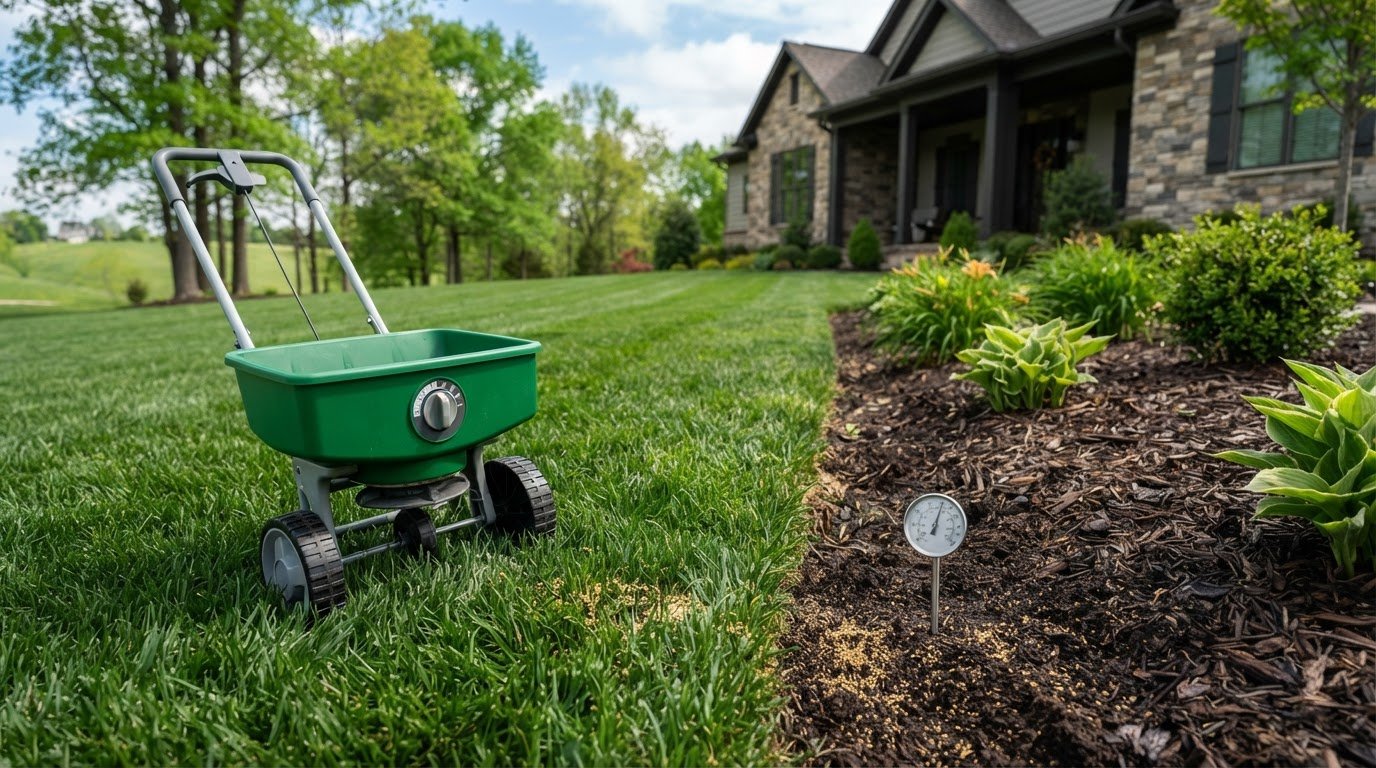
- Use a scoop or spreader to control where granules land. Avoid tossing de-icer by hand near shrubs, lawn borders, or exposed roots. If wind carries granules into a planting bed, sweep them back onto the pavement before they dissolve. A narrow, measured application is easier to manage than scattered piles.
- Sweep up leftover granules or sand after the storm. Once the ice has cleared, collect loose material from concrete and adjoining landscaping to prevent buildup. Check corners, steps, and pavement edges, where residue can gather. Dispose of collected material appropriately rather than washing it into a drain or garden.
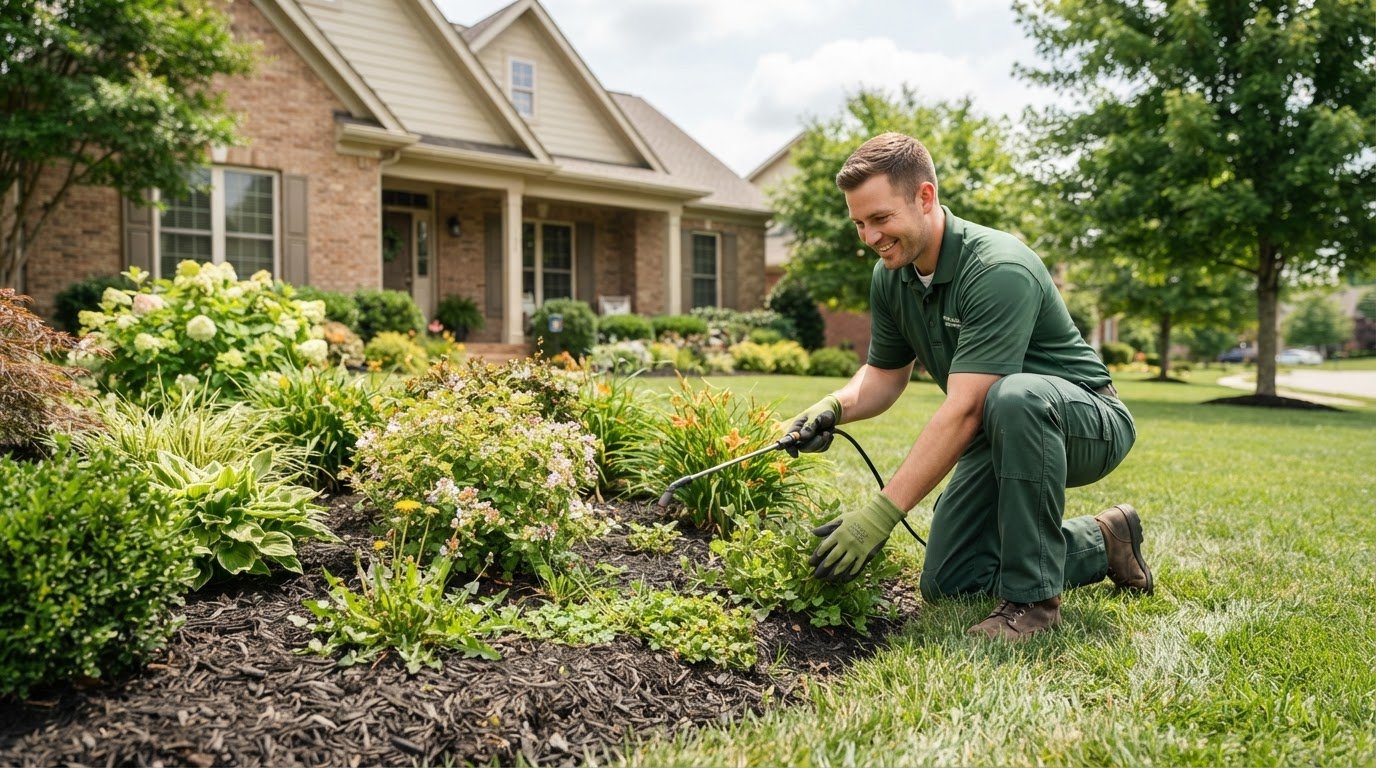
- For recurring concerns around beds, lawn edges, or walkways, plan landscape care around the areas exposed to winter treatments. Palisades Outdoor Solutions offers help with landscape maintenance planning for outdoor spaces that need consistent attention through the seasons.
Shoveling sidewalks and driveways
- Clear snow soon after it falls, before melting or compaction makes removal harder. Work during a lull if snow continues, and push cleared snow away from walking and driving surfaces. For example, open the sidewalk route before moving snow from the driveway apron. Early removal also leaves less packed material to tackle later.
- Choose a flat, wide shovel for a manageable area with thin ice. Its broad blade helps move loose snow across a sidewalk or driveway without repeated narrow passes. Start at the far edge and push snow toward a place where it won’t block the path. Lift only what you can handle comfortably.
- Clear a defined route first, such as the front steps, sidewalk, and path to the driveway. Push snow toward the same side where possible instead of scattering it back across cleared pavement. At the driveway, leave room near the entrance so piled snow won’t slide or be driven onto the walkway.
- Make steady passes instead of waiting for a deep layer to accumulate. On a sidewalk, overlap each pass slightly to avoid thin ridges that can refreeze. On a driveway, work from the garage toward the street, clearing a usable track before widening it. Remove slush too, since it can freeze into a harder layer.
- Use an ice chisel when compacted snow or ice resists the shovel. Work carefully across the stubborn patch, loosening material so it can be lifted or scraped away. For example, focus on the compacted strip where tires repeatedly cross the driveway. Avoid striking one spot forcefully; loosen the layer gradually.
- After shoveling, choose de-icer to melt ice or sand for traction. Scatter the selected material over remaining slick areas, such as a shaded section of sidewalk or a polished tire track. Sand won’t melt ice, but it can add grip. Remember that traction material won’t remove the ice beneath it.
- Check the pavement after the material has had time to act. If de-icer loosens the remaining ice, scrape it away and clear the resulting slush. If sand is still needed for grip, leave it on the slippery patch. Reassess the route rather than treating dry sections that are already clear.
- Sweep up loose sand or leftover granules after the ice is gone. Pay particular attention to pavement edges, steps, and driveway corners, where material can collect. Clearing residue finishes the job and helps prevent buildup through repeated storms. A clean surface also makes it easier to spot fresh ice.
Treating frost, thick ice, and black ice
Apply de-icer 12 to 24 hours before snow arrives to help prevent ice bonding to pavement. After snow or freezing rain begins, clear loose accumulation first, then treat remaining ice.
- For frost, identify the slick surface before spreading anything. Frost can lightly cover a whole walkway while nearby pavement remains dry. Apply a thin, targeted layer of de-icer to the affected area, then remove loosened residue as it releases. Avoid scattering product across clear sections that need no treatment.
- For black ice, treat pavement that looks wet but feels slick underfoot. Focus on shaded sections, driveway slopes, and the transition between sidewalk and pavement. Apply de-icer across the suspected patch, then let it work before scraping or shoveling. Walk carefully around untreated areas, since transparent ice can be difficult to see.
- For thick ice, break the surface before applying de-icer. Use a scraper to create small openings so the product can reach beneath the hard layer. Work across the patch rather than striking one point repeatedly. Once the ice loosens, clear it from the walking route so melted material doesn’t refreeze into ridges.
- Prepare pavement for a forecast snowstorm with salt brine. Apply it before the storm to make ice less likely to bond tightly to the surface. Brine can also reduce the amount of granular salt needed afterward. Keep the treatment on the sidewalk or driveway, not on adjacent planting beds.
- Choose a de-icer rather than table salt to melt ice. Use a product intended for de-icing rather than assuming ordinary salt is suitable. Use the selected product according to its label, focusing on icy spots rather than coating the entire driveway. Once the ice loosens, remove slush and any remaining ice with a shovel or scraper.
- Use sand or traction grit when immediate grip matters more than melting. Spread it over an icy step, sloped driveway section, or slick sidewalk patch. Sand doesn’t melt ice, so use it only for traction while the surface remains slippery. Sweep it up after the ice is gone and reuse it where appropriate.
- Recheck the route after each treatment. Look for glossy black ice, stubborn thick patches, or refrozen meltwater near the driveway entrance. Scrape away loose ice, then add traction material where needed. A final sweep removes excess granules or grit that could otherwise collect along pavement edges.
For a thick layer of ice, breaking the surface with a scraper before applying de-icer can help the product penetrate. The openings let the treatment reach beneath the hard layer; applying it only over an unbroken surface may not provide that access. Once the ice loosens, clear the material from the route.
On stairs, sand can provide traction, while melting the ice is described as the safer solution. Sand and traction grit can add grip on icy pavement, but neither melts the ice. Use them as traction materials, not ice-melting products. After the ice is gone, sweep up the sand or grit and reuse it where appropriate.
What are Nicholasville and Jessamine County rules for clearing snow and ice from sidewalks?
- First identify whether the property is within Nicholasville city limits or elsewhere in Jessamine County. The place name alone doesn’t establish which local code applies. Use the property’s location to distinguish city requirements from county requirements before relying on a cleanup deadline or penalty.
- Look for sidewalk snow and ice provisions in the applicable municipal or county code. Search sections addressing sidewalks, public rights-of-way, property maintenance, and snow removal. A rule may cover a public sidewalk beside private property without applying to a private driveway.
- Read the full provision, not just a search result or brief summary. Note which properties it covers, what condition must be cleared, and whether it specifies a deadline. Don’t assume an obligation, time limit, or fine based on another Kentucky city’s ordinance.
- Distinguish a public sidewalk from your private walkway and driveway. For example, a path from the front door to a garage is different from a sidewalk bordering a street. Check how the local rule describes the area, then clear each surface you need to use safely.
- Pay attention to how the rule treats snow and ice. A sidewalk provision may require clearing snow, ice, or both. Follow the wording that applies to your property, and use shoveling and targeted treatment to remove slippery buildup without spreading material across dry pavement.
- Plan for changing conditions instead of clearing only once. After snow, freezing rain, or a thaw followed by refreezing, inspect the sidewalk and driveway again. Remove loose accumulation and address slick patches, especially along the route from the entrance to the street.
- Keep a clear pedestrian route while moving snow. Place shoveled snow where it won’t cover the sidewalk again, block an entrance, or create a ridge across the driveway. If a local provision defines where snow may be placed, follow that direction instead of piling it in the public path.
- Use the current Nicholasville or Jessamine County code for any specific deadline or penalty. Local requirements can change, and rules for one jurisdiction shouldn’t be treated as rules for the other. Until you identify the applicable provision, clear snow promptly and keep the sidewalk and driveway free of avoidable icy patches.
Removing snow soon after a storm makes it less likely to become difficult to clear as it melts, freezes, or compacts. Treat that as a practical reason to check conditions promptly rather than waiting for a later cleanup. Salt brine is applied before a storm to make ice less likely to bond tightly to pavement and reduce the amount of granular salt needed afterward. This preventive approach can be considered before accumulation begins, while later cleanup addresses conditions already present.
For ice that has already formed, a flat, wide shovel is recommended when the area is manageable and the ice is not too thick. Keep that recommendation within those limits: it suits a smaller area and thinner ice, not every icy surface. Match your approach to whether the snow is still loose or has developed into ice.
Palisades Outdoor Solutions: Lawn Care & Mowing
Palisades Outdoor Solutions helps homeowners care for outdoor spaces surrounding winter walkways and driveways. The de-icing steps above address immediate snow and ice; Landscape Maintenance and Lawn Care & Mowing support broader seasonal upkeep. Choose these services when your lawn and landscaped areas need ongoing attention alongside winter surface care. For a larger property refresh, Landscape Construction can address outdoor improvement projects.
Keep winter de-icing targeted, then maintain the surrounding landscape as conditions change. To discuss outdoor property care with Palisades Outdoor Solutions, contact the team.
Keep Your Outdoor Spaces Ready for Winter
A thoughtful approach to sidewalk and driveway de-icing in Nicholasville can guide how you care for the rest of your property through winter and into spring. Consider the areas beside your walkways: lawn edges, planting beds, and landscape features all benefit from steady seasonal attention. Planning ahead helps protect the appearance and function of these outdoor spaces, not just manage the next icy morning.
Palisades Outdoor Solutions offers Lawn Care & Mowing , Landscape Maintenance , and Mulch & Rock Installation to support the broader care of your property. If you’d like help planning that work, contact Palisades Outdoor Solutions to discuss your outdoor needs. A considered plan can help you move into the next season with well-cared-for spaces and greater confidence in your property.
Frequently Asked Questions
What de-icing products work best for sidewalks and driveways in Nicholasville, Kentucky?
For sidewalk and driveway de-icing in Nicholasville, choose a product based on pavement temperature, ice conditions, and nearby landscaping. Rock salt becomes much less effective below 15°F; calcium chloride works at temperatures as low as -25°F. Potassium chloride works down to about 15°F. For magnesium chloride, follow the product label. Match its stated temperature range to conditions, and keep application away from planting beds.
How much de-icer should I apply per square foot to sidewalks and driveways?
Follow the product label’s coverage directions rather than estimating a universal amount per square foot. Product concentrations and spreader settings differ, so the label’s rate is the practical guide. Measure the pavement area if needed, then apply only enough to treat icy sections. For example, a single slick driveway track doesn’t require treating the entire paved area during sidewalk and driveway de-icing in Nicholasville.
Can de-icers damage concrete, asphalt, plants, or pet paws?
Yes, de-icers can harm concrete, plants, and animals, particularly when used excessively; new concrete is especially vulnerable to salt. Don’t assume every product is safe for asphalt or pet paws. Follow label directions, keep granules away from landscaping, and remove residue from areas where pets walk. For a paved path beside a garden, targeted application helps limit unnecessary exposure.
How can I safely remove ice from a sidewalk or driveway without de-icer?
Shovel snow promptly, then loosen remaining ice with a flat shovel or scraper. For compacted patches that resist a shovel, use an ice chisel carefully and clear away the loosened pieces. Spread sand or traction grit over slick stairs or a sloped driveway for grip. It won’t melt ice, so sweep it up once the surface is clear.
Are there local sidewalk and driveway snow-and-ice removal services in Nicholasville, and what do they charge?
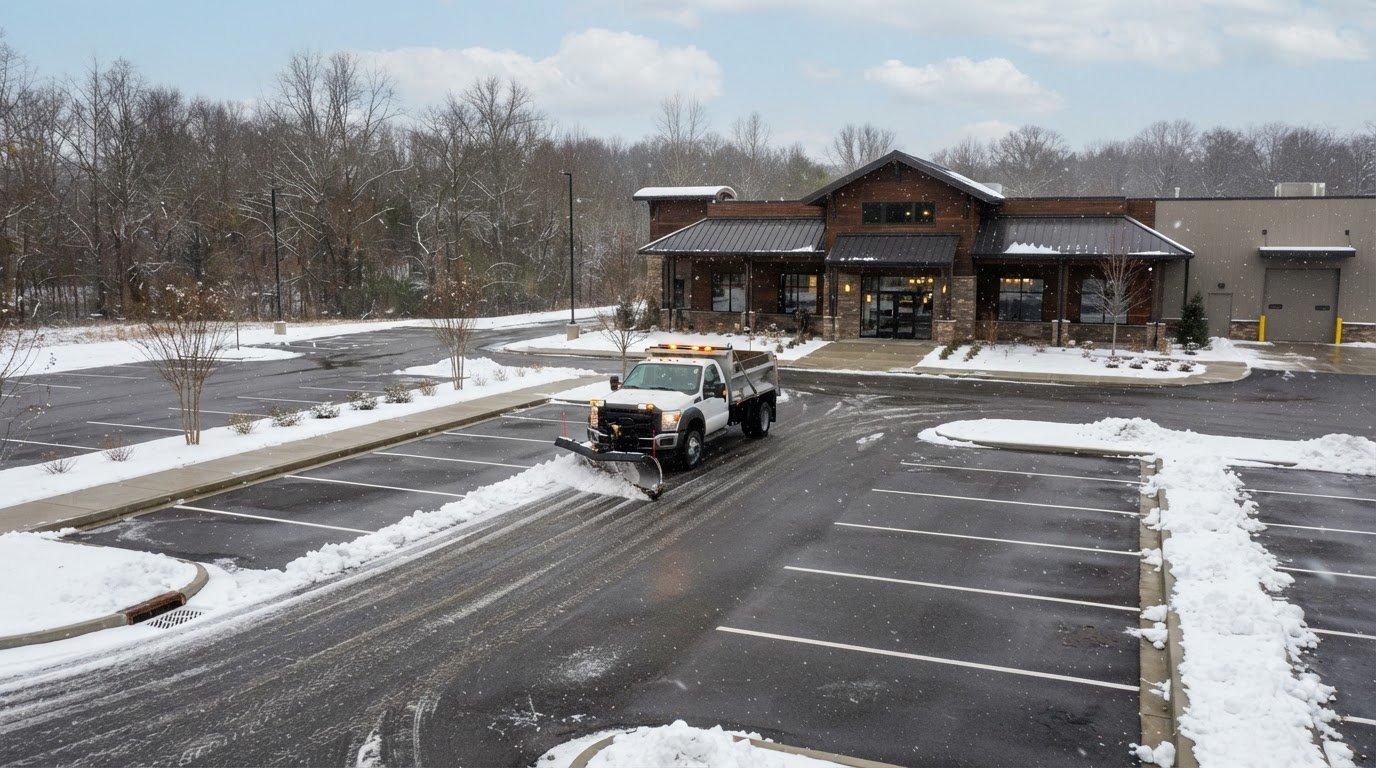
Yes. Palisades Outdoor Solutions provides Snow & Ice Removal for homeowners in Nicholasville, including snow clearing for driveways and walkways. The company offers a free, no-obligation estimate rather than publishing a service price here. Its team is licensed and insured, with an approach that emphasizes listening to property needs and attention to detail. Contact the company for an estimate tailored to your property.