The secret to effective weed control in Kentucky isn't just killing the broadleaf invaders you see; it's cultivating a lawn so dense that weeds simply have no room to grow. Many homeowners in Nicholasville and Lexington spend their weekends spraying dandelions only to see crabgrass take over a month later. Achieving a professional-grade result requires a shift from reactive spraying to a proactive system of weed control lawn care Kentucky residents can rely on year after year.
It's incredibly frustrating to watch your hard work disappear under a wave of clover or fear that one wrong chemical application might scorch your Tall Fescue. You deserve the peace of mind that comes with a predictable, healthy landscape. This guide will show you how to identify local threats and treat them using the same strategies the pros use to maintain lush, healthy turf in the Central Kentucky transition zone. We'll break down the 2026 weed control calendar, explain why professional-grade products outperform retail options, and provide a clear maintenance schedule to help you reclaim your lawn.
Identifying Common Kentucky Lawn Weeds
To master fertilizer and weed control, you first need to know what you're fighting. In Central Kentucky, we deal with two main categories: broadleaf and grassy weeds. Broadleaf weeds like dandelions have wide leaves with net-like veins. Grassy weeds, such as crabgrass, look like your lawn but have hollow stems and joints. Distinguishing between them is the first step in any comprehensive guide to weed control because the treatments for each are vastly different.
Crabgrass remains the top summer enemy for Nicholasville homeowners. It thrives in the heat when your Kentucky Bluegrass begins to stress. Dandelions, on the other hand, are persistent because of their deep taproots. Pulling them by hand rarely works; even a small piece of root left behind will regenerate a new plant within weeks. This resilience makes professional-grade treatments necessary for long-term removal.
If you see invasive clover or ground ivy spreading, it's often a sign of underlying soil issues. Clover frequently indicates a nitrogen deficiency, while ground ivy thrives in compacted, shady areas. Addressing the weed is only half the battle. You must also fix the soil health to prevent their return. A thick, well-fed lawn is the best defense against these opportunistic invaders.
Summer Annuals vs. Perennial Invaders
Annual weeds like crabgrass die with the first frost, but they leave behind thousands of seeds that wait for the spring sun. This makes pre-emergent timing critical. Perennial invaders like Henbit and Chickweed are different. They survive through the winter and require a strategy that targets the living plant rather than just the seeds. Identifying these "warning signs" early prevents a total takeover in the spring. Understanding these cycles is vital for effective weed control lawn care Kentucky residents need to maintain property value.
The Signature Kentucky Bluegrass Dilemma
Kentucky Bluegrass is prized for its color and texture, but it can be delicate during our humid summers. This susceptibility allows weeds to gain a foothold in the lawn. Many Lexington residents find that incorporating Tall Fescue blends through aeration and overseeding provides better heat resistance and weed suppression. The transition zone is the area where cool and warm-season grasses meet. This unique climate means we face pressure from both types of weeds, requiring a specialized approach to weed control lawn care Kentucky lawns need to stay healthy and vibrant through every season.
Pre-Emergent vs. Post-Emergent: The Science of Control
Achieving professional results in weed control lawn care Kentucky requires a scientific understanding of how different treatments interact with the soil and the plant. Pre-emergent herbicides function by creating an invisible chemical barrier in the top layer of soil. This barrier doesn't kill the seed itself but stops the young sprout from developing as it attempts to break through. In contrast, post-emergent treatments target active weeds that have already breached the surface. We prioritize selective herbicides, which are engineered to eliminate specific broadleaf or grassy invaders without harming your turf. Many retail "weed and feed" products deliver sub-par results because they lack the precision of these professional-grade applications, often providing inconsistent coverage that leaves gaps for weeds to thrive.
Understanding the Pre-Emergent Window
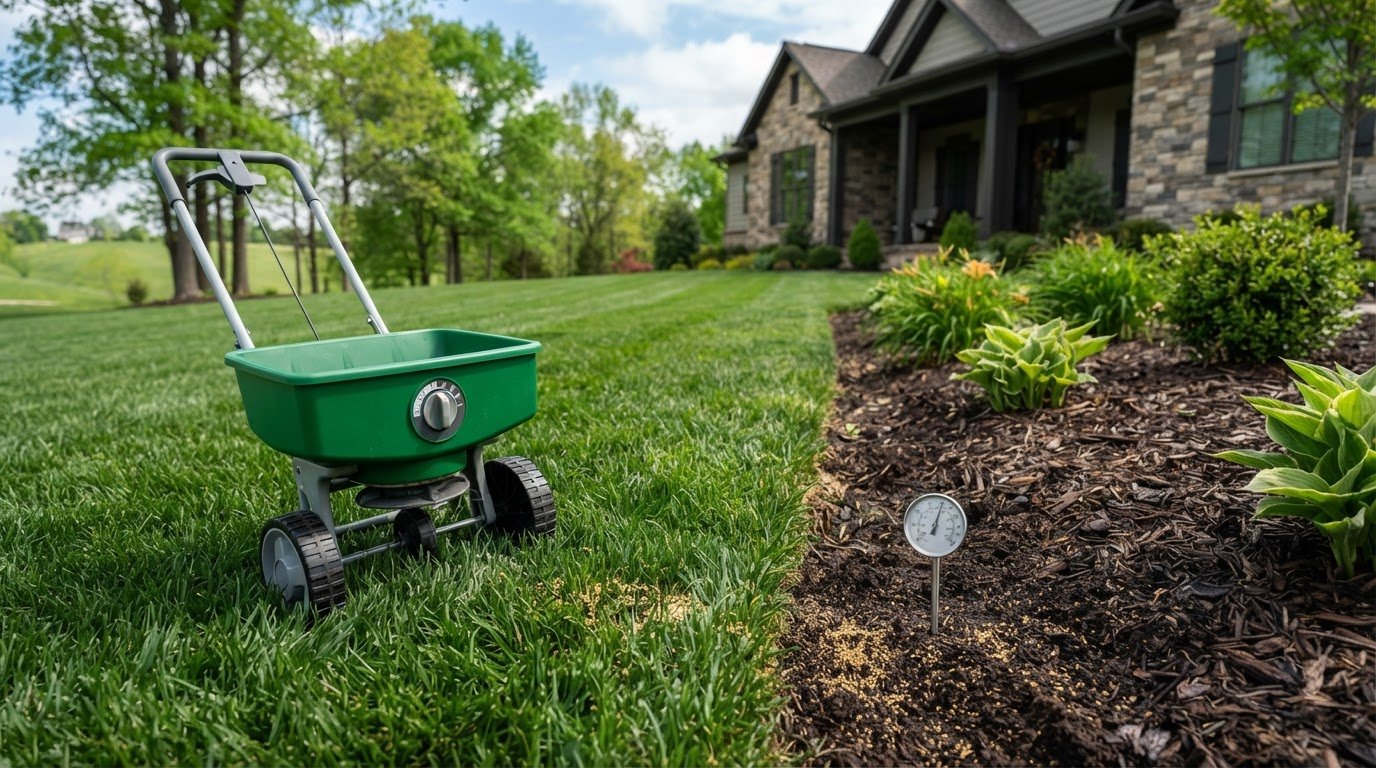
Timing is the most significant factor in a successful prevention strategy. In Nicholasville and Lexington, the critical rule is the 55-degree soil temperature threshold. Once the soil reaches 55 degrees for several consecutive days, crabgrass and other summer annuals begin to germinate. If you miss this early spring window, the preventative barrier will be ineffective against the plants that have already started growing. According to the Kentucky Homeowner Weed Control Guide, missing this window often leads to a season-long struggle with invasive grasses. These products must also be used carefully alongside your long-term goals. Because pre-emergents block all seed development, they can interfere with fall grass growth if applied too close to your scheduled aeration and overseeding sessions.
Spot Treatments and Broadleaf Control
For weeds that manage to emerge, liquid post-emergents offer the most reliable solution. These treatments are absorbed directly through the leaves, moving through the plant’s vascular system to kill it at the root. To maximize this process, we use surfactants. These specialized additives act as a sticker, breaking down the surface tension of the herbicide so it clings to the weed’s foliage rather than bead up and roll onto the ground. This is especially important for weeds with waxy leaves like wild violet or ground ivy. Professional-grade equipment allows for calibrated pressure and nozzle settings, ensuring the mist is fine enough for maximum coverage but heavy enough to avoid drifting into your flower beds. This level of precision provides the stability your landscape needs to remain healthy. If you're concerned about the current state of your lawn, you can reach out for a professional assessment to determine the best course of action.
The Kentucky Weed Control Calendar: When to Treat
The success of any weed control lawn care Kentucky program depends entirely on the calendar. We follow a structured timeline that anticipates weed life cycles rather than simply reacting to them. This systematic approach ensures your property remains a source of pride throughout the year. By understanding the rhythm of our local climate, you can provide the steady care your lawn requires to stay healthy.
- Early Spring (March-April): This is the primary window for crabgrass prevention. We focus on applying pre-emergent barriers before the soil consistently hits 55 degrees.
- Late Spring (May-June): As the weather warms, broadleaf weeds like dandelions and white clover begin their most aggressive growth. This is the ideal time for targeted post-emergent treatments.
- Summer (July-August): Heat-stressed turf needs careful management. We pivot to managing tough invaders like nutsedge, which thrives in the humid Kentucky heat when other grasses might struggle.
- Fall (September-October): This period is about prepping for winter. We target late-season perennials to ensure they don't return even stronger in the spring.
Why Timing is Everything in Central Kentucky
Lexington weather is notoriously erratic, with spring temperatures that can swing thirty degrees in a single day. These fluctuations directly impact how well herbicides work. If you apply treatments during a sudden cold snap, the weeds won't absorb the product effectively. Conversely, applying chemicals during the peak of summer heat can be dangerous for your grass. When temperatures exceed 85 or 90 degrees, even selective herbicides can cause turf burn. Late fall is actually the best time to kill tough perennials because the plants are busy moving nutrients down to their roots for winter. When we apply treatments then, the weeds pull the herbicide deep into their root systems, ensuring a more permanent solution.
Coordinating with Other Lawn Services
Properly managing a property means ensuring different services don't work against each other. If you're planning for aeration and overseeding, you must time your weed control carefully. Most professional-grade pre-emergents stay active in the soil for three to four months. You should never apply pre-emergent right before seeding because the same barrier that stops crabgrass will also kill your expensive new grass seed. We generally recommend a wait time of at least four weeks after a post-emergent broadleaf treatment before you begin overseeding. Aligning your fertilization schedule with these treatments is also vital. A well-timed application of fertilizer and weed control provides the nutrients your grass needs to outcompete any remaining invaders, creating a dense turf that serves as its own natural defense.
Beyond the Spray: Cultural Practices for a Weed-Free Lawn
Herbicides are powerful tools, but they work best when supported by a healthy environment. True weed control lawn care Kentucky relies on cultural practices that make your yard an inhospitable place for invaders. While many guides focus on generic northern climates, Nicholasville and Lexington homeowners must contend with heavy clay soils that compact easily. This compaction chokes out grass roots while allowing tough weeds like plantain to thrive in the hardened earth. Relieving this pressure is a fundamental step in property restoration.
Soil chemistry also plays a vital role in Central Kentucky. Our local soils often lean toward the acidic side, which can lock away essential nutrients from your turf. When your grass can't access food, it thins out, leaving gaps for opportunistic weeds. In many cases, applying lime to balance the soil pH is a more effective long-term solution than chemical applications alone. Restoring this balance ensures your grass has the competitive advantage it needs to reclaim the landscape.
Mowing and Irrigation Strategy
The height of your grass directly impacts weed germination. We recommend setting your mower blades to 3.5 or 4 inches for Kentucky Bluegrass and Tall Fescue blends. Taller grass provides a natural canopy that shades the soil surface, preventing sunlight from reaching dormant weed seeds. This simple adjustment acts as a biological barrier. Combine this with a "deep and infrequent" watering method to encourage turf roots to grow deep into the clay. Shallow watering only feeds weeds. Ensuring your system receives regular irrigation maintenance prevents the dry spots where weeds often gain their first foothold.
Soil Health and Nutrition
A thick, vigorous lawn is your best defense. When your grass is dense, there is no physical space for new weeds to establish. This density is driven by consistent nutrition and proper nitrogen levels. If nitrogen is too low, you will likely see an influx of clover; if it is applied incorrectly, you might stress the turf during a heatwave. Professional fertilizer and weed control ensures your soil chemistry is precisely balanced for our transition-zone climate. This methodical approach provides the stability and aesthetic appeal you expect for your home.
If you are ready to move beyond reactive spraying and build a truly resilient landscape, contact our team today for a comprehensive property assessment.
Professional Weed Control in Nicholasville: Why Expertise Matters
While many homeowners begin their journey with retail products, there is a distinct gap between consumer-grade and commercial-grade herbicides. Professional formulations offer higher efficacy and more targeted control over resistant species that standard products often miss. These commercial products require precise calibration and specialized knowledge to apply safely. Using the wrong concentration or applying at the incorrect time can result in turf damage or ineffective results. Entrusting your property to a seasoned professional ensures that these powerful tools are used responsibly and effectively to maintain a healthy environment.
Precision is especially critical in Nicholasville and Lexington, where prized landscape plants often sit adjacent to turf areas. We use specialized equipment designed to minimize drift and ensure that treatments stay exactly where they belong. This level of control protects your boxwoods, perennials, and ornamental trees from accidental exposure. Consistency also plays a major role in long-term success. A year-round property stewardship program prevents the seasonal fluctuations where weeds gain a foothold during transitions in the weather. This methodical approach provides the stability your landscape needs to thrive.
Beyond the immediate aesthetic benefits, professional weed control lawn care Kentucky increases the overall value of your home. A healthy, weed-free lawn serves as the foundation for your property’s curb appeal. It creates a welcoming environment and signals that the entire property has been maintained with meticulous attention to detail. This long-term care preserves your investment and ensures your outdoor space remains a functional, beautiful asset for years to come.
The Palisades Outdoor Solutions Difference
We believe that a lawn is more than just grass; it's a vital component of your home's ecosystem. Our team is committed to the functional beauty of the Nicholasville landscape, treating every property with the quiet confidence of a master of the craft. We provide peace of mind by acting as a dependable partner in your property's health. By integrating weed control with our comprehensive landscape maintenance services, we offer a total solution that addresses everything from soil health to aesthetic organization.
Getting Started with Your Custom Plan
Every property in Central Kentucky has unique challenges, from varying degrees of shade to different soil compaction levels. Your journey begins with a thorough initial lawn health assessment. We examine your specific turf type, identify current weed pressure, and evaluate soil conditions to build a strategy tailored to your needs. This methodical approach ensures we apply the right treatments at the right time for your specific environment. To begin your journey toward a stable, healthy lawn, contact Palisades Outdoor Solutions for a weed control consultation today.
Reclaiming Your Central Kentucky Landscape
Maintaining a lush, healthy lawn in our transition-zone climate requires more than just reactive spraying. It's about understanding the seasonal rhythm of our region and supporting your turf through proper mowing heights and soil nutrition. By combining professional-grade treatments with sound cultural practices, you can create a dense, resilient lawn that naturally resists even the most persistent invaders. This systematic approach provides the stability and aesthetic appeal your home deserves.
Palisades Outdoor Solutions has been serving Central Kentucky since 2026, providing the expert local knowledge of Nicholasville and Lexington soil necessary for consistent results. Our comprehensive lawn care and landscaping packages ensure your property receives steady, meticulous attention from a master of the craft. Reaching your goals for a beautiful landscape doesn't have to be a source of confusion. You can enjoy a vibrant yard that reflects the true pride of home ownership. Request Your Professional Weed Control Estimate today to begin a custom program for weed control lawn care Kentucky residents trust. Your perfect lawn is well within reach.
Frequently Asked Questions
Is professional weed control safe for my pets and children?
Professional weed control is safe for families and pets as long as you allow the application to dry completely before entering the lawn. We generally recommend staying off the grass for at least one to two hours, depending on humidity and sunlight levels. Once dry, the product is bonded to the plant or soil and is no longer a contact hazard. We prioritize precision to ensure treatments stay exactly where they're intended.
How long does it take to see results after a weed control treatment?
You will typically notice weeds beginning to curl or discolor within seven to ten days after a post-emergent application. Tougher perennials might take up to two weeks to fully wither and disappear. It's important to remember that professional weed control lawn care Kentucky programs focus on the root system, not just the leaves. This ensures the plant dies completely rather than just losing its top growth, leading to a cleaner landscape.
Can I mow my lawn immediately after it has been sprayed for weeds?
We recommend waiting at least 24 to 48 hours before mowing after a liquid weed treatment. This delay allows the herbicide enough time to be absorbed through the leaf surface and travel down to the root system. Mowing too soon removes the treated foliage and can significantly reduce the effectiveness of the application. For the best results, it's also helpful to avoid mowing for 24 hours before the service.
Why do I still have weeds even though I used a pre-emergent in the spring?
Pre-emergents only stop new seeds from germinating; they don't kill existing perennial weeds like dandelions or wild violets that survived the winter. Additionally, if the soil was disturbed through heavy raking or if the application missed the 55-degree soil temperature window, the barrier may have been breached. Some weeds also develop resistance to certain consumer-grade products, making a professional-grade weed control lawn care Kentucky strategy necessary for complete coverage.
What is the most difficult weed to kill in a Kentucky lawn?
Wild violet and nutsedge are among the most difficult invaders to manage in Nicholasville yards. Wild violets have a waxy coating that repels many liquids, while nutsedge grows from underground tubers that can remain dormant for years. Controlling these requires specialized selective herbicides and professional surfactants that help the product stick to the leaf. A single application is rarely enough; these species often require a persistent, multi-season approach to fully eradicate.
Does a healthy lawn really stop weeds from growing naturally?
A thick, healthy lawn is the most effective biological weed control available. When your grass is dense and maintained at a height of nearly four inches, it shades the soil and prevents weed seeds from receiving the sunlight they need to sprout. Healthy turf also competes more successfully for water and nutrients, leaving very little for invaders. This natural defense reduces the need for heavy chemical applications over time as your lawn matures.
How much does a professional weed control program cost in Nicholasville?
The cost of a professional program in Nicholasville depends on several factors, including the total square footage of your turf and the specific weed pressure present. We customize every plan based on your lawn's unique health assessment rather than using a one-size-fits-all approach. Factors such as soil compaction and existing nutrient deficiencies also influence the treatment schedule. For an accurate understanding of your property's needs, we recommend requesting a personalized estimate.
What happens if it rains right after my lawn is treated for weeds?
Rain is actually beneficial for pre-emergent treatments because it helps wash the product into the soil where it can create a barrier. However, liquid post-emergent sprays for broadleaf weeds typically need about one to two hours of drying time to be rainfast. If a heavy downpour occurs immediately after a post-emergent application, the product might be washed off the leaves. We monitor local Nicholasville weather patterns closely to ensure treatments are applied during optimal windows.