The best snow-plowing contract spells out where crews will work, when service begins, and whether ice treatment is included. When comparing snow plowing contracts in Nicholasville, weigh on-demand, seasonal, and multi-site options against your property’s access needs rather than choosing by contract label alone. The written scope should identify covered entrances, lanes, and parking areas, so you know what work to expect when winter weather arrives.
It’s reasonable to want a plan that keeps drives, parking areas, and walkways usable without leaving uncertainty about service timing or ice control. This guide explains how to compare contract structures, map priority routes, decide how snow and ice treatment fit together, and determine whether a contractor serves your Nicholasville ZIP code. You’ll also learn what to include in the service scope so the selected arrangement fits your property and the way people use it.
Choosing a qualified snow removal contractor
A useful contract defines the property areas covered, the service trigger, response expectations, and ice treatment. For a Nicholasville property, compare these details before weighing the contract’s pricing structure.
Pay-Per-Push and Seasonal Pricing
Pay-per-push pricing charges for each completed plowing visit, while a seasonal contract covers service under agreed winter terms. Compare how each option handles repeated storms, partial visits, and ice treatment. Seasonal coverage can make budgeting more predictable, but its value depends on the included work and winter conditions. Pay-per-push ties charges to visits, so clarify what counts as a push and which areas each visit covers.
Snow Plowing and Removal Plans
A snow removal plan sets out the sequence for clearing priority areas and addressing ice. Identify the trigger depth, covered areas, expected response window, and whether sidewalks receive separate service. The contract should distinguish plowing from hauling snow away, as these are different tasks. Match the trigger depth and response time to access needs, traffic patterns, and site operations, then state both in the agreement.
Start planning before winter needs become urgent, leaving time to map the property and define the scope. There is no single booking date for every site. Route complexity, contract review, and seasonal scheduling all affect timing.
Comparing Contractor Bids
A bid comparison evaluates written scopes on the same basis, rather than price alone. For Jessamine County, list each entrance, drive lane, parking area, and sidewalk, then compare trigger depth, service window, ice treatment, and billing method. Check whether a bid includes repeat visits or only an initial pass. A clear side-by-side scope reveals differences that a single total can hide.
Contract Exclusions, Liability, and Insurance
Contract exclusions specify work the agreement leaves out, while liability and insurance terms describe responsibility and coverage. Review exclusions for sidewalks, snow hauling, ice treatment, blocked areas, and damage to site features. Confirm that the agreement explains how incidents are documented and handled. Compare insurance evidence and stated coverage with the property’s needs. A service description alone does not settle responsibility for every loss.
Sidewalk Snow-Removal Priorities
Sidewalk priorities are the walking routes cleared first to preserve access across a property. Mark the paths connecting entrances, accessible parking, and building doors, then note which routes need early attention. Lexington schedules its Rank 1 city-managed sidewalks for clearing within 24 hours after a snow event ends, and Rank 2 sidewalks within 48 hours. Those municipal schedules apply to Lexington, not automatically to private properties in Nicholasville.
Schill notes that Ohio may have a winter with only 20 snow-removal events.
In Lexington, residents and businesses must clear adjacent sidewalks when more than 4 inches of snow has fallen and their street has been plowed. Lexington sidewalk-clearing crews mobilize when street plows mobilize. Lexington classifies primary traffic routes through neighborhoods and streets critical to keeping schools open as Ranked 3 for snow removal. In Lexington, vehicles stalled or disabled on the normally traveled part of a public roadway may be removed to facilitate snow removal and traffic flow. In Lexington, vehicles parked along snow emergency routes may be removed if the mayor declares a snow emergency.
On-demand, seasonal, and multi-site service
These service models organize snow response around one property, a winter season, or several locations. Match the structure to your operating schedule, access priorities, and number of sites.
On-Demand Service
On-demand service dispatches snow removal when a property needs attention, rather than covering a full season in advance. It may suit a site with occasional service needs or a manager who prefers to request visits as conditions change. Record who can request service, how requests are sent, and which areas crews should clear first. For example, a manager might prioritize the main entrance and loading area before secondary parking.
A published customer testimonial describes a snow-removal crew arriving within 30 minutes of a call during a blizzard. That account is one reported experience, not a response-time standard for every property or storm. For a workable plan, define the service trigger and communication process in the agreement, so staff know when and how to request a visit.
Seasonal Service
A seasonal contract sets out snow-removal coverage for an agreed winter period. It can help managers plan service across repeated storms without arranging each visit separately. Review how the contract handles snowfall triggers, repeat visits, ice treatment, and changing site conditions. A retail property, for instance, may need its customer entrance cleared before less-used areas receive attention.
Seasonal coverage works best when the site map and priorities are clear before service begins. Mark entrances, parking rows, pedestrian paths, and places where snow may be piled. Note areas that need a different sequence, such as a delivery lane that must remain accessible. These details help crews follow a consistent route when weather calls for multiple clearing rounds.
Multi-Site Service
Multi-site service coordinates snow removal across several properties under one management plan. It can simplify oversight when locations share operating priorities, but each site still needs its own route details. Create a separate map for every address, identify priority areas at each property, and record the site contact who can direct crews. A clinic and nearby office may need different access routes, even under one agreement.
For snow plowing contracts in Nicholasville, compare whether each location receives a defined scope or shares one broad service description. Review how the plan handles simultaneous weather impacts, site-specific access, and updates between locations. A manager can then see which tasks belong to each property and coordinate staff accordingly. To organize a property-specific snow and ice plan, use the contact page to discuss the site’s needs.
For multiple locations, clarify how dispatch decisions are made when storms affect properties differently and how managers receive status updates.
Schill describes an Ohio winter scenario with 40 snow events under a fixed-price seasonal agreement, and another Ohio winter scenario with 100 snow events under a fixed-price seasonal agreement. These scenarios make it useful to ask how the agreement defines coverage, repeat visits, and communication when event frequency varies. Confirm that site maps, contacts, and priority routes remain current, so coordinated oversight does not blur the requirements of any individual property.
Pre-storm preparation and route planning
Pre-storm preparation means getting a property ready so its clearing plan can be followed. Start with a site walk, a current property map, and a list of operating priorities. Mark entrances, loading areas, pedestrian paths, drains, curbs, and places where snow can be stored. For a Nicholasville office, note which entrance staff use before business hours and which lane deliveries need.
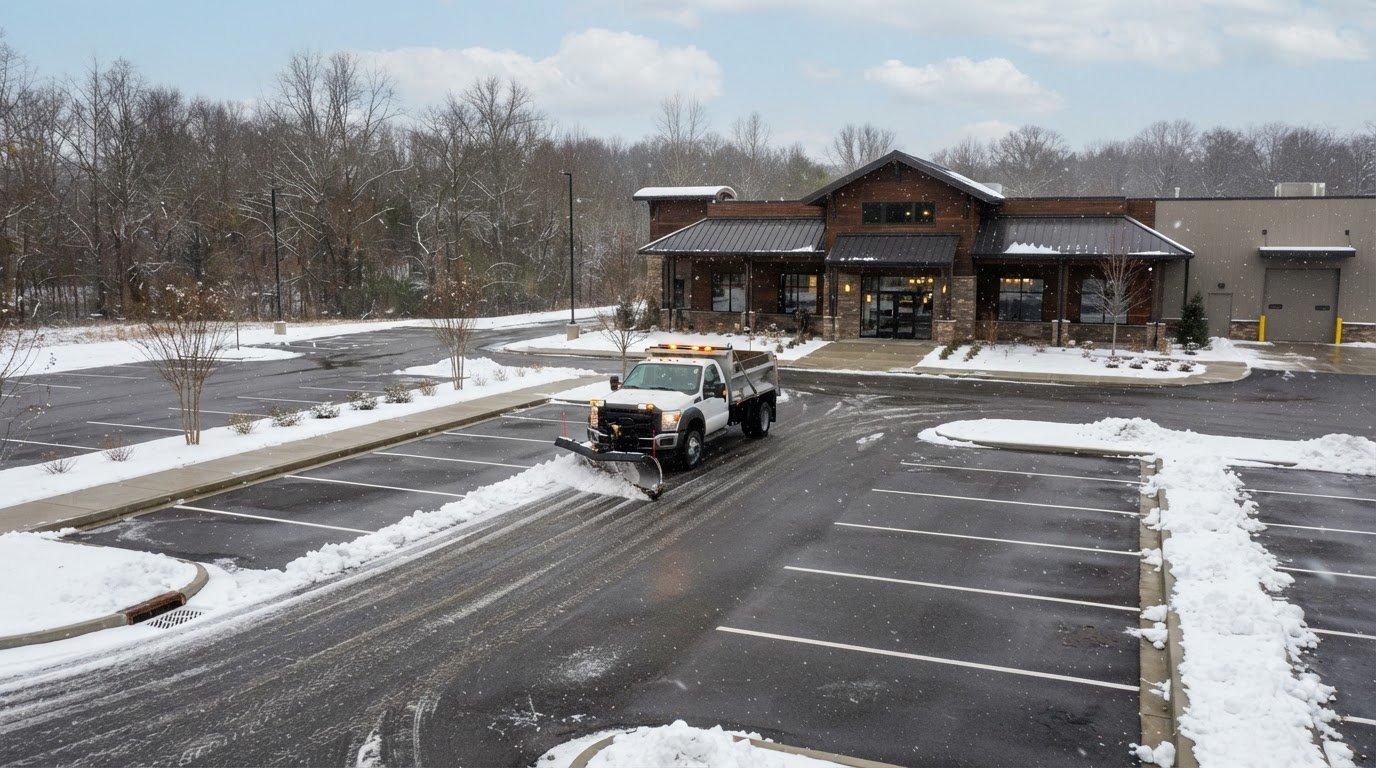
A plowing route is the planned sequence crews follow to clear a property. Divide the site into connected sections, then identify the access points that must remain open first. For example, a route might begin at the primary entrance, continue along the main drive, clear the loading zone, and finish in secondary parking. Showing the sequence on a map helps crews avoid working against the site’s normal traffic flow.
Route priority is the order assigned to streets or property areas according to use and access needs. Lexington prioritizes streets for snow and ice removal based on traffic volume, while also considering access to public transportation, emergency services, and schools. Property managers can apply similar planning logic to private sites: identify heavily used routes, essential building access, and connections to transit stops or nearby services. This is a planning comparison, not a city rule for Nicholasville properties.
Include property details on the route map when they affect a plow’s path or snow placement. Mark narrow drive aisles, raised curbs, islands, signs, gates, and loading bays. Show where snow can be piled without blocking entrances, sightlines, or the next part of the route. At a retail center, for example, a manager might designate a clear path between the main entrance and accessible parking, then mark a separate snow-storage area.
Site readiness means preparing the property so crews can follow the agreed route. Before winter, update the map after construction, restriping, or changes to parking and access. Make sure property staff can identify the entrances and landmarks shown on the plan. If a gate code or access procedure applies, include it in the site instructions so crews can reach the planned starting point without relying on informal directions.
A route review is a final walkthrough to check the plan against actual property conditions. Follow the route from the entrance to the farthest priority area, comparing each turn with the map. Flag parked-vehicle areas, tight corners, and places where a completed pass could block another route. A clear plan gives property managers a practical basis for reviewing service after a storm and updating instructions when site use changes.
Ice treatment and refreeze checks
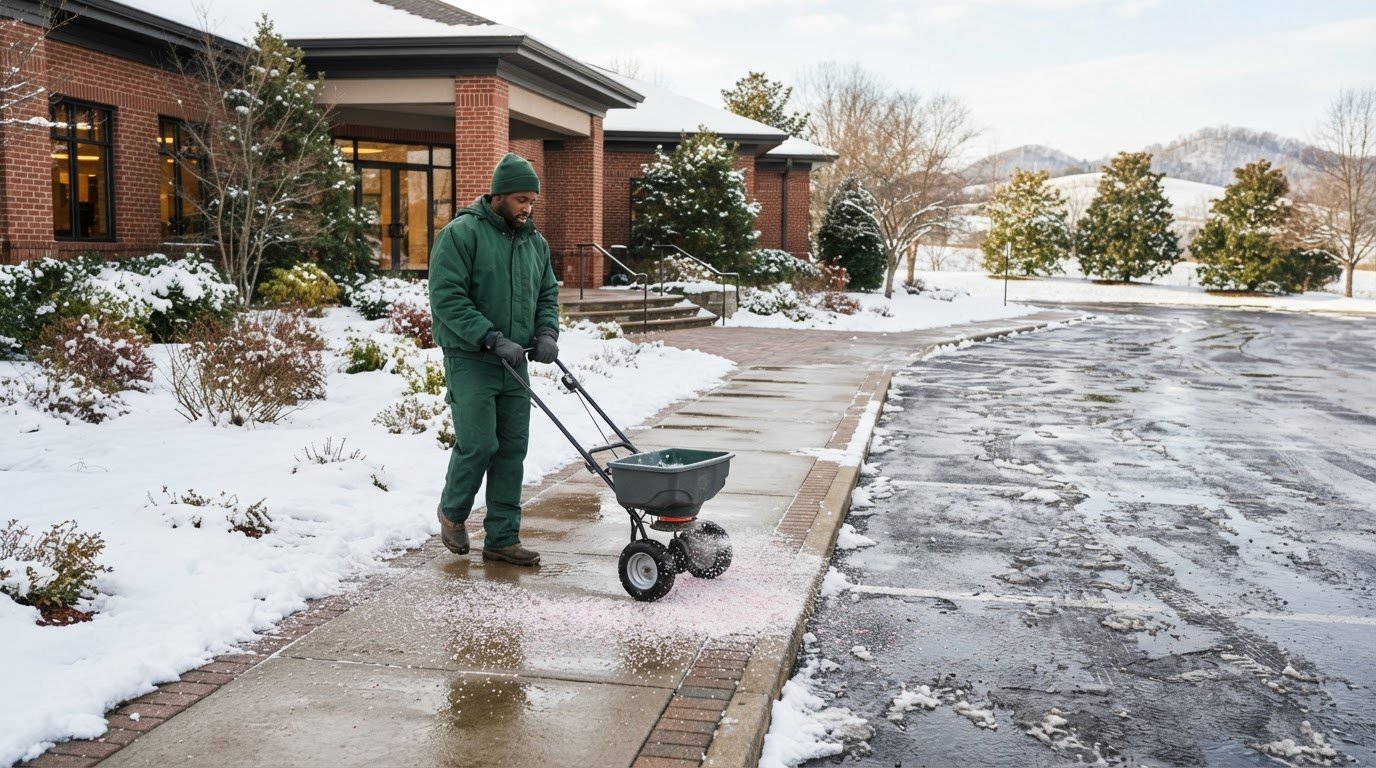
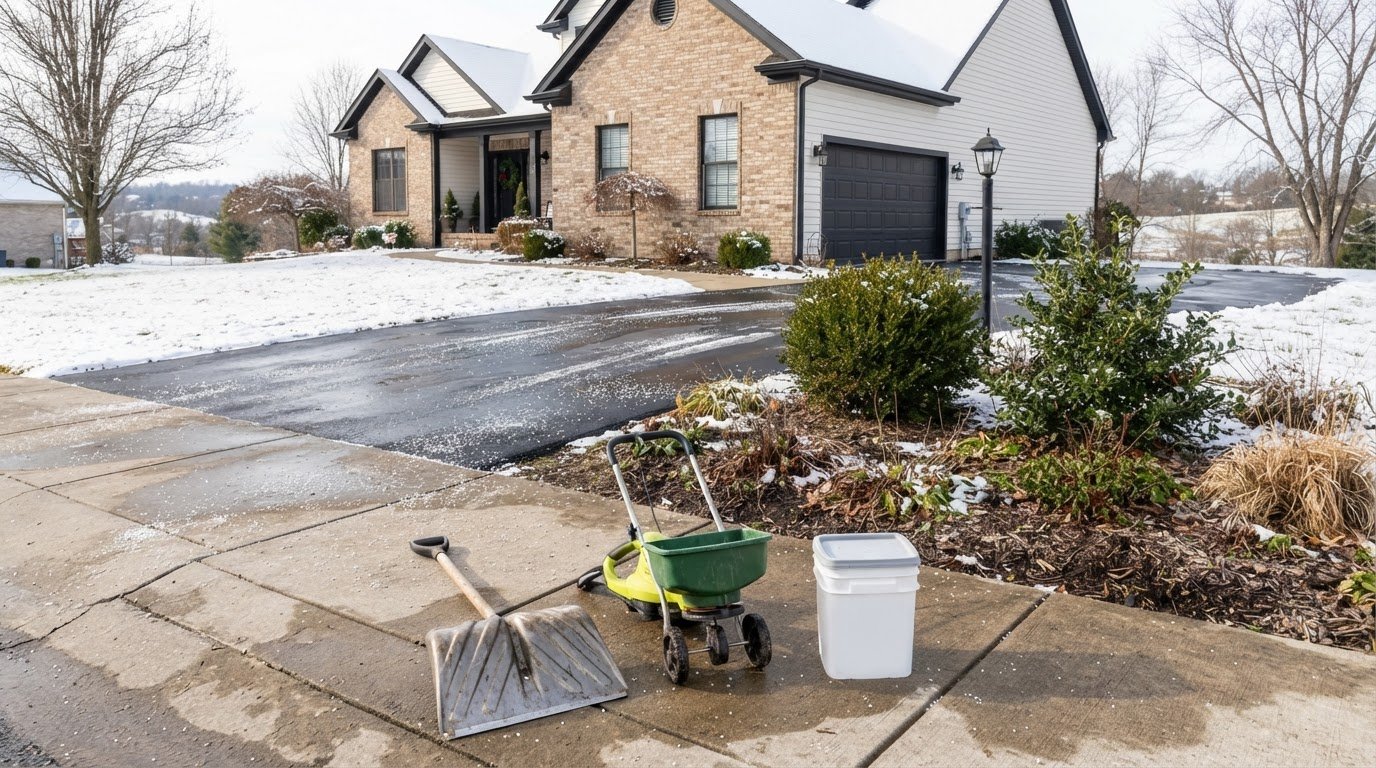
Ice treatment means applying an agreed method to address icy surfaces after plowing. A contract should define which areas receive treatment, such as entrances, ramps, sidewalks, and loading zones. It should also state whether treatment happens during the initial visit or after snow clearing. That distinction helps managers understand what work is planned for a building entrance after plows pass.
A refreeze check is a follow-up inspection for newly slick areas after melting snow or moisture freezes again. Include the check in the site plan and mark priority locations on the property map. For example, inspect shaded walks, sloped driveways, and spots where roof runoff crosses a pedestrian route. These areas can behave differently from an open parking lane, so one uniform route may miss them.
Priority treatment means addressing the surfaces people need to reach essential parts of a property. Mark a continuous path from parking to the main entrance, then identify connections to accessible entrances and delivery doors. At an office, this might mean treating the entrance walk and the route from employee parking before a less-used rear path. Set the sequence to match the property’s daily use.
Application scope describes the materials and work included in an ice-treatment visit. Specify whether the agreement includes treatment after plowing, during a refreeze check, or only when requested. Identify the covered surfaces and locations, then record any site-specific application instructions. For example, a manager can flag decorative paving or planted edges near a walkway for careful handling.
Weather monitoring means reviewing conditions that may change the state of a cleared surface. Use a consistent site procedure to note melting, runoff, shaded areas, and renewed slickness during inspections. A thaw followed by falling temperatures can affect a north-facing entrance differently from a sunlit parking area. The plan should say who records observations and how they are shared with the property manager.
Service documentation records where and when snow or ice work took place. A useful entry names the property area, work completed, and any remaining concern, such as a blocked drain or recurring runoff. Managers can compare the notes with the site map and adjust instructions for later visits. Clear records also help staff distinguish untreated areas from surfaces that became icy again after service.
Contract review means checking that ice control has a defined scope alongside plowing. Before winter, walk the property and match the written plan to actual paths, slopes, drains, and entrances. If the plan says “walkways,” identify each one on the map. Precise locations and follow-up steps make ice treatment easier to coordinate across a Nicholasville property.
Service coverage in Nicholasville ZIP codes
Service coverage is the set of addresses and property types included in a contractor’s operating area. For a Nicholasville property, use the complete street address and ZIP code when reviewing coverage, rather than relying on the city name alone. A property near a municipal edge may have a Nicholasville mailing address while its access roads or surrounding sites fall elsewhere. Record the actual service address for every building.
A ZIP-code check matches a property’s postal address to the contractor’s stated coverage area. Start with the address shown on the property’s lease, tax record, or management system. Then compare the street, city, and ZIP code with the service-area description and contract. If one management portfolio includes a Nicholasville office and a nearby Jessamine County site, assess each address separately instead of assuming one location establishes coverage for both.
Coverage also depends on the work location, not just the mailing address. List the driveways, parking areas, sidewalks, and entrances that need clearing at each property. A commercial parcel may have a rear loading entrance reached from a different road than its public address. Include that entrance and its access route in the site description so the service scope reflects the full property.
Use a simple address record for each location:
- Property identity: list the site name, full street address, city, and ZIP code.
- Service areas: identify the parking, drives, walks, and entrances to be covered.
- Access notes: describe gates, shared drives, loading areas, or separate building entrances.
- Local contact: name the property representative who can clarify site directions.
A citywide population figure cannot establish whether an individual address falls within a particular service route. Use the actual property address instead. For multi-site management, keep one record per location, even when several sites share a ZIP code. Separate records make it easier to distinguish coverage, route instructions, and property-specific priorities.
Before a snow season begins, compare the address list with the written contract and property map. Check that each covered building appears by address and that the listed service areas match its map. If a site changes ownership, access, or use, update its record and instructions. To discuss coverage and property-specific needs, share your Nicholasville property details.
Palisades Outdoor Solutions: Lawn Care & Mowing
Palisades Outdoor Solutions helps property managers maintain outdoor spaces with Lawn Care & Mowing and Landscape Maintenance. After setting winter priorities, managers can plan for the grounds that need attention as the seasons change. Regular mowing and landscape upkeep support a tidy, functional property, while mulch and rock installation can refresh defined landscape beds. Landscape Construction can address broader outdoor improvements when a site needs more than routine care.
These services are a natural fit for properties that need organized maintenance beyond snow planning. Share your property goals with Palisades Outdoor Solutions through the contact page.
Plan the next step for your property
A winter service plan can also clarify how the rest of your grounds fit into year-round property care. As you assess snow plowing contracts in Nicholasville, consider how winter access connects with the condition and use of the surrounding landscape. Palisades Outdoor Solutions provides Lawn Care & Mowing, Landscape Maintenance, and Mulch & Rock Installation to support outdoor spaces beyond the snow season.
For a property manager, the next useful step is to outline the site’s priorities and discuss how they relate to ongoing landscape needs. A clear picture of entrances, grounds, and maintenance goals gives the conversation a practical starting point. Contact Palisades Outdoor Solutions to discuss your property and its outdoor maintenance needs. A well-organized plan can help you move into the next season with greater clarity and confidence.
Frequently Asked Questions
Which snow plowing contractors serve Nicholasville, Kentucky?
Palisades Outdoor Solutions provides snow and ice removal for homeowners in Nicholasville, Kentucky, and is licensed and insured. Its approach centers on expertise, customer-focused service, attention to detail, and affordable pricing. When considering snow plowing contracts in Nicholasville, describe whether your property needs its driveway, walkways, or both cleared. Palisades offers a free, no-obligation estimate so homeowners can discuss the work before deciding.
Are there commercial snow plowing contractors in Nicholasville, KY?
Commercial snow-plowing arrangements should account for how employees, customers, and deliveries use a site. For a managed rental community, identify resident parking, building entrances, and shared access lanes as separate areas. Compare the written scope with the property’s operating needs, including who can authorize service and how site instructions reach the crew. Keep the property address and site map together so managers can communicate the correct location and priorities.
What are snow plowing contract prices in Nicholasville, KY?
The estimate depends on the property layout, area covered, service trigger, and visit frequency. Palisades Outdoor Solutions provides a free, no-obligation estimate for its services. To support a useful estimate, provide the property address and describe the areas needing attention. Note whether your request includes sidewalks or ice treatment, as these details affect the work being scoped.
What is included in a seasonal snow plowing contract?
A seasonal contract should state its coverage dates, billing terms, and how service records are handled. It should also explain what happens when a storm spans the end of the contract period or site access changes. For example, if a property closes one entrance during construction, record the change and the replacement access route. These details help managers interpret the agreement throughout the season.
How do per-storm and seasonal snow removal contracts differ in costs and terms?
Per-storm terms tie charges to defined weather events or service visits, while seasonal terms cover service for an agreed winter period. Compare how each contract counts multiple visits during one storm, handles a return pass, and documents completed work. These terms help a property manager understand how billing relates to completed service. Since the estimate depends on the property and scope, compare written terms rather than assuming either structure costs less.