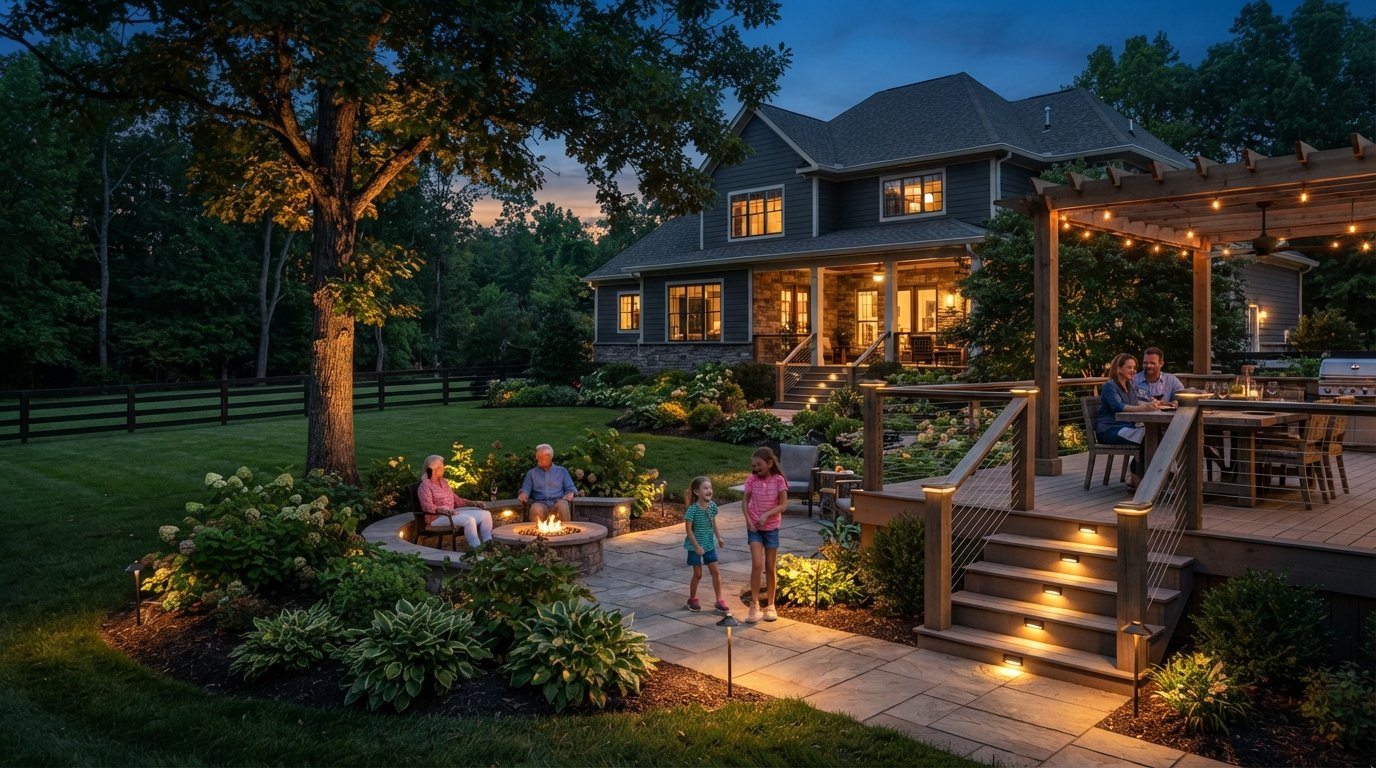
A plant can be native to Kentucky and still struggle in the wrong corner of a yard. Native plants are species that occur naturally in a region, and native plants for central Kentucky landscapes can support local wildlife while adding seasonal flowers, shade, and texture. Central Kentucky is in USDA plant hardiness zone 7a, but the right choice still depends on the conditions in each planting area.
It’s natural to want plants that look appealing and grow well in your yard. The key is to match each plant to its soil, sunlight, moisture, and available space rather than choosing by flower color alone. A sunny, dry bed needs different plants than a moist, shaded area, and trees and shrubs need room to reach their mature size.
This guide explains what makes a plant native and offers practical choices for perennials, shrubs, and trees. You’ll find examples for full sun, shade, and partial shade, plus ways to assess your site before planting. Matching plants to their conditions can create seasonal interest and a landscape that fits its surroundings.
1. What are Native Plants?
Native plants are species that occur naturally in a region, where local conditions shape how they grow. In Central Kentucky, selecting plants suited to the site can support local wildlife and ecosystems while adding flowers, shade, and texture. The area is in USDA plant hardiness zone 7a, but soil, sunlight, and moisture still vary from one garden bed to another.
Plan for habitat as well as appearance. Purple coneflower adds summer color, and its seed heads can feed finches and other birds. Fox sedge suits wet areas such as rain gardens, water features, and riparian settings. Choose plants with varied forms and seasons of interest, and leave seed heads standing where practical. This helps provide food and cover while keeping the garden cared for.
Sedges can also work as ground cover. Pennsylvania sedge has dense, low-growing foliage that can cover ground beneath trees or along a bed edge. For a rain garden, place fox sedge where water collects, not in a dry, sunny spot. Matching each plant to its moisture needs helps prevent it from struggling in the wrong location.
Start with conditions you can observe. Note where sunlight falls, how quickly the ground dries after rain, and whether water pools or runs downhill. A soil test can show whether nutrients are needed. Avoid adding fertilizer by default: overly rich soil or excess fertilizer can cause native perennials to flop. If rain exposes erosion, address runoff before planting.
A small bed is a practical way to learn how plants perform on your property. Start with a defined area, prepare the soil, and choose plants that suit its light and moisture. Check each plant’s mature spread before spacing it, allowing neighboring plants room to grow without leaving large gaps. Expand the bed over time as you learn what thrives and what look you prefer.
Plant costs in Kentucky depend on the species, plant size, and whether you choose seed or established plants. There’s no fixed number of plants per square foot. Use mature spread and desired coverage to set spacing, then calculate how many plants the bed requires.
Near Nicholasville and Lexington, look for native plants and seeds at local garden centers, nurseries, and native-plant sales. Ask for the botanical name to distinguish the intended species from similar-looking plants.
Some plants that resemble desirable natives can be invasive or toxic, so identify plants by botanical name before adding them. Avoid unidentified plants and remove unwanted seedlings before they spread. A native appearance alone does not confirm that a plant is safe or suitable.
To establish and maintain a native garden in Central Kentucky, prepare the soil, match plants to site conditions, and water new plants at least once a week. Weed while plants establish, observe how the bed responds through the seasons, and expand it gradually. Once plants are established, maintenance can focus on unwanted growth and keeping paths and bed edges orderly.
2. Assessing soil, sunlight, moisture, and competition
Before choosing species, observe the planting area throughout the day and after rain. Note where sunlight reaches the ground, where shade falls, and where water collects or drains quickly. Existing trees, turf, and dense shrubs also compete for light, moisture, and root space. These observations help you match plants to actual conditions, not just the bed’s appearance at one moment.
Soil texture offers useful clues. Clay-heavy ground may stay wet longer, while loose, dry soil loses moisture sooner. A soil test can identify nutrient needs; the City of Lexington recommends testing before deciding whether or how much to amend. Avoid adding fertilizer automatically. Rich soil and excess fertilizer can make native perennials flop instead of holding upright foliage.
Moisture and light often go together. Cardinal flower prefers moist soil and partial to full sun, making it a fit for a bright area that does not dry quickly. A dry, sunny slope calls for plants adapted to those conditions. Flowering dogwood is an understory tree that does best in partial to full shade. Eastern redbud is another option when its mature canopy and the available light suit the site.
Check drainage and erosion before preparing the bed. After rain, look for exposed roots, displaced soil, or channels forming downhill. The City of Lexington advises checking planting areas for erosion after rain and addressing any signs. Stabilize the soil and manage runoff before installing plants; otherwise, new roots may not hold the ground in place.
Prepare the site by removing turf and persistent weeds, then loosen compacted ground without disturbing nearby tree roots. Keep desirable existing plants, but clear space around each new planting to prevent crowding. During establishment, hand-pull weeds before they set seed. A well-defined bed edge also helps distinguish intentional plants from unwanted growth.
Competition can change as plants mature. A young redbud casts less shade than an established tree, and nearby lawn can draw moisture away from shallow-rooted perennials. Consider how tree canopies, roots, and neighboring foliage will affect the bed over time. Allow room for mature growth, and consider ground covers where bare soil might otherwise invite weeds.
Keep notes on sunlight, standing water, soil-test results, and weed pressure as the season changes. Those details help refine plant choices and guide soil preparation. For support managing weeds around landscape beds, contact the team about weed control.
3. Native shrubs for flowers and bird food
Wild hydrangea and Carolina rose offer different benefits in a Central Kentucky planting. Wild hydrangea flowers on the current season’s growth, while Carolina rose develops hips that birds can eat. Together, these shrubs add structure and flowering interest, with a food source that lasts beyond the bloom period. Check their mature spread and allow enough room for each shrub’s natural form.
Wild hydrangea can be pruned simply in early spring. Cutting stems to the ground allows new shoots to emerge and bloom that summer. For pollinator value, seed-grown wild hydrangeas from wild populations can offer more benefit than cultivated forms with showier sterile flowers. This distinction matters when flowers are intended to support wildlife as well as add color.
Carolina rose adds value beyond its flowers. Its rose hips provide food for birds, so leave them in place rather than pruning them away for a tidier look. Place the shrub where its mature spread won’t crowd a path or neighboring plants. A planned location makes it easier to retain the hips through the season while keeping the planting orderly.
For pollinators, include flowers with different forms and functions. Butterfly milkweed is a larval host plant for monarch butterflies, whose caterpillars feed exclusively on milkweeds. Wild bergamot attracts bees, butterflies, and hummingbirds, making it suitable for pollinator gardens. Cardinal flower produces bright spikes for a month or longer, adding a distinct display.
Plan seasonal interest by combining shrubs and perennials instead of expecting one plant to carry the whole garden. Pair the flowering structure of wild hydrangea with butterfly milkweed, wild bergamot, and cardinal flower. Purple coneflower seed heads can remain later in the season to feed finches and other birds. This mix offers flowers and wildlife value across different growth stages.
Color and shape help keep a planting visually balanced. Cardinal flower adds vivid spikes, while wild bergamot’s open flowers and the forms of hydrangea and rose create contrast. Group plants so their mature sizes allow foliage to develop without overwhelming smaller neighbors. Keep paths edged clearly, and leave hips or seed heads standing where they provide food.
Which Central Kentucky native plants support pollinators, birds, and other wildlife? Wild hydrangea, Carolina rose, butterfly milkweed, wild bergamot, cardinal flower, and purple coneflower each play a useful role, from providing pollinator flowers to offering food for birds. Combining them can support different wildlife needs while adding varied flowers, foliage, and seasonal structure.
When selecting shrubs, consider their flowering traits and maintenance needs. Wild hydrangea can be cut to the ground in early spring for new shoots and summer flowers, while Carolina rose hips are best left for birds. Match each shrub’s mature spread to the available bed, then add nearby perennials that complement its height and flowering display.
4. Planting guides for full sun, full shade, and partial shade
Start by matching plants to the light and moisture already present. Sunny, dry areas suit native wildflowers and grasses, while moist, shady areas can support ferns, woodland flowers, and shrubs. Check the bed at different times of day before planting. A spot with morning sun may behave differently from one exposed to strong afternoon light.
For a full-sun bed, choose species suited to open, drier ground. Native grasses add upright foliage, while flowering plants bring color and attract wildlife. Purple coneflower and black-eyed Susan are options for sunny garden displays. Allow room for mature growth, and group compatible species so the bed looks intentional as foliage fills in.
Full shade calls for a different approach. Virginia bluebells thrive in rich, moist soil, including woodland settings and stream banks. Native ferns, woodland flowers, and shrubs can add layers beneath a dense canopy. Bluebells are spring ephemerals: their leaves die back after spring, so let them fade naturally rather than filling the space with plants that need summer foliage.
Partial shade creates an opportunity to combine understory trees with lower plantings. Flowering dogwood, Cornus florida , grows as an understory tree and does best in partial to full shade. Eastern redbud, Cercis canadensis , is a small ornamental tree that can provide summer shade and nectar for early-season pollinators. Account for mature canopies when adding flowers below them.
For a layered design, place a tree where its mature shade will be useful, then add shrubs and lower-growing flowers around it. Consider how much light each layer will receive as leaves emerge and spread. Keep woodland flowers away from the driest exposed edges, and reserve brighter openings for sun-loving species. Thoughtful placement helps each plant thrive without asking one bed to meet conflicting needs.
When should native plants be planted in Central Kentucky? Choose a mild period when the ground is workable, not frozen or saturated, and you can water new plants. Match timing to the plant and site, then keep newly planted roots moist as they establish.
Winter structure matters, too. Some grasses and sturdy stems remain visible after flowers fade, adding texture while surrounding plants are dormant. In a shaded bed, let Virginia bluebells complete their natural dieback before clearing foliage. In a sunny bed, leaving seed heads in place can extend visual interest and provide food for birds.
Sketch the layout before digging. Mark the tree canopy, wet areas, and open sun, then assign plants to those conditions. Planning for full sun, shade, and partial shade makes the garden easier to maintain and helps prevent a beautiful plant from ending up where it cannot thrive.
5. Choosing native perennials, shrubs, and trees
The best native plants for a Central Kentucky landscape depend on the bed’s light, moisture, and available space. For sunny areas, purple coneflower, black-eyed Susan, and wild bergamot provide flowers and wildlife value. In rich, moist shade, Virginia bluebells or eastern columbine suit a woodland-style planting. Add shrubs and trees where their mature size fits the site.
For full sun, purple coneflower grows best in lean soil and attracts bees and butterflies. It typically reaches 2 to 4 feet tall and spreads about 1 to 2 feet. Black-eyed Susan offers a prolonged bloom, then seed heads that feed finches and other birds later in the season. Wild bergamot adds flowers that attract bees, butterflies, and hummingbirds.
Native grasses can complement sunny, dry beds by adding foliage and structure among wildflowers. Choose grasses according to the space they’ll occupy as they mature, and avoid crowding them against paths or smaller perennials. For a lower-growing accent, narrow-leaved blue-eyed grass typically reaches 6 to 18 inches tall. Grouping compatible plants can create a more cohesive display than scattering single specimens.
For moist areas, cardinal flower produces vivid spikes and grows 2 to 4 feet tall. Virginia bluebells typically reach 1 to 2 feet, then die back after spring and remain dormant until the next year. Eastern columbine grows 1 to 3 feet tall, while white snakeroot typically reaches 2 to 4 feet. These differences in height help build layers without hiding shorter plants.
Shrubs and vines can add vertical interest where perennials alone leave gaps. Carolina rose provides bird-feeding hips, and wild hydrangea blooms on current-season growth. Coral honeysuckle can grow 6 to 15 feet tall, so give its climbing stems suitable room and support. Check each plant’s mature dimensions before placing it near windows, walkways, or neighboring foliage.
For a small tree, eastern redbud provides summer shade and nectar for early-season pollinators. River birch is available as a single-stem tree or a multiple-trunk clump. Choose the form that suits the planting area and the visual structure you want. Consider its future canopy before adding sun-loving flowers beneath it.
Which native plants are best for Central Kentucky landscapes? Combine plants suited to the site, such as purple coneflower for lean, sunny ground, cardinal flower for moist conditions, and Virginia bluebells for rich shade. In sunny, dry gardens, pair flowering perennials with native grasses; use woodland flowers in suitable shade.
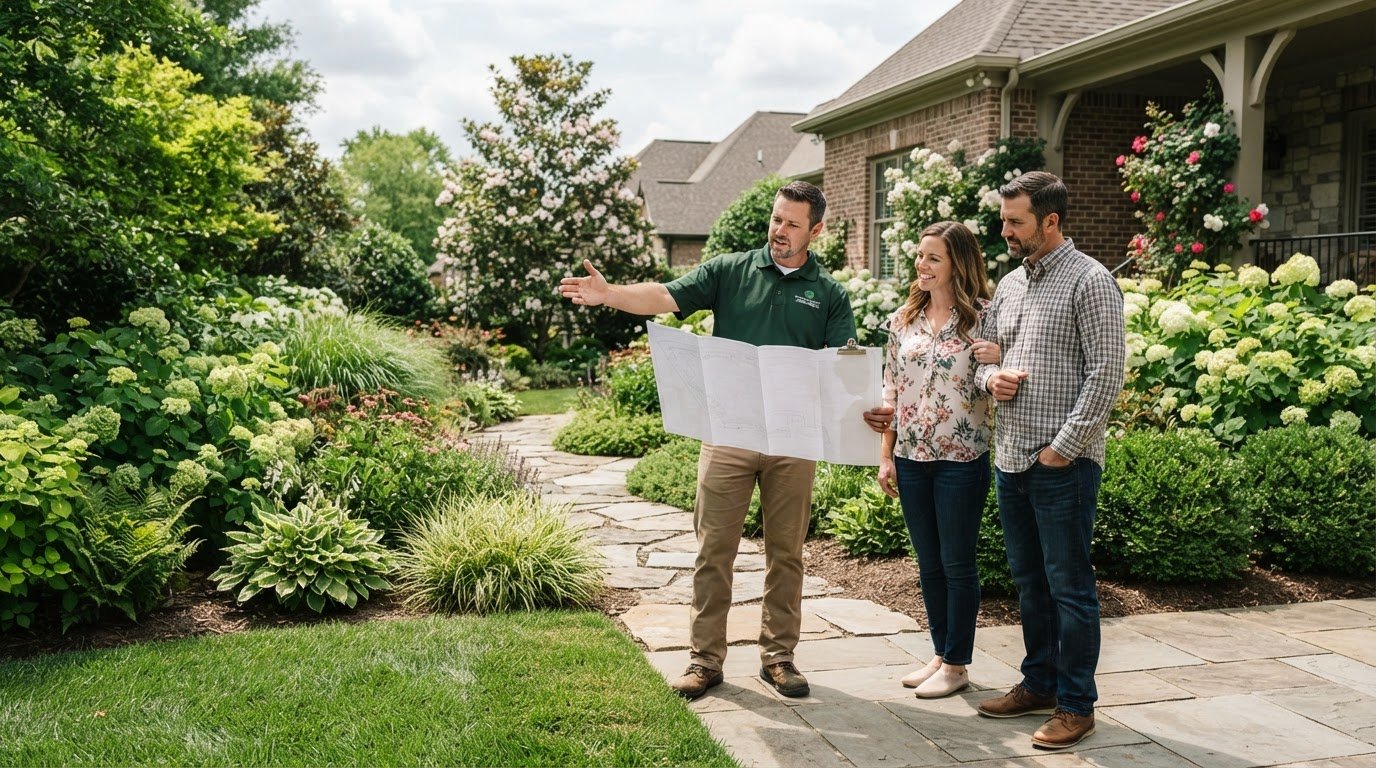
For visual rhythm, plant perennials in groups of three or five, and vary heights across the bed. Leave room for mature spread instead of filling every gap with young plants. A planting plan can balance flowers, foliage, and tree shade. Plan a native landscape design around your property’s conditions and preferred plant mix.
Palisades Outdoor Solutions: Lawn Care & Mowing
Palisades Outdoor Solutions can help keep the surrounding lawn and landscape orderly as native plantings take root. Lawn Care & Mowing maintains nearby turf, while Landscape Maintenance supports care for established beds. Mulch & Rock Installation and Landscape Construction can help shape and finish a new planting area.
Turn to these services when lawn growth, bed edges, or a landscape project needs attention alongside your planting plans. A clear boundary between turf and native plants helps keep routine mowing separate from garden beds.
For help with your property’s landscaping needs, contact Palisades Outdoor Solutions.
Give Your Native Garden Room to Grow
A native planting can evolve as you learn how each part of your property responds through the seasons. Start by refining one area, then adjust its layout as plants mature and your needs change. This gradual approach helps create an intentional garden rather than a crowded one, with future maintenance in mind.
For native plants for central Kentucky landscapes, the next step is to turn your priorities into a workable plan. Palisades Outdoor Solutions can support the surrounding property with Lawn Care & Mowing, Landscape Maintenance, and Mulch & Rock Installation, helping keep lawn edges and planting areas in order as the garden develops.
Share what you’d like your outdoor space to become and where you need help. Contact Palisades Outdoor Solutions to discuss your landscape needs, and take the next step toward a garden that grows beautifully with your property.
Frequently Asked Questions
What are Native Plants?
Native plants are species that occur naturally in a particular region, rather than plants introduced from elsewhere. In a Central Kentucky garden, the term narrows choices to species suited to local ecosystems and growing conditions. Check a plant’s botanical name, since common names can refer to different plants. Then compare its light, moisture, and mature-size needs with the intended planting spot.
What native trees and shrubs grow well in Central Kentucky?
Eastern redbud, flowering dogwood, and river birch are native tree choices for Central Kentucky landscapes. Redbud is a small ornamental tree, dogwood suits partial or full shade, and river birch comes in single-stem and multiple-trunk forms. For shrubs, consider wild hydrangea for flowers and Carolina rose for hips that feed birds. Choose based on available space, site conditions, and the landscape structure you want.
Which native plants thrive in sun, shade, wet, or dry soil in Central Kentucky?
For sunny, dry areas, consider native wildflowers and grasses, including purple coneflower, which grows best in lean soil. Moist, shady areas can suit ferns, woodland flowers, Virginia bluebells, and shrubs. Fox sedge fits wet settings such as rain gardens, while cardinal flower prefers moist soil and partial to full sun. Observe where water lingers after rain, then choose plants with matching moisture needs.
What are the soil, rainfall, and hardiness-zone conditions for Central Kentucky?
Central Kentucky is in USDA plant hardiness zone 7a. Soil and moisture can vary across a property, so use a soil test to determine nutrient needs and inspect beds after rain for pooling or erosion. Rainfall alone doesn’t show whether a planting area stays wet: slope, soil texture, and drainage affect how long moisture remains. Match plant choices to those on-site conditions rather than assuming every bed is alike.
How much do native plants cost in Kentucky, and how many plants are needed per square foot?
Costs depend on the species, plant size, and whether you buy seed or established plants. There is no fixed number per square foot. Use each plant’s mature spread and your desired coverage to determine spacing and quantity.
Are there invasive or toxic native-looking plants to avoid in Kentucky landscapes?
Yes. Some plants that resemble desirable natives can be invasive or toxic, so identify plants by botanical name, avoid unidentified plants, and remove unwanted seedlings before they spread.